Coral spawning on the Great Barrier Reef is one of nature’s most spectacular and important events. Every year, for just a few nights, something extraordinary happens across the reef.
As the water warms and the moon reaches the right phase, corals across the reef synchronise their reproduction in an event known as coral mass spawning. In a matter of hours, the reef releases billions of tiny eggs and sperm into the ocean, turning the water into a drifting cloud of life. Footage of the event is mesmerising — but it isn’t just visually stunning, it captures one of the most important ecological processes on the planet.
Quick answer: what is coral spawning and why does it matter?
Coral spawning is how most hard corals on the Great Barrier Reef reproduce, releasing eggs and sperm in a synchronised event once or twice a year. It matters because it’s how the reef regenerates, maintains genetic diversity, and recovers from bleaching, storms and cyclones.
Key takeaways
- Coral spawning happens once or twice a year, usually in late spring or early summer, triggered by water temperature, daylight length and the lunar cycle.
- Synchronised release overwhelms predators and lets coral larvae spread across vast distances via ocean currents, helping reefs recover and reconnect.
- Successful spawning reseeds damaged reefs after bleaching, storms or cyclones, and maintains the genetic diversity that improves resilience to warming oceans.
- Footage of coral spawning is a powerful reminder that the reef is alive, dynamic, and still capable of regenerating itself when given the chance.
What is coral spawning on the Great Barrier Reef?
Coral spawning is how most hard corals on the Great Barrier Reef reproduce. Once or twice a year — usually in late spring or early summer — many coral species spawn at the same time. Timing is everything: corals use environmental cues like water temperature, daylight length and the lunar cycle to synchronise their release, dramatically increasing fertilisation success. This synchronisation is critical — it overwhelms predators, improves survival rates, and allows coral larvae to spread across vast distances via ocean currents, helping reefs recover and reconnect.
Why coral spawning on the Great Barrier Reef matters
Coral spawning is not just a beautiful natural phenomenon — it is essential for the future of the reef. Through mass spawning events, corals:
- Reproduce and regenerate reef systems.
- Maintain genetic diversity, improving resilience to warming oceans.
- Reseed damaged reefs after bleaching, storms or cyclones.
- Support entire food webs, from plankton to fish and megafauna.
Without successful spawning, coral populations decline, recovery slows, and reef ecosystems become increasingly fragile. When we see coral spawning, we are witnessing hope in action.

Why coral spawning footage captivates people
The vision of coral bundles drifting upward like underwater snowstorms is mesmerising, and it shows the reef doing what it does best: regenerating itself. The Great Barrier Reef is often portrayed only through loss and decline, but coral spawning reminds us that the reef is alive, dynamic, and still fighting to thrive when given the chance. It’s a powerful reminder that protection, sustainable tourism, and responsible reef management genuinely make a difference. While coral spawning itself typically happens at night, the health of the reef you snorkel and dive on during the day is directly linked to these spawning events — every vibrant coral garden, every reef fish, every turtle sighting begins with moments like these.
Experiencing the reef with Sunlover Reef Cruises
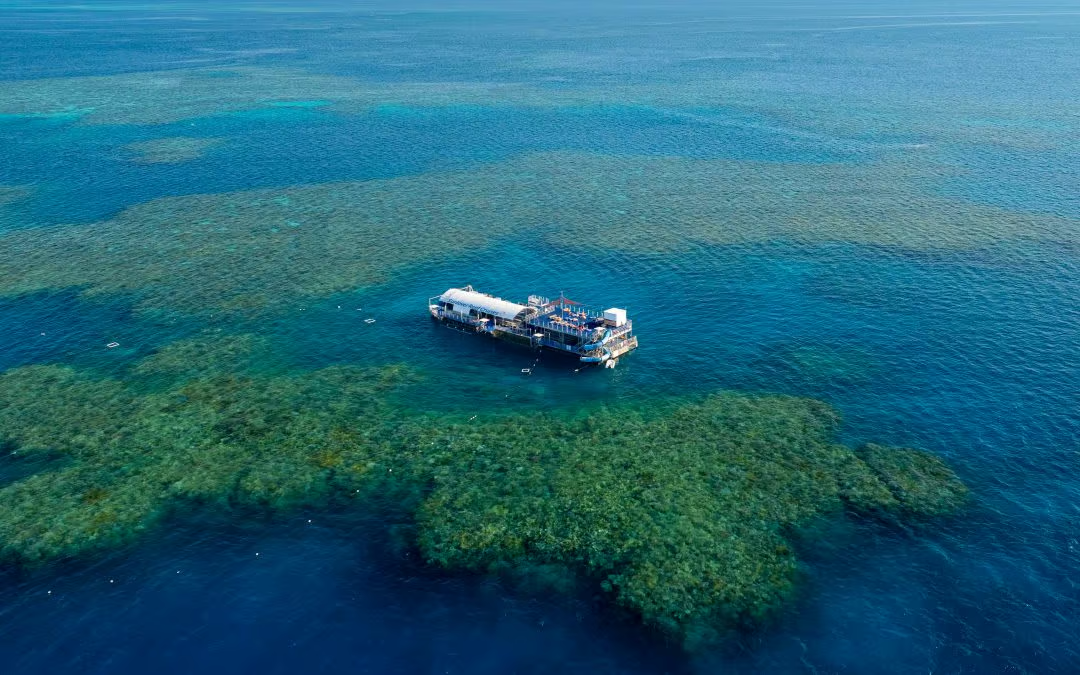
At Sunlover Reef Cruises, we operate in one of the most active coral reef environments on the Great Barrier Reef at Moore Reef. Our team works alongside marine scientists, Master Reef Guides and reef management programs to support reef monitoring and education, share accurate, science-based interpretation with guests, promote responsible reef interaction and stewardship, and advocate for long-term reef protection.

Why seeing the reef matters
Photos and videos are powerful — but they don’t replace being there. When people experience the reef firsthand, snorkelling above living coral and learning how these systems function, they form emotional connections. Those connections are what turn visitors into reef advocates. Responsible reef tourism plays a key role in conservation — supporting monitoring programs, reef education, and protection initiatives that help keep events like coral spawning possible for generations to come.
Witness the future of the reef
Coral spawning is nature’s reminder that the Great Barrier Reef is still alive, still resilient, and still worth protecting. When you visit the reef with Sunlover, you’re not just taking a tour — you’re supporting a future where these spectacular events continue to happen.
When does coral spawning happen on the Great Barrier Reef?
Why is coral spawning important?
Can visitors see coral spawning on a Sunlover tour?
What does Sunlover do to support reef health?
Come experience the reef
Come experience the Great Barrier Reef with Sunlover — and be part of the story behind the footage.