
Sustainability
Moore Reef is our backyard. Looking after it runs through everything we do — reef surveys and predator control for the Reef Authority, coral research with James Cook University, a marine biologist on every guided snorkel, and a steady list of changes to how the boats run. The numbers are below.
Quick Answer
Sunlover has been Eco Certified for more than 20 years. We survey and look after Moore Reef for the Reef Authority, support coral research, teach on every tour, and keep changing how our boats run.
Looking after Moore Reef is a privilege
Sunlover is 1 of 26 tourism operators in Australia chosen by the Reef Authority, through a competitive open tender, to monitor and protect the reef sites we visit.
The Tourism Reef Protection Initiative was set up by the Great Barrier Reef Marine Park Authority on a simple logic: tourism operators are already out on the same reefs almost every day of the year. That frequency is worth something scientifically. It turns a tour boat into a monitoring platform that can pick up bleaching, damage or a predator outbreak in something close to real time.
The Australian Government committed $15.1 million through its Reef Protection Package to put that idea to work. Sunlover has been in the program since it began in December 2022. Crew go out on dedicated reef days with a job list — surveys to complete, transects to photograph, predators to remove — and the data goes straight to the Reef Authority and into national reef databases.
None of this happens in front of an audience. It is quietly part of how our crew works — looking after the reef we bring you to, every day — and it is something we love talking about with guests who ask.
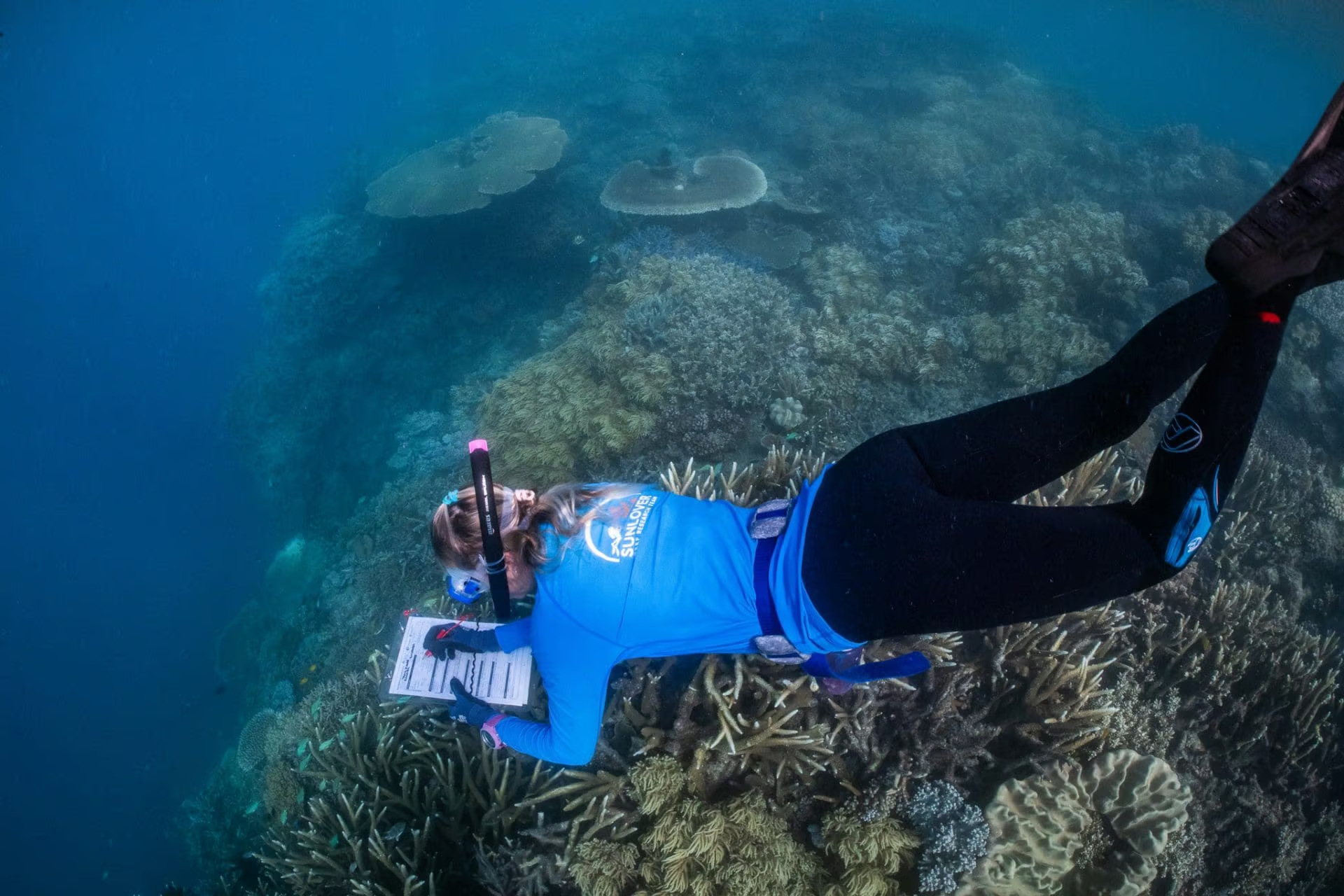
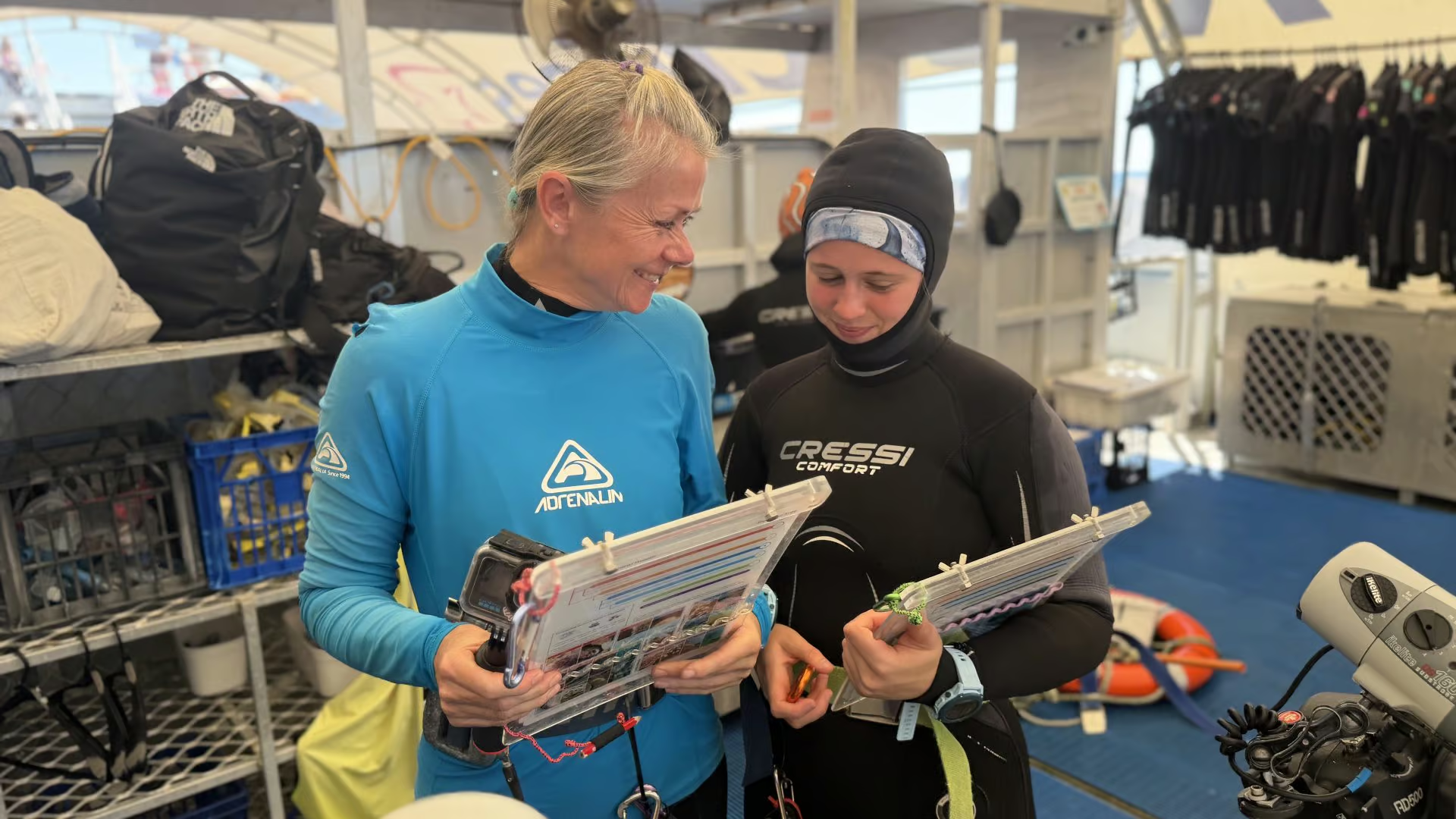
Our crew at work under the Tourism Reef Protection Initiative.
What that has added up to
Reef protection is easy to claim and hard to count. These are the counted numbers, as reported to the Reef Authority.
| Activity | 2022–24 | 2024–25 | 2025–26 | Total |
|---|---|---|---|---|
| Reef health and impact surveys | 602 | 718 | 626 | 1,946 |
| Tourism weekly surveys | 120 | 81 | 101 | 302 |
| Coral predator control surveys | 295 | 74 | 144 | 513 |
| Crown-of-thorns starfish culled | 92 | 580 | 233 | 905 |
| Drupella snails removed | 29,189 | 9,673 | 10,962 | 49,824 |
| Photo point transects | 34 | 25 | 53 | 112 |
| Images contributed to ReefCloud | 3,376 | 2,911 | 4,261 | 10,548 |
| Site stewardship actions | — | 22 | 31 | 53 |
Source: Sunlover Reef Cruises activity reported under the Tourism Reef Protection Initiative, December 2022 to the 2025–26 funding round. Headline figures as published by the Great Barrier Reef Marine Park Authority.
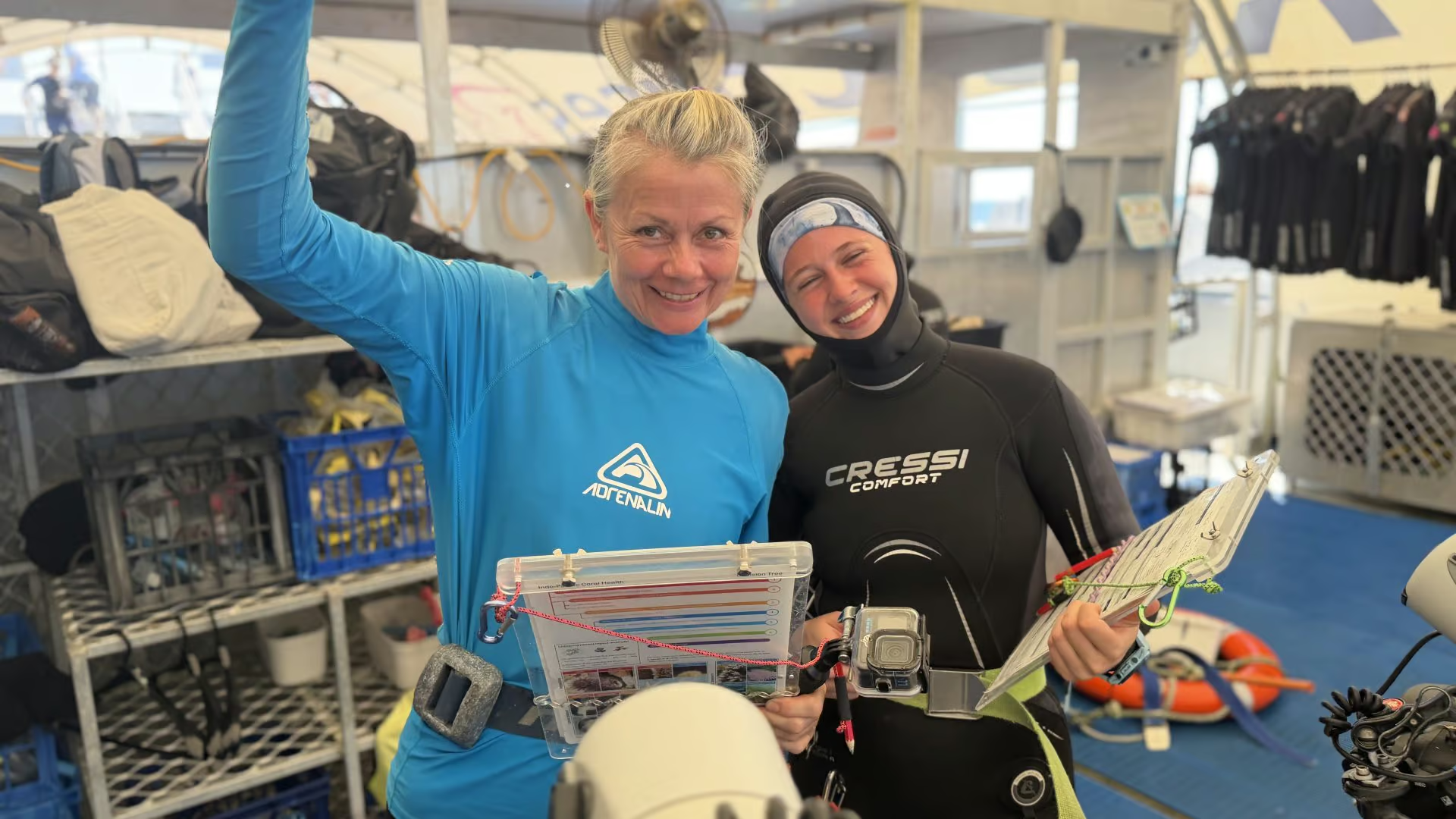
6 jobs we do on the reef
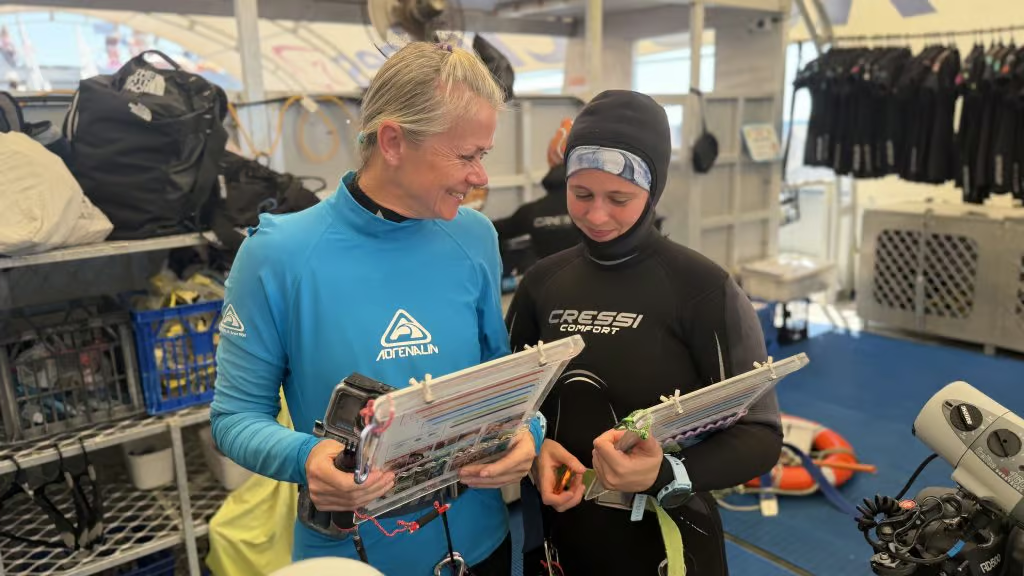
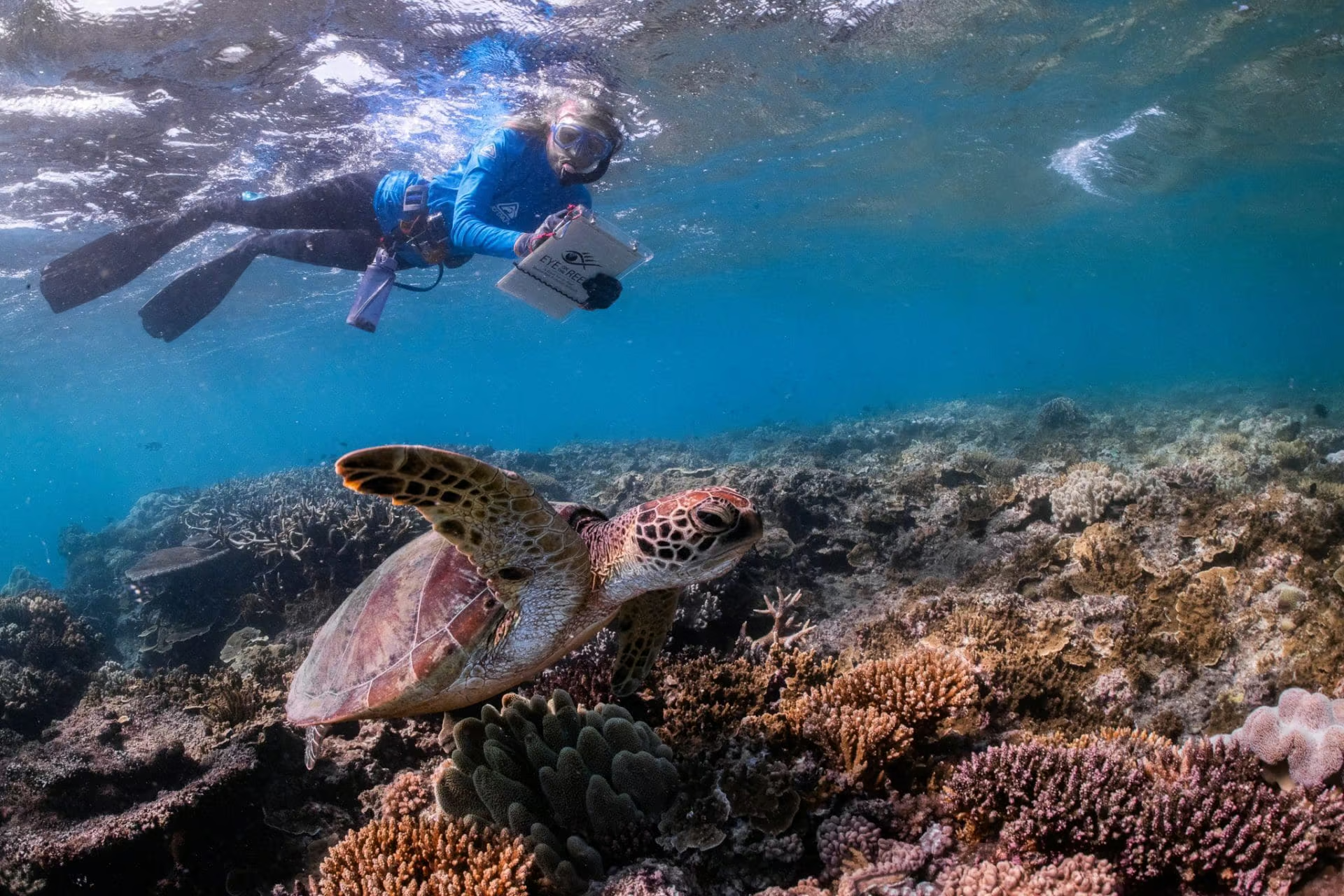
Eye on the Reef surveys
The Reef Authority's national monitoring program. Our marine biologists record coral cover, bleaching, damage, water temperature and the animals present. Because we are on the same sites constantly, the picture is close to real time rather than annual.
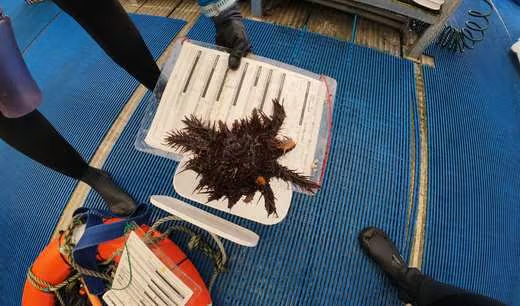
Crown-of-thorns starfish control
One adult crown-of-thorns can eat through roughly its own body area of coral in a week, and an outbreak can strip a reef. Our crew are trained and authorised to cull them. 905 removed from our sites so far.
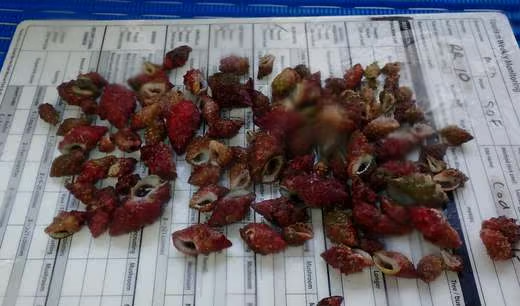
Drupella snail removal
Small, easy to miss, and devastating in numbers — they graze living coral tissue away. Removal is done by hand, one at a time. 49,824 so far.
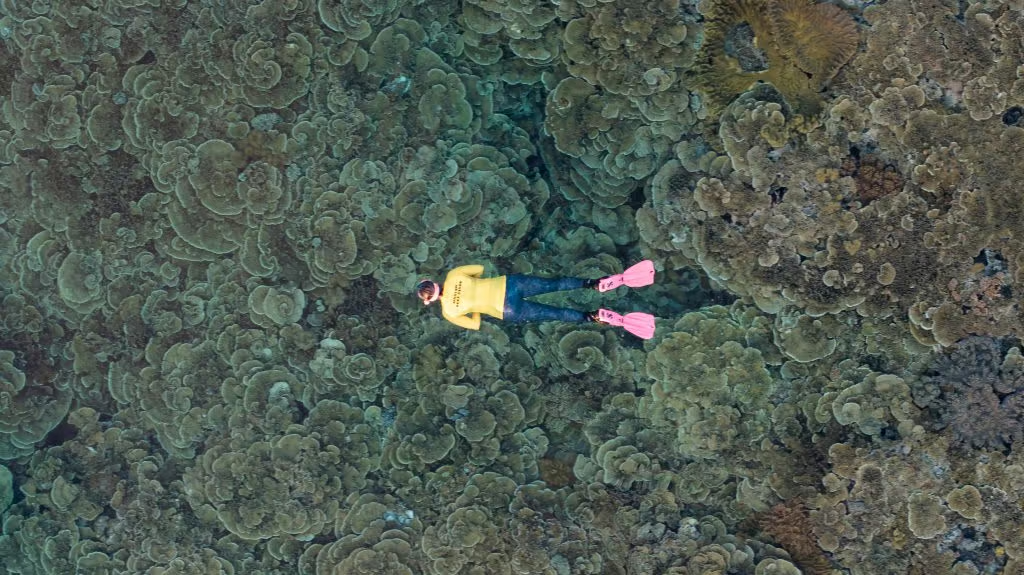
Photo point transects
The same marked stretches of reef photographed on a repeating schedule, so change in coral cover is measured rather than remembered. The images go to ReefCloud, the Australian Institute of Marine Science's machine-learning platform, which analyses them at a scale no human team could.
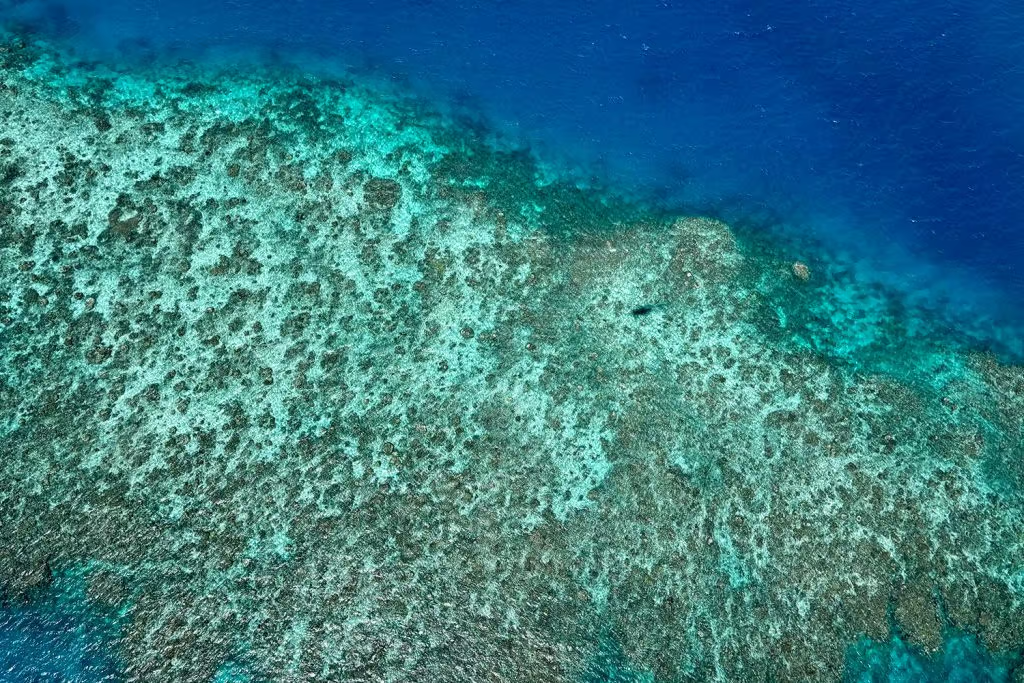
Site stewardship
A written plan for each high-value site, built on best-practice management, the available data and local knowledge, and agreed with the Reef Authority. 53 stewardship actions completed.

Coral spawning observation
Crew and scientists in the water for the annual spawning, recording what happens and when — the event that determines whether a damaged reef gets a new generation.
We are one boat in a fleet of 26
Our numbers only mean something next to the program they sit inside. Across the whole Tourism Reef Protection Initiative, between December 2022 and June 2026:
Program-wide, 421,771 Drupella snails and 9,194 crown-of-thorns starfish have been removed, 155,897 images analysed, and more than 280 new surveyors trained. 425 On Country visits were facilitated for Traditional Owners, and 115 school excursions ran for 1,592 students.
Counting the next generation of coral
A reef recovers by growing new coral, not by the old coral getting better. Whether that is happening is measurable — and until recently, almost nobody was measuring it locally.
Since late 2023 Sunlover has been part of the Cairns–Port Douglas Reef Hub coral recruitment study, a long-term collaboration with James Cook University’s TropWATER centre. 6 tourism operators, the Jabalbina First Nations Land & Sea Ranger group and the Resilient Reefs Foundation each run part of the fieldwork.
The method is deliberately simple. Each organisation fixes 15 limestone tiles, 9 cm square, to reef sites in late September, just before the summer spawning. Coral larvae settle on them. The tiles come up 10 to 12 weeks later and go to James Cook University, where they are treated to reveal the skeletons of the coral that settled — new recruits are invisible to the naked eye until they are nearly 12 months old. Temperature loggers sit alongside them, recording what the water actually did that summer.
Across the study there are 270 tiles at 18 sites on 6 reefs, Moore Reef among them. Reef Hub participants — including ranger groups, school groups and operator staff — were trained at JCU to identify and count the recruits themselves.
The early results are not a headline, and that is the point: recruitment varies enormously between reefs, between sites on the same reef, and from year to year. One good season tells you nothing. A decade of tiles tells you whether the reef in front of you is replacing itself.

Coral spawning at Moore Reef — the annual event the recruitment tiles are set to catch.
A pontoon is a laboratory that floats
A permanently moored platform on the outer reef is a rare thing for researchers to have. Our Moore Reef site hosts coral larval planting work led by the Australian Institute of Marine Science and Reef Restoration and Adaptation, and we run specialised overnight research projects from the pontoon.
We also provide transport and reef access to the Resilient Reefs Foundation for their coral nurseries and for training marine biologists. Their first 10 coral trees went in during February 2022. Inside 12 months they were transplanting grown coral into depleted areas, and they have since expanded to 20.

Changes we have made on board
Certification tells you a business was audited. These are the decisions behind it.
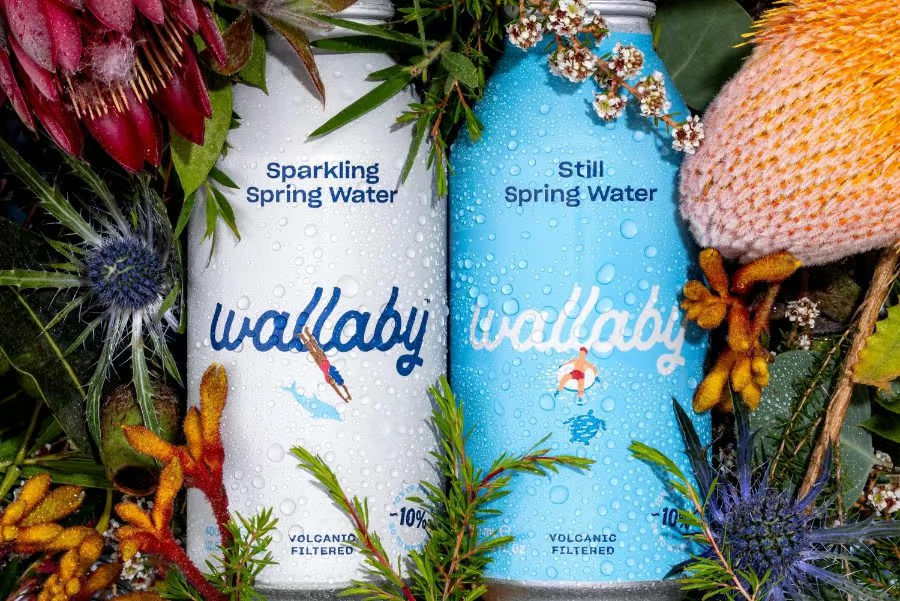
No single-use plastic water bottles
Plastic water bottles are gone from the vessels and the pontoon. In their place, Wallaby Water in recycled aluminium — recycled metal takes a fraction of the energy of new, and it can go round again without losing quality.

Wine in cans instead of glass
Our wine comes from Small Things Winery, a small Australian producer focused on sustainable practice. Cans instead of glass means far less weight to carry out to the reef, and aluminium that goes straight back into the recycling stream.
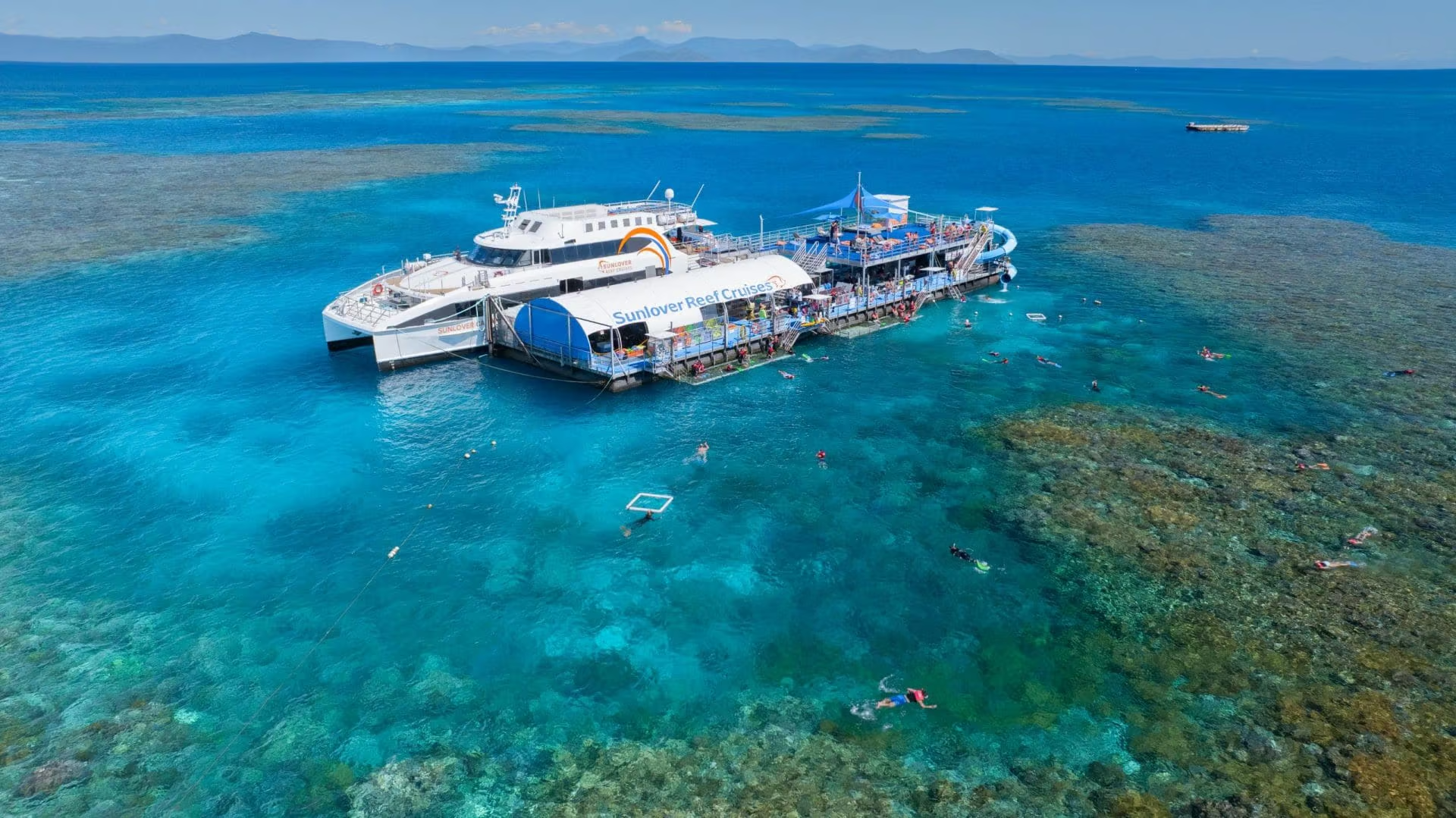
Combining tours where we can
Where 2 trips can sensibly run as one, we run them as one. Fewer vessel movements to the same reef, for the same guests. That work earned us an industry awards nomination in 2025.
Local suppliers first
We give preference to suppliers and businesses in Tropical North Queensland, and to those who can show they are working on their own environmental impact. Money that stays in the region, and shorter supply lines.
People protect what they understand
A marine biologist leads every guided snorkel tour, every day. They love sharing what they know, and teaching people about the reef is part of the work we do for the Reef Authority.

- Marine Biologist for a DaySchool and student groups learn the same survey techniques our team uses for the Reef Authority, then use them in the water. Across the whole initiative, 115 school excursions have run for 1,592 students.
- Training new surveyorsThe program has trained more than 280 new reef surveyors nationally. The number of tourism contributors to the national reef database has grown 4 times over since 2017.
- Environmental Management ChargeCollected with every ticket and passed to the Reef Authority and Queensland Parks and Wildlife Service. It funds reef management and gives the Reef Authority the visitation data it needs.
- On Country visits425 On Country visits have been facilitated for Traditional Owners across the initiative, supporting Traditional Owner presence and decision-making on Sea Country.
Audited, not self-declared
Eco Certified with Ecotourism Australia for more than 20 years, and accredited by the Australian Tourism Industry Council. See every accreditation.



Sunlover Reef Cruises acknowledges the Gimuy Walubara Yidinji, Mandigalbay Yidinji, Yirrganydji & Gunggandji people, the traditional owners of the Sea Country on which our business operates. We pay our respects to Aboriginal and Torres Strait Islander cultures; and to elders past, present and emerging.
What people ask us about the reef
What is the Tourism Reef Protection Initiative?
It is a Great Barrier Reef Marine Park Authority program, funded with $15.1 million through the Australian Government's Reef Protection Package, that funds 26 tourism operators to monitor and protect the reef sites they visit. Operators were selected by competitive open tender. Sunlover Reef Cruises has been part of it since it began in December 2022.
What has Sunlover actually done under the program?
Between December 2022 and the 2025-26 funding round, Sunlover completed 1,946 reef health and impact surveys, culled 905 crown-of-thorns starfish, removed 49,824 Drupella snails, ran 112 photo point transects and contributed 10,548 images to the ReefCloud database, along with 53 site stewardship actions. In total that is 50,729 coral predators removed from our reef sites.
Are Sunlover crew allowed to cull crown-of-thorns starfish?
Yes. Our crew are trained and authorised to cull crown-of-thorns starfish on the sites we manage, as part of the Tourism Reef Protection Initiative. Crown-of-thorns are a native coral-eating starfish whose outbreaks are one of the largest causes of coral loss on the Great Barrier Reef.
What is ReefCloud?
ReefCloud is a machine-learning platform run by the Australian Institute of Marine Science that analyses reef photographs at scale. Sunlover contributes photo point transect images to it, so change in coral cover at our sites is measured consistently over time.
Is Sunlover Reef Cruises certified?
Sunlover has held ECO Certification with Ecotourism Australia continuously for more than 20 years, which put us in the ECO Certification Hall of Fame in 2025 — 1 of 11 Australian tourism operators inducted that year. We are also a Quality Tourism Accredited Business and hold Sustainable Tourism Accreditation with the Australian Tourism Industry Council.
What is the Environmental Management Charge?
It is a charge collected with every ticket and passed to the Great Barrier Reef Marine Park Authority and Queensland Parks and Wildlife Service. It funds reef management and research, and gives the Reef Authority the visitation data it needs to manage the Marine Park.
Are there single-use plastics on board Sunlover vessels?
Not for water. Plastic water bottles have been removed from the vessels and the pontoon, replaced with Wallaby Water in recycled aluminium. The wine is canned rather than bottled, from Small Things Winery in Australia.
Are Sunlover snorkel tours led by a marine biologist?
Yes, every day. The guided snorkel tours are led by our marine biology team rather than by general crew.