Quick answer: why start your Tropical North Queensland trip on Fitzroy Island?
If you’re planning a trip to Tropical North Queensland, make Fitzroy Island your first stop — not the reef, not the Daintree. This ancient, rainforest-covered island, just 45 minutes by ferry from Cairns, is a National Park where your senses wake up and everything that follows becomes richer. Guests who visit Fitzroy Island first tend to notice more, slow down more, and get more out of every reef and rainforest experience that comes after.
Quick takeaways
- Fitzroy Island is a National Park, not a resort island — 29 million years of granite, ancient rainforest, fringing coral reef and wildlife that doesn’t perform for visitors.
- The Nudey Beach Track is a graded-moderate, roughly 45-minute walk through rainforest to one of Australia’s best-known beaches — closed-toe shoes with grip are essential.
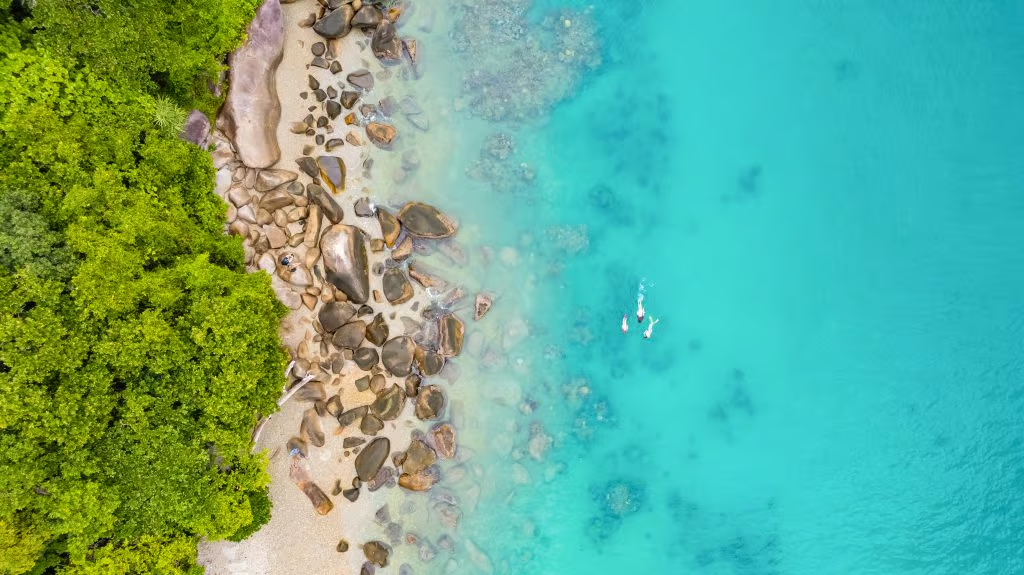
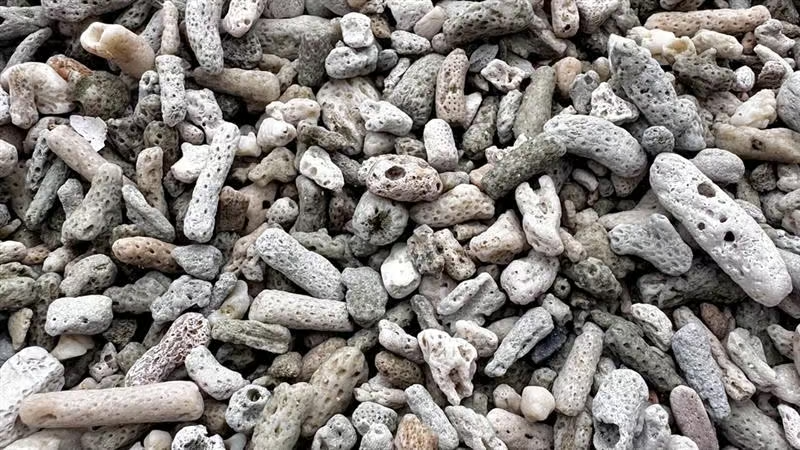
- Nudey Beach is made of coral fragments, not sand — reef shoes or aqua shoes are worth bringing.
- Rain doesn’t ruin a Fitzroy Island day — the island is designed to be experienced in the wet as much as the dry.
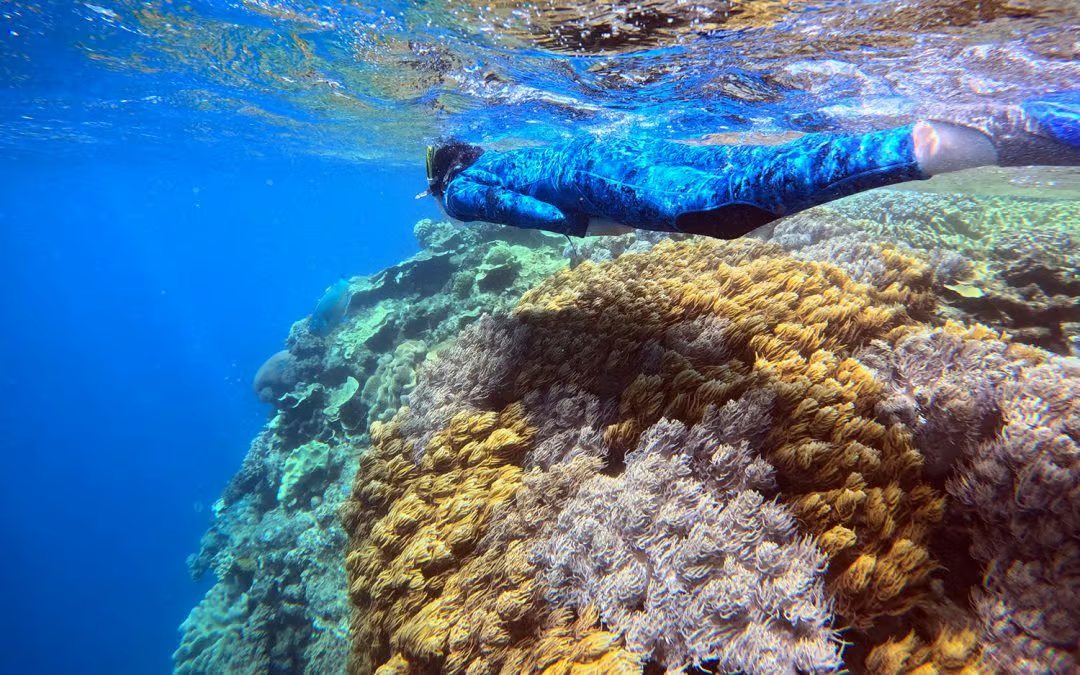
- The fringing reef at Nudey Beach offers good snorkelling straight off the shore.
An island that wakes up your senses
Most people arrive in Cairns with a list: the Great Barrier Reef, the Daintree Rainforest, Cape Tribulation, the Atherton Tablelands. They tick them off one by one, moving quickly between experiences, taking photos, and flying home feeling like they saw everything but somehow missed something. What they missed was the beginning.
Fitzroy Island is not a resort island. It’s a National Park — 29 million years of granite, ancient rainforest, fringing coral reef, and wildlife that doesn’t perform for visitors. The moment you step off the ferry, the air changes. It’s thicker, warmer, alive with the scent of damp earth and eucalyptus. The sounds of Cairns disappear, replaced by birdsong — the long, low call of the Wompoo Fruit-Dove echoing through the canopy, the rustle of Orange-Footed Scrub Fowl turning leaf litter, the distant crack of a Sulphur-Crested Cockatoo.
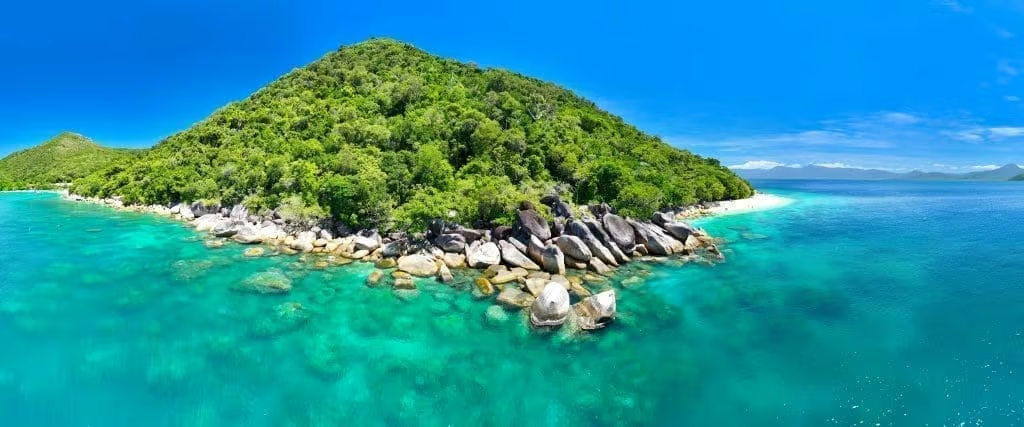
The main walking track — the Nudey Beach Track — takes about 45 minutes and winds through the heart of the rainforest to one of Australia’s most beautiful beaches. But the destination isn’t the point. The walk itself is the experience. Every few steps, something demands your attention: granite boulders smoothed by millions of years of chemical weathering, tree burls recording decades of storms and survival in their twisted grain, vine thickets so dense they block the sky.
You start noticing things you’d normally walk straight past — the radiating roots of a White Starfish Orchid clinging to bark, a Birdsnest Fern catching rain in its rosette like a living funnel, termite galleries inside a fallen log breaking it down into nutrients for the next generation of trees. The island is a complete ecosystem, visibly alive and working, and it teaches you to look — really look — at everything around you. That shift carries with you to every other experience in the region.
Nature as nurture: what happens when you slow down
There’s a reason people feel different after spending time on Fitzroy Island. The rainforest canopy filters light into soft, dappled patterns. The air is rich with phytoncides — organic compounds released by trees that have been shown to lower cortisol, reduce blood pressure, and boost immune function. The rhythm of walking on uneven ground — stepping carefully over granite, adjusting to roots and rock — engages your body in a way that flat pavement never does. You’re not exercising. You’re re-calibrating.
Your breathing deepens without you deciding to breathe differently. Your shoulders drop. The mental noise of airports, itineraries and time zones starts to fade. It’s not magic and it’s not a wellness programme — it’s what happens when you put a human body inside a living, breathing forest and let it do what forests have always done: restore.
The Japanese concept of shizen describes the natural state of things — effortless and unforced. On Fitzroy Island, you don’t have to try to feel something. The environment does the work. You just have to show up and pay attention. It’s why Fitzroy Island works so well as a first stop — the island does the resetting for you.
The Nudey Beach Track: a walk that tells a story
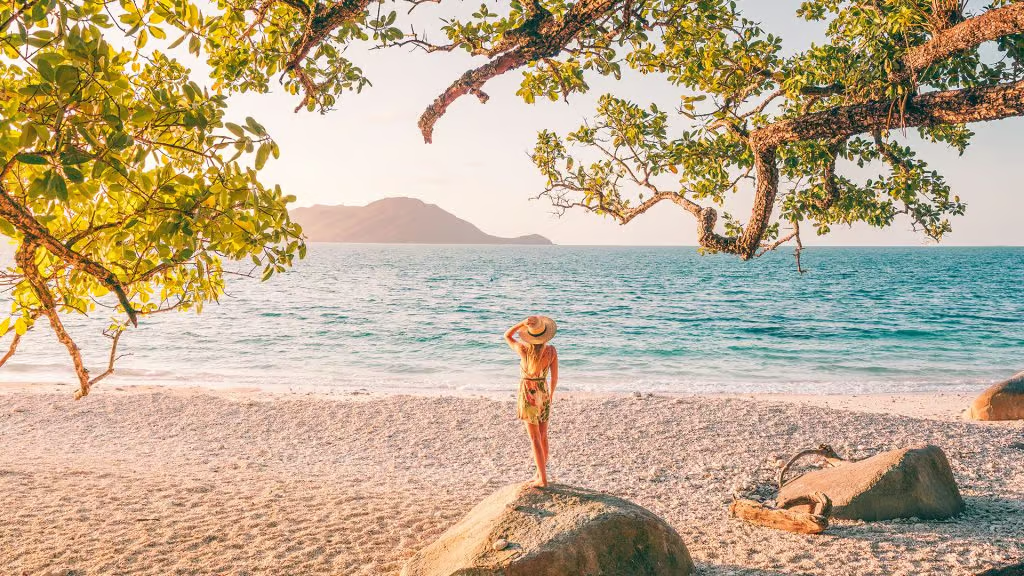
The Nudey Beach Track is graded moderate. It’s well-maintained, mostly paved, but it winds through large granite boulders and requires walking up some steep, rough-cut stone steps. Proper closed-toe shoes are essential — the granite becomes slippery when wet, and the beach itself is made of coral fragments, not sand. It’s beautiful but uncomfortable barefoot.
The track follows a natural narrative arc. You begin at the jetty, cross a bridge where you might spot the resident short-finned eel, and enter the rainforest through what locals call the Secret Garden Path. The light shifts immediately — from open tropical sky to the green-filtered half-light of the canopy.
From there, the track climbs through granite boulder steps that are millions of years old, past tree burls that record the island’s history of cyclones and storms, through vine thickets thick with lianas and strangling figs. You pass through zones of nutrient recycling where fallen logs are being broken down by fungi, termites and bacteria in a visible 3-step process that feeds the entire forest.
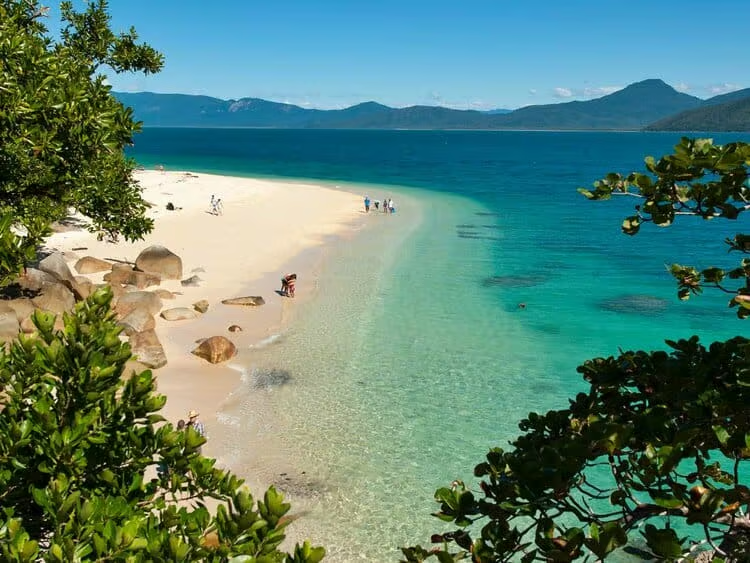
At the bridges, pause and listen — this is where the forest is loudest, with birdsong echoing off granite, water trickling below, wind moving through canopy. The first lookout gives you a view across sparkling water to King Beach on the mainland. Then, at the second lookout, the reveal: Nudey Beach, stretching out below you, its coral-fragment shore glowing white against turquoise water and the green wall of the fringing reef just offshore. It’s the kind of view that makes you stand still and just breathe. And that’s the point.
What happens when it rains on Fitzroy Island (and why that’s a good thing)
Tropical North Queensland receives over 2,000mm of rain per year. Most tourism operators treat rain as a problem to apologise for. We don’t — on Fitzroy Island, rain is one of the best things that can happen to your experience.
When rain falls on the island, the forest transforms. Steam rises from warm granite. The air fills with petrichor — that rich, earthy scent released when rain hits dry stone and soil. Every surface becomes a percussion instrument: rain on broad leaves sounds different from rain on granite, which sounds different from rain on the coral beach. Birdsnest Ferns fill their rosettes. Vine thickets drip. The forest canopy glows a deeper, more saturated green.
And something happens to people, too. The initial instinct is to shelter, to wait it out. But once you let go of that reflex and keep walking, something shifts. You’re soaked. You’re warm. You’re laughing. The rain breaks down the invisible barrier between you and the environment — you’re not observing nature anymore, you’re in it, part of it. In many cultures, rain is understood as a force of renewal and purification — in Japan, the concept of misogi, purification through water, reflects a similar idea: you’re meant to experience the elements, not endure them, and that changes how you approach every outdoor experience that follows.
The gateway effect: why everything after Fitzroy Island feels different
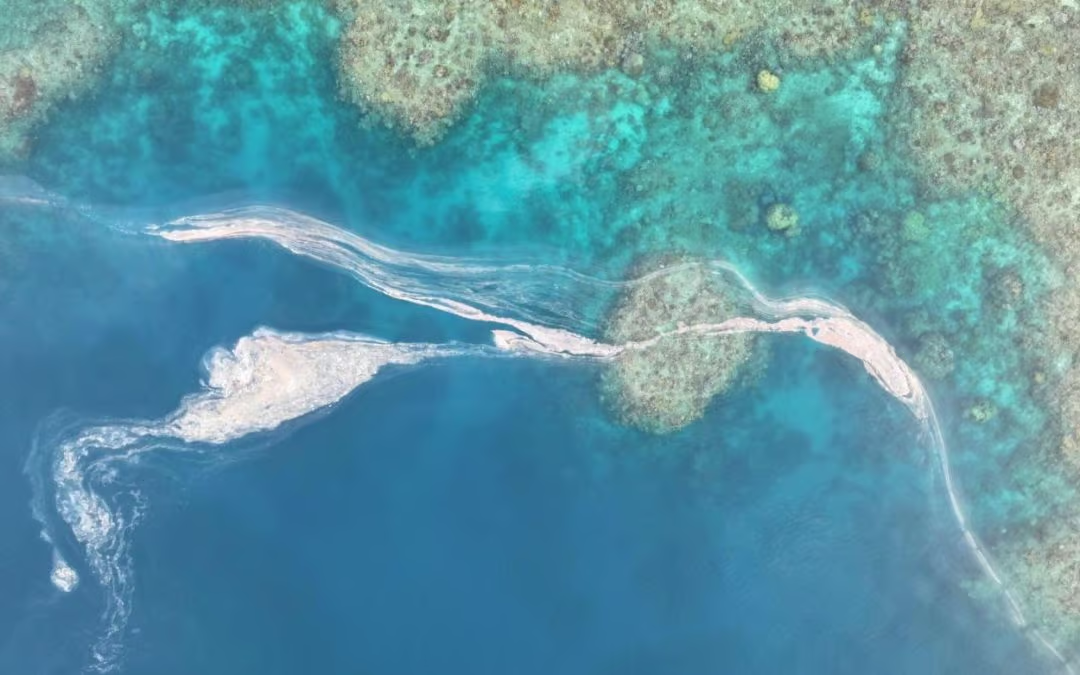
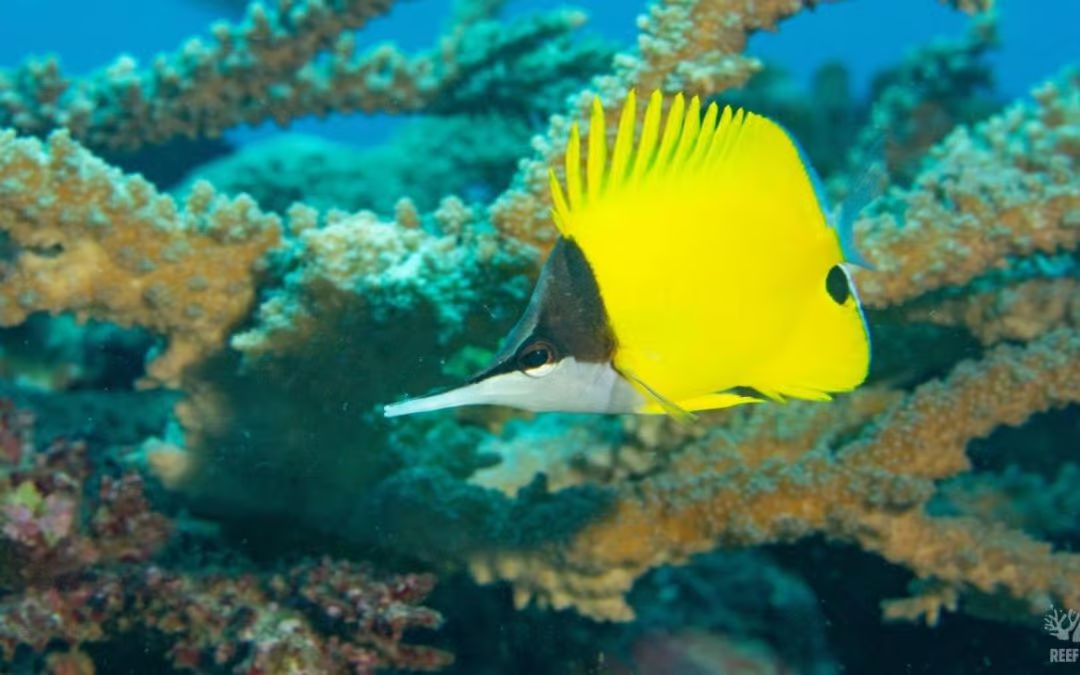
Here’s what we’ve observed over years of taking visitors to Fitzroy Island and then out to the outer reef, up to the Daintree, and across the Tablelands. Guests who start on the island snorkel differently. They notice individual coral species, not just “the reef.” They spot fish behaviour, not just fish. They understand that the fringing reef at Nudey Beach connects to the outer reef by currents, by species migration, by water temperature — the reef becomes a living continuation of what they’ve already experienced, not a separate attraction.
The same thing happens in the Daintree. Having walked through Fitzroy’s rainforest — having touched buttress roots, watched nutrient recycling in action, learned to listen for specific bird calls — the Daintree becomes a deeper, richer experience. They’re already fluent in the language of the forest.
This is what we mean by “come here first.” Fitzroy Island doesn’t compete with the Great Barrier Reef or the Daintree — it amplifies them. Making Fitzroy Island your first stop is the difference between seeing Tropical North Queensland and truly experiencing it.
What to expect on your Fitzroy Island day
The Sunlover ferry departs from Cairns and takes about 45 minutes. Upon arrival, you’ll walk off the jetty and immediately into the island’s natural environment. The Nudey Beach Track begins a short walk from the jetty and takes approximately 45 minutes one way, depending on how long you stop to explore.
- Track grade: Moderate. Well-maintained, mostly paved, but includes granite boulder steps and uneven surfaces. Slippery when wet.
- Footwear: Closed-toe walking shoes with grip are essential. Thongs, sandals and fashion trainers are not suitable for this track.
- Rain: Don’t let rain deter you. A light rain jacket is useful, but expect to get wet — and enjoy it. Keep valuables in a waterproof bag.
- Beach: Nudey Beach is made of coral fragments, not traditional sand. It’s stunning but rough on bare feet — reef shoes or aqua shoes are recommended.
- Wildlife: You may encounter Yellow-Spotted Monitors (goanna), Major Skinks, Bush Stone-Curlews, Sulphur-Crested Cockatoos and Orange-Footed Scrub Fowl. These are wild animals in a National Park — observe from a respectful distance.
- Snorkelling: The fringing reef at Nudey Beach offers excellent snorkelling directly from shore. Bring or hire snorkel gear.
Come here first
Tropical North Queensland is one of the most extraordinary natural regions on Earth. 2 World Heritage areas — the Great Barrier Reef and the Wet Tropics — meet here and nowhere else. The experiences available are genuinely world-class. But they’re better when you’re ready for them.
Fitzroy Island is where you get ready — where your senses wake up, your pace slows down, and you start to see the connections between everything: forest and reef, rain and growth, ancient stone and living ecosystem. It’s not the destination. It’s the first stop that makes every other stop matter more.
Come here first. Everything after will thank you.
Frequently asked questions
How hard is the Nudey Beach Track on Fitzroy Island?
How long is the ferry to Fitzroy Island?
Is Nudey Beach sandy?
Is Fitzroy Island worth visiting in the rain?
Can you snorkel at Fitzroy Island?
Ready to start your Tropical North Queensland journey the right way?
Book your Fitzroy Island day with Sunlover Reef Cruises.