Caring for the Reef
Small, bright, usually in pairs, and almost always eating. Butterflyfish are the reef fish scientists count when they want to know how the coral is doing, and the reason is in their mouths.
Most people notice butterflyfish on their first snorkel without knowing what they are looking at: a flat, hand-sized fish in yellow, white and black, often 2 together, nosing at the coral and moving on. They are among the most photographed animals on the Great Barrier Reef. They are also one of the most useful, because a butterflyfish that eats only coral cannot live on a reef that has lost it.
This post is about why that matters: what butterflyfish are, why their mouths look the way they do, why reef scientists treat them as an indicator species, and what you can learn by counting them on your own reef day.
Quick answer: why are butterflyfish an indicator species?
- There are about 129 species of butterflyfish worldwide, and most of them live on coral reefs. Dozens are found on the Great Barrier Reef.
- Many eat nothing but coral polyps, picked off one at a time with a small, forward-pointing mouth that has evolved to suit the shape of coral each species feeds on.
- Because they depend on living coral, their numbers and variety respond quickly to coral loss. Reef monitoring programs count coral-dependent fish for this reason.
- A reef with many kinds of coral usually carries many kinds of butterflyfish. Variety is the signal, not just numbers.
- They do no harm to the reef. They are part of a healthy one.
What is a butterflyfish?
Butterflyfish belong to the family Chaetodontidae, about 129 species in 12 genera, found on tropical reefs around the world. Most are between 12 and 20 cm long, flattened side to side, with a single dorsal fin running most of the length of the back. The name comes from the colours: yellow is the family uniform, broken up by black bars, stripes, spots and the dark line through the eye that most species carry.
That eye bar is not decoration. Many butterflyfish also carry a false eye-spot near the tail, so a predator sees a fish that appears to be facing the other way. The real eye is hidden in the stripe.
Most coral-feeding butterflyfish live in pairs that stay together for years and defend a patch of reef. That is why you so often see 2 of them, and it is one of the things that makes them easy to survey: a pair on a patch of coral is a stable unit you can count again next month.
Why do butterflyfish have those mouths?
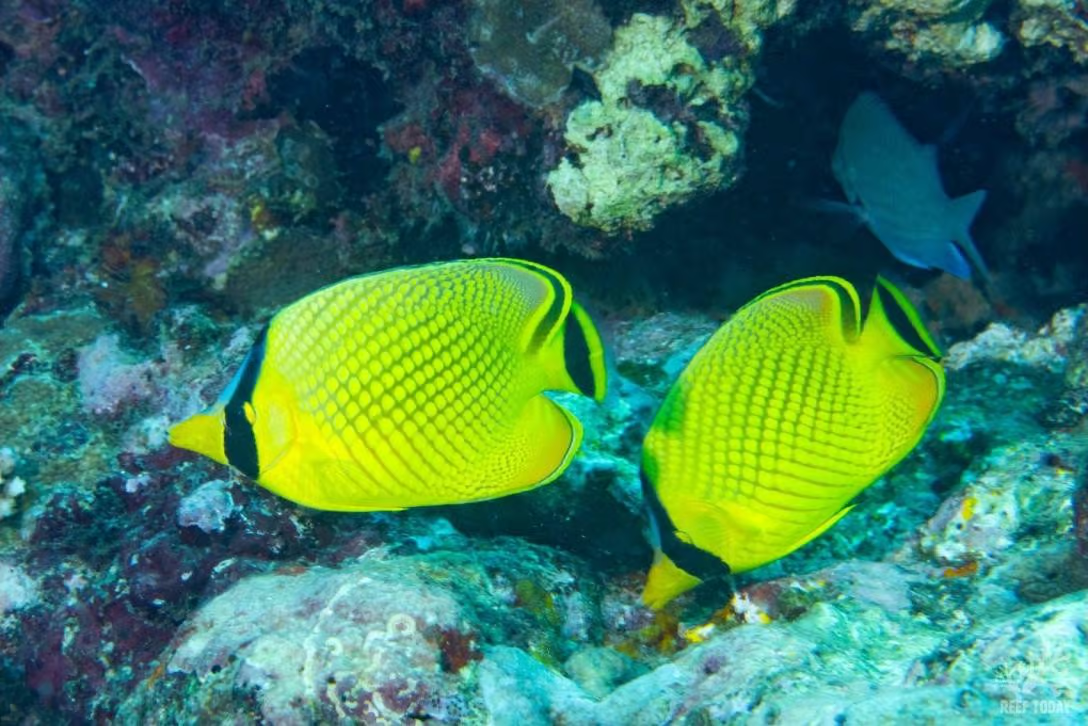
Look closely at a butterflyfish and the mouth is tiny: a small, pointed snout at the end of a tapering face, with rows of fine, bristle-like teeth. The family name, Chaetodontidae, means bristle-tooth.
That mouth is a precision tool. A coral colony is made of thousands of individual polyps, each a soft animal sitting in a limestone cup. A butterflyfish does not bite the coral the way a parrotfish does. It picks: polyp by polyp, tentacle by tentacle, nipping the soft tissue and leaving the skeleton where it is. On a healthy colony the polyps retract and regrow, and the fish moves on.
What makes the family interesting is that the mouth is not one design. It varies from species to species, and the variation lines up with what each one eats.
Short, blunt snouts suit species that graze the flat surfaces of plate and boulder corals, where the polyps are exposed.
Medium snouts suit the species that work the branching corals, reaching between the arms of a staghorn thicket to the polyps inside.
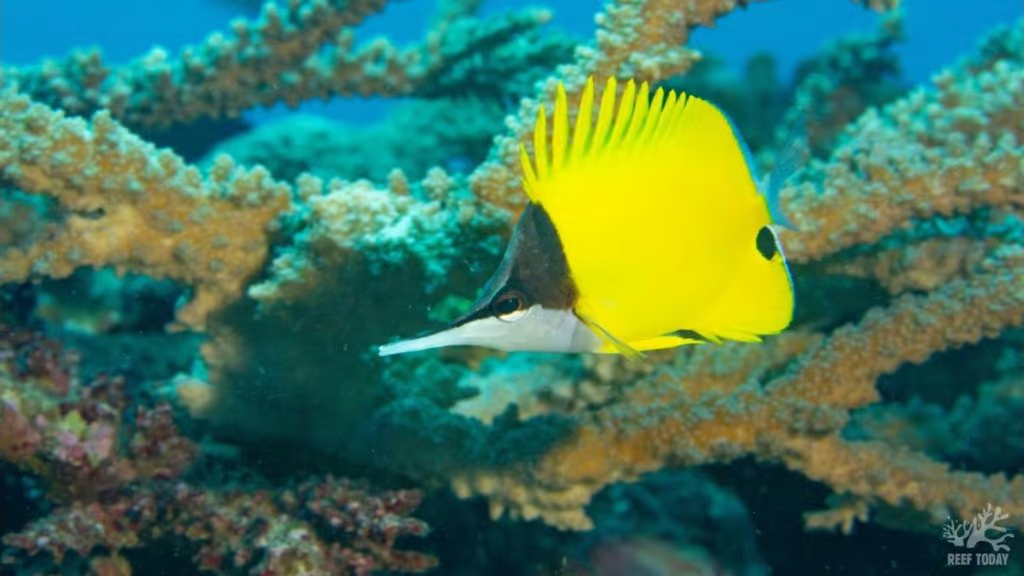
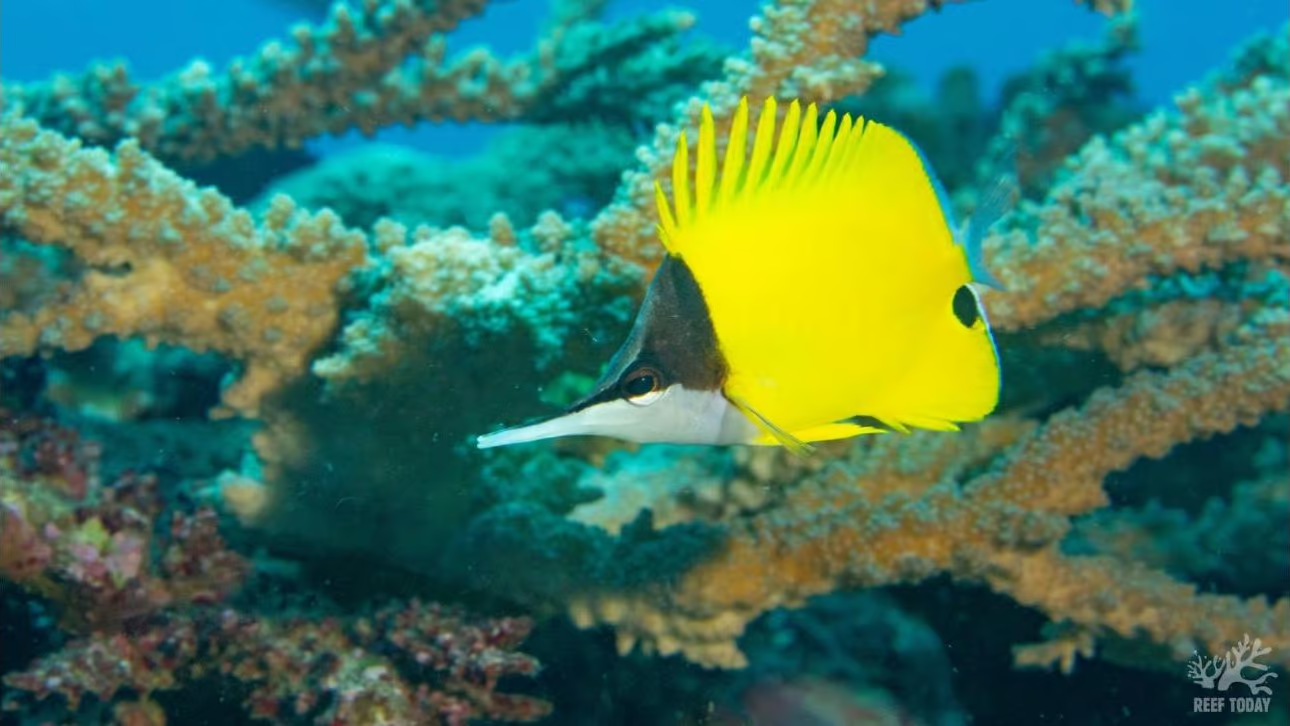
Long, tweezer-like snouts, most obviously on the longnose butterflyfish, reach into crevices, holes and the gaps between branches that no other fish can get into, taking polyps, small worms and crustaceans that are otherwise out of reach.
Scientists sort butterflyfish by how much coral is in the diet. The obligate corallivores eat almost nothing else, and some of those specialise further, on a single type of coral such as Acropora. The facultative corallivores eat coral when it is there and other things when it is not. A smaller group feeds on plankton in the water column and barely touches coral at all.
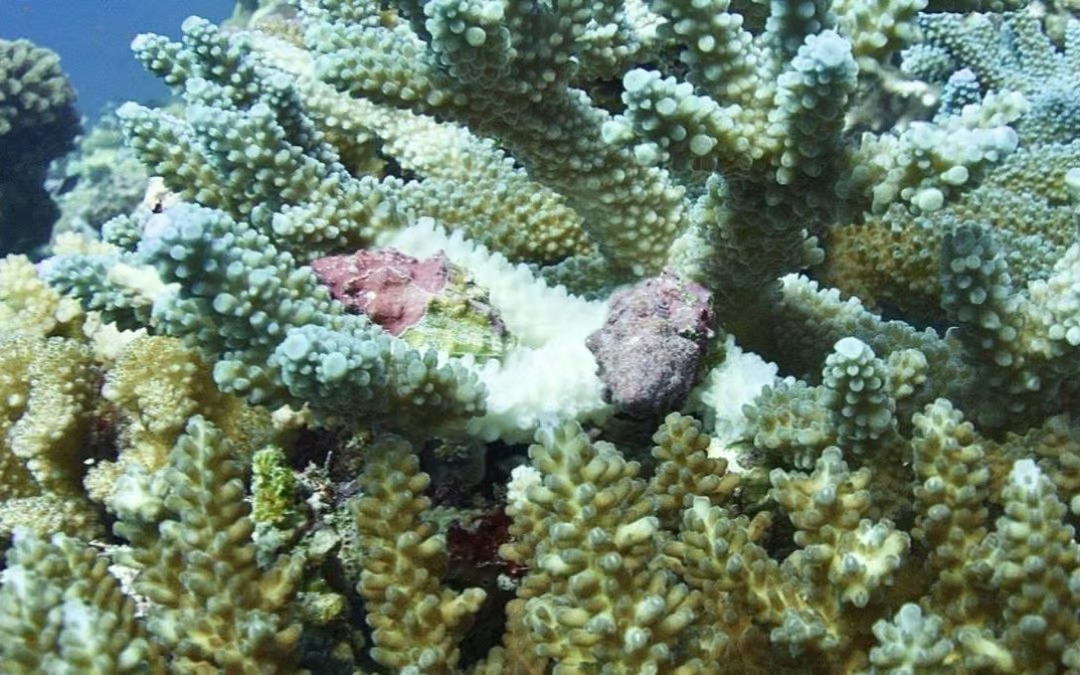
The practical result is that a reef with many kinds of coral, in many shapes, can support many kinds of butterflyfish, each with a mouth that fits one part of it. Take away the branching corals and the branching-coral specialists go first. Take away the plate corals and a different set disappears. The family as a whole reads the reef in detail.
Why are butterflyfish an indicator species?
An indicator species is one whose presence, absence or abundance tells you about the condition of a habitat without having to measure the habitat directly. Butterflyfish are the textbook reef example, for 4 reasons.
They depend on living coral. An obligate coral-feeder cannot switch to algae when the coral dies. It loses condition, stops breeding, and either moves or disappears. Research at James Cook University, where Professor Morgan Pratchett’s group has studied the effects of coral loss on reef fishes with a particular focus on Chaetodon butterflyfishes, has documented these sub-lethal effects: the fish are still there for a while after the coral goes, but thinner and not reproducing, before numbers fall.
They respond fast. Coral cover is measured once or twice a year by divers towing along the reef. Butterflyfish react to a bleaching event or a crown-of-thorns outbreak within months, which makes them an early warning rather than a post-mortem.
They are easy to count. Bright, slow, daytime, territorial and in pairs. A trained observer can swim a set distance and record every butterflyfish seen, by species, with a high degree of confidence. Compare that with trying to count a shoal of fusiliers.
Variety carries extra information. Because different species need different corals, the mix of butterflyfish on a reef says something about the mix of corals. A reef that still has its longnose and its Acropora specialists has kept its structural variety. A reef where only the generalists remain has lost it, even if total fish numbers look fine.
This is why the Australian Institute of Marine Science Long-Term Monitoring Program, which has surveyed the Great Barrier Reef since 1983, records not just coral cover and crown-of-thorns starfish but reef fish abundance and diversity, including fish closely associated with corals. It is also why the Reef Authority’s Eye on the Reef program trains tourism crew, rangers and visitors to record reef health and key species on structured surveys. Butterflyfish are among the easiest of those species for a trained snorkeller to identify and count.
Worth knowing. A reef can bleach and recover. Whether it has recovered is partly a fish question. When the butterflyfish pairs come back to a patch of coral, the coral is alive enough to feed them.
4 butterflyfish to learn before your reef day
There are far more than 4 on the Great Barrier Reef, but these are distinctive, photogenic, and each tells a slightly different story about how the family makes a living. Ask our marine biologists which ones are around the pontoon on the day.
Longnose butterflyfish
Forcipiger
Bright yellow body, dark upper head, white lower face, and the longest snout in the family. Works crevices and the inside of branching corals for polyps and small invertebrates. Usually alone or in pairs along reef walls and bommies.
Latticed butterflyfish
Chaetodon rafflesii
Yellow with a fine dark net pattern across the body and a black eye bar. A coral and invertebrate feeder that forages over the reef surface in pairs. One of the easier species to pick at a glance because of the lattice.
Redfin butterflyfish
Chaetodon lunulatus
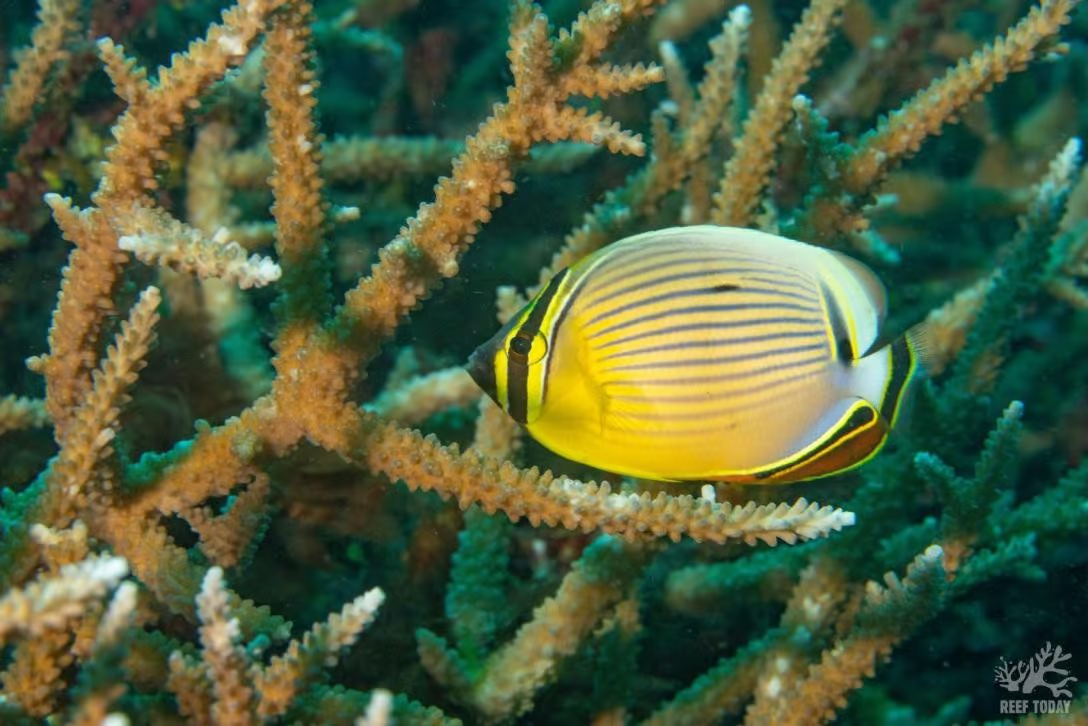
Pale yellow with fine dark stripes, a black eye bar and an orange-red edge to the rear fins. A coral specialist that lives in and around branching coral, which is where you will find it. When the staghorn goes, so does this fish.
Rainford’s butterflyfish
Chaetodon rainfordi
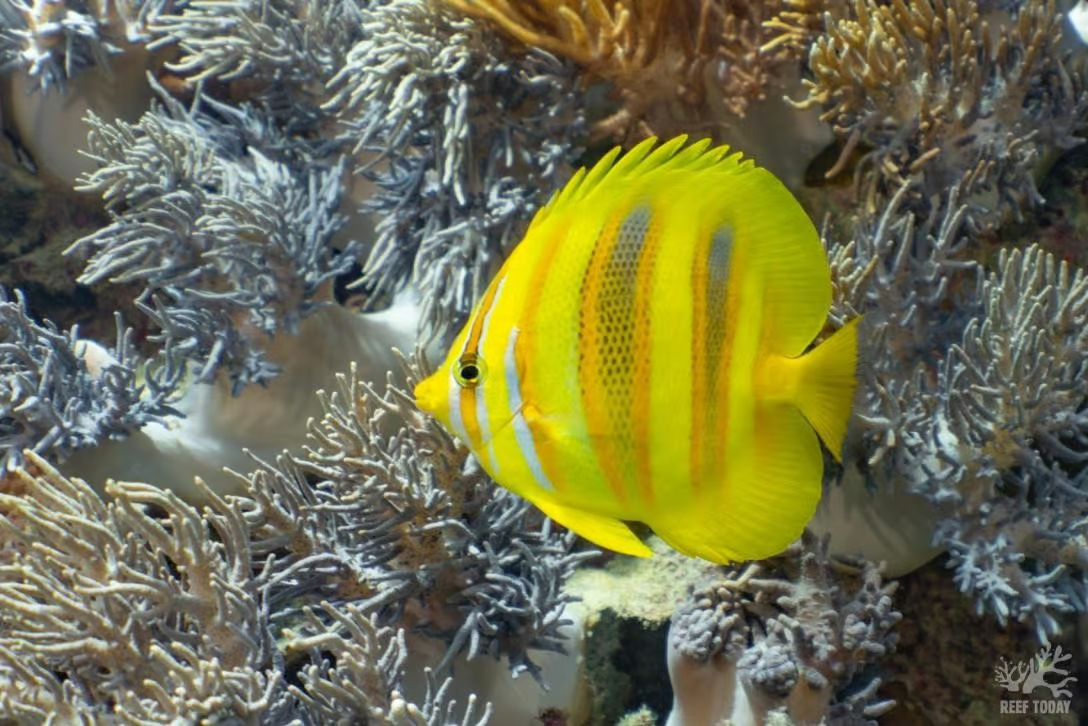
Yellow with soft orange and grey vertical bands. Found almost only on the Great Barrier Reef and nearby reefs, and dependent on living coral. A good one to see because its range is so small: it is a local.
How to tell what a butterflyfish is doing
| What you see | What it means |
|---|---|
| A pair moving slowly over a coral head, nipping at it | Feeding on polyps. Normal, and harmless to the colony. |
| Several different species in a small area | A reef with varied coral. The best sign of all. |
| Only one or two species, mostly the same kind | Less variety in the coral, or recovery still under way. |
| Thin fish with a pinched belly on a patch of white coral | Coral loss. The fish is still holding its territory but not finding food. |
| A single butterflyfish high in the water, not feeding on the reef | Probably a plankton-feeding species. Different job, different diet. |
Do butterflyfish damage coral?
No. A butterflyfish takes individual polyps from a colony of thousands, and the colony regrows them. The effect on a healthy reef is in the noise. Compare the 2 animals that do cause measurable coral loss on the Great Barrier Reef, the crown-of-thorns starfish and the Drupella snail, which kill whole colonies by digesting the tissue off the skeleton. We have written about those separately in What eats coral?
If anything, butterflyfish are evidence the system is working: predators that take a little, from a food source that renews, on a reef with enough variety to feed several different mouths.
Are butterflyfish used in coral husbandry?
Not to help it, and this is where the family’s reputation turns around. In any setting where people are trying to grow coral, butterflyfish are on the wrong side of the ledger.
Coral nurseries and restoration. Corals grown on frames or outplanted onto a reef are small, and a small coral cannot afford to lose polyps. Fish predation, from butterflyfish among others, is one of the known causes of damage and loss on young outplanted corals, and restoration teams check for bite marks as part of monitoring their sites. It is one of the reasons nursery corals are often grown mid-water, away from the reef, until they are large enough to cope.
Aquariums. Most butterflyfish are classed as not reef-safe in the home aquarium trade for the same reason: put a coral-feeder in a tank of coral and it will do what it does. The one husbandry job the family is known for is the opposite of growing coral. A few species with longer snouts, the copperband butterflyfish in particular, are used by aquarists to eat Aiptasia, a pest anemone that spreads through reef tanks. The same tweezer mouth that picks polyps off a wild reef picks anemones off tank rock.
On a wild reef, none of this is a problem. The reef is not a nursery, the corals are mature, and the butterflyfish have been part of the system for as long as there have been corals to feed on.
What this means on your reef day
Butterflyfish are the easiest reef-health reading you can take with your own mask. Here is how to use them.
Count the kinds, not the fish
Try to spot 3 or 4 different species in a single snorkel. Each one you add is a different mouth, and a different kind of coral still doing its job.
Watch what they are doing
Feeding pairs on live coral is the picture you want. A pair holding ground over bleached or dead coral is a different story, and worth telling the crew about.
Ask
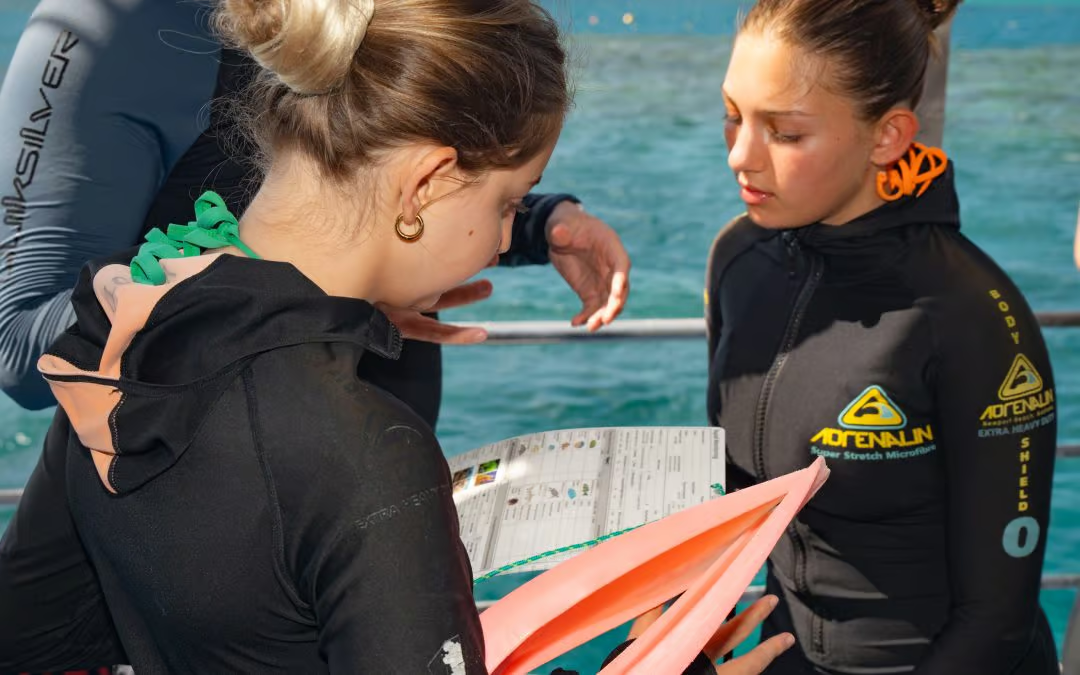
Our marine biologists are on board every reef day and run the pontoon reef presentation and the optional guided snorkel. Ask them to point out the butterflyfish around the pontoon, and what the mix tells them about the site.
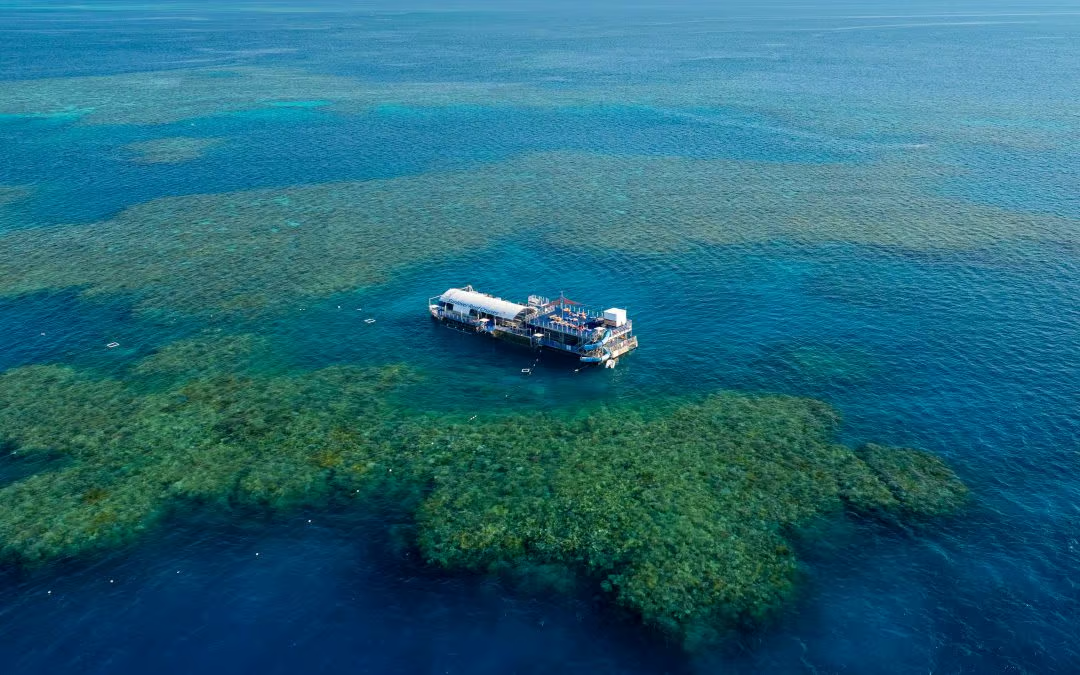
Share what you see at Moore Reef. We keep a year-round record of every species seen around the Sunlover pontoon, and anyone can add to it. Join our Moore Reef project on iNaturalist (it’s free), then upload your photos from your reef day. Every sighting helps us and reef scientists understand who lives on our site, how it changes through the seasons and over the years, and how best to look after it.
Common questions
Why are butterflyfish called an indicator species?
Because many of them eat only living coral. When coral dies, obligate coral-feeding butterflyfish lose condition and disappear, so their numbers and variety track reef health faster and more visibly than most other measures.
How many species of butterflyfish are there?
About 129 species in 12 genera worldwide, most of them on tropical coral reefs. Dozens of species are found on the Great Barrier Reef.
What do butterflyfish eat?
It depends on the species. Obligate corallivores eat almost nothing but coral polyps. Facultative corallivores eat coral plus small invertebrates, worms and algae. A few species feed on plankton in the water column.
Why do butterflyfish have small pointed mouths?
To pick individual coral polyps and small animals out of a structured surface. Snout length varies by species, from short snouts for grazing flat corals to the long tweezer snout of the longnose butterflyfish, which reaches into crevices other fish cannot.
Do butterflyfish harm the reef?
No. They take individual polyps from colonies of thousands, and the colony regrows them. The animals that cause real coral loss on the Great Barrier Reef are crown-of-thorns starfish and Drupella snails.
Why do butterflyfish swim in pairs?
Most coral-feeding species form long-term pairs that hold and defend a feeding territory together. Pairs can stay together for years. It also makes them easy to count on surveys.
Who monitors butterflyfish on the Great Barrier Reef?
The Australian Institute of Marine Science Long-Term Monitoring Program has surveyed reef fish, including coral-associated species, alongside coral cover since 1983. The Reef Authority’s Eye on the Reef program trains tourism crew, rangers and visitors to record reef health and key species. University groups, including Professor Morgan Pratchett’s at James Cook University, study how coral loss affects butterflyfish directly.
Are butterflyfish used to grow coral?
No. In coral nurseries and restoration work they are a predation risk on small corals, and most are classed as not reef-safe in aquariums. The one husbandry use is pest control: some long-snouted species, such as the copperband butterflyfish, eat Aiptasia pest anemones in reef tanks.
Which butterflyfish is found only on the Great Barrier Reef?
Rainford’s butterflyfish, Chaetodon rainfordi, is found almost only on the Great Barrier Reef and nearby reefs. It is yellow with soft orange and grey bands and depends on living coral.
Can I see butterflyfish snorkelling at Moore Reef?
Yes. Butterflyfish are common around the coral gardens at Moore Reef and are easy to spot from the surface. Sunlover’s marine biologists can point out the different species on the optional guided snorkel tour, or from the pontoon.
The takeaway
A butterflyfish is a small fish with a very specific mouth, and that mouth ties it to living coral. Count the kinds you see on a reef and you have a rough reading of how varied and how alive the coral is, taken with nothing more than a mask. Scientists use the same reading with more rigour, and have for decades.
They are not a threat to the reef. They are one of the better signs that it is working.
Written by the team at Sunlover Reef Cruises, who run daily trips to Moore Reef on the outer Great Barrier Reef, with marine biologists on board every day. Reef monitoring and stewardship is delivered through the Tourism Reef Protection Initiative.
Sources: AIMS Long-Term Monitoring Program; Reef Authority, Eye on the Reef; Professor Morgan Pratchett, James Cook University; Reef Authority, Tourism Reef Protection Initiative.