Reef Wildlife
Seeing a shark glide past is one of the most memorable moments of a reef day. Here is what researchers know about the sharks of the Great Barrier Reef, why they matter, and how to behave if you meet one while snorkelling or diving.
The short version
- The sharks most closely tied to coral reefs are reef sharks, such as blacktip reef, whitetip reef and grey reef sharks.
- Most reef sharks are mid-level predators, not top predators, and many stay faithful to the same reef for long periods.
- Reef sharks are in trouble worldwide: a global survey found no sharks at all on almost 20% of reefs surveyed. Protected areas make a real difference.
- Never chase, touch, ride or feed a shark. Stay calm, give it space and let it pass.
Meet the reef sharks
Researchers from the Australian Institute of Marine Science (AIMS) and James Cook University focus on 3 of the best-known reef sharks of the Indo-Pacific: the grey reef shark, the blacktip reef shark and the whitetip reef shark. They live their lives on and around coral reefs, rather than passing through like ocean-going species.
- Blacktip reef shark: black tips on its fins, especially the first dorsal fin, which often pokes above the water. Look for it: shallow water over reef flats and lagoons.
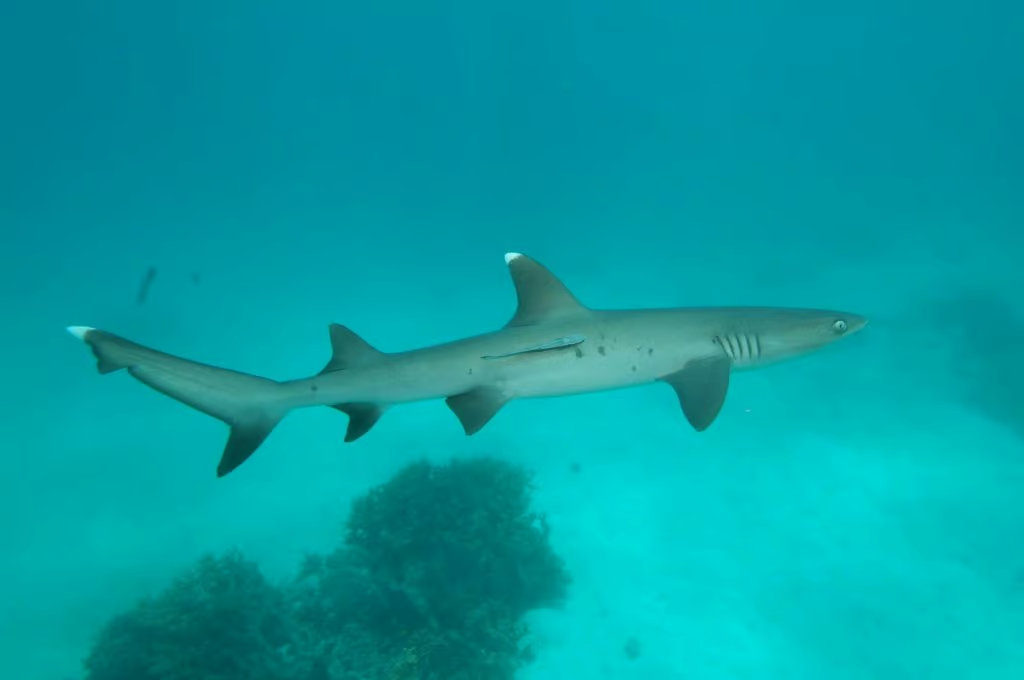
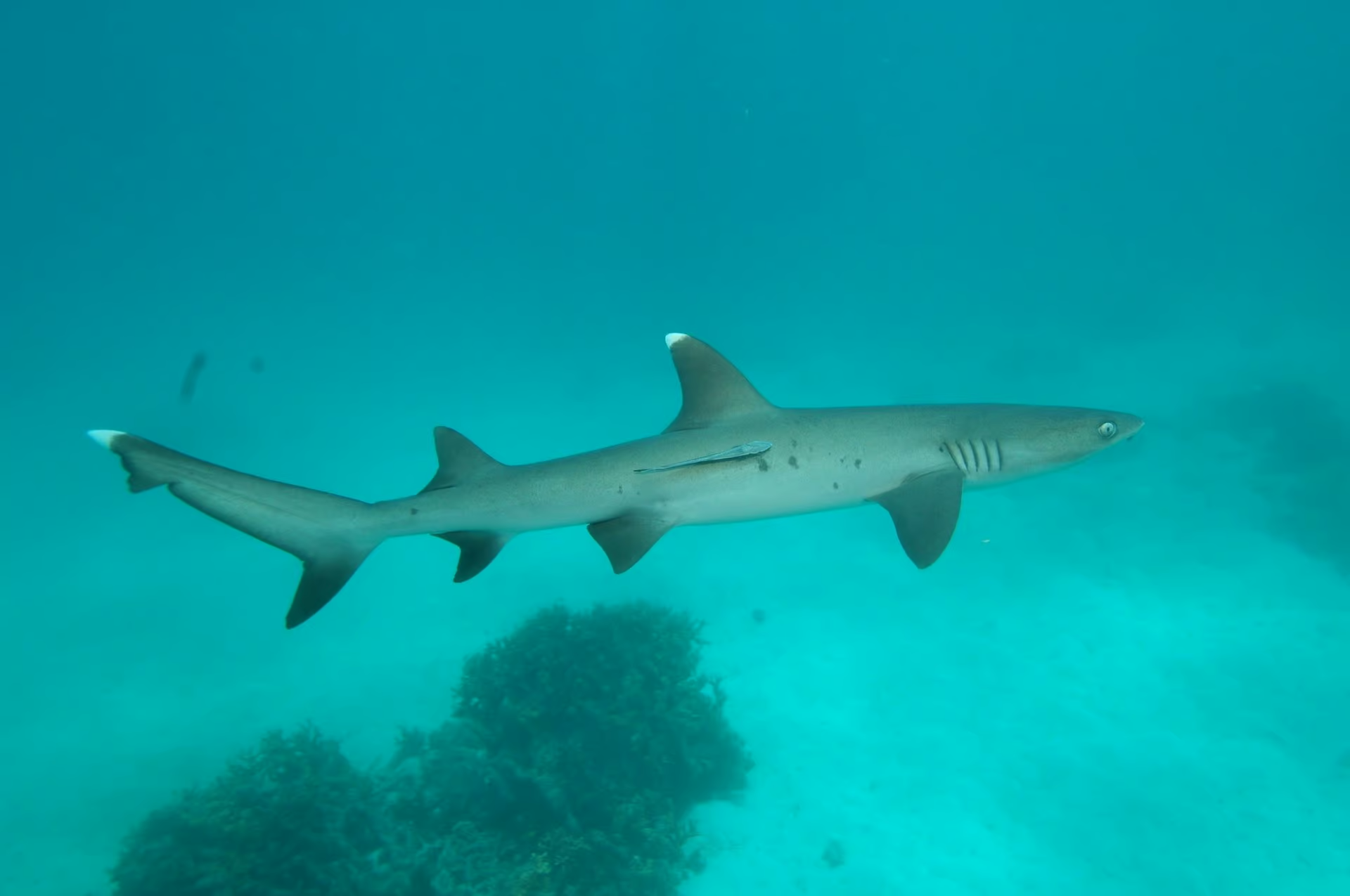
- Whitetip reef shark: slender body with white tips on its first dorsal fin and tail. Look for it: resting on the bottom, in caves or under ledges during the day.
- Grey reef shark: grey body with a dark edge along the back of its tail fin. Look for it: deeper reef edges, slopes and channels.
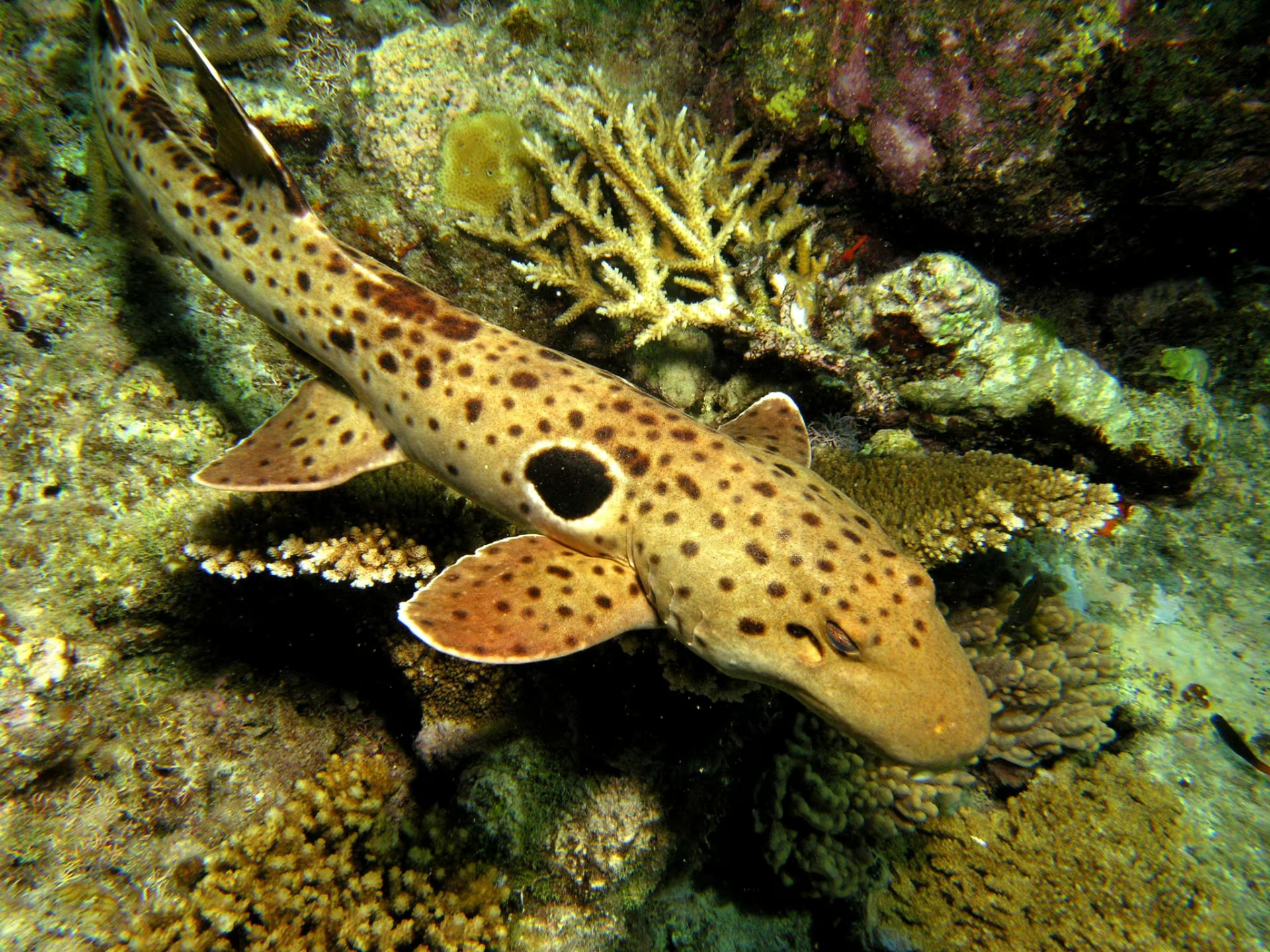
- Zebra (leopard) shark: spotty adults with long tail fins and ridges along the body. Look for it: lying on sand or rubble near the reef.
- Tawny nurse shark: brown body, small eyes and a broad, flattened head, with 2 dorsal fins set well back. Look for it: resting in caves and under ledges.
The Australian Museum describes the zebra shark, also called the leopard shark, as harmless. It grows to at least 2.4 m and feeds mainly on molluscs on the sea floor. The tawny nurse shark can grow to about 3.2 m and lives in Queensland, Northern Territory and Western Australian waters, down to about 70 m.
Homebodies of the reef
One of the most surprising things researchers have learned is how loyal reef sharks are to place. Tracking studies summarised by Heupel and colleagues (AIMS and James Cook University) show that grey reef, blacktip reef and whitetip reef sharks often stay on the same reef, or a small group of reefs, for long periods. Their populations are still connected over long distances, though: grey reef sharks on the Great Barrier Reef share genes across about 1,200 km.
That loyalty matters for conservation. A shark that lives on one reef can be protected by a well-placed marine park zone. It can also disappear quickly from a reef where it is fished.
Why sharks matter to the reef
Sharks are often called top predators, but most reef sharks are actually mesopredators: mid-level hunters that eat smaller fish and invertebrates, and are themselves eaten by larger sharks. They are part of a complex food web, and scientists are still working out exactly how their loss changes a reef.
What is clear is that reef sharks are under pressure. The Global FinPrint project, which included researchers from James Cook University, used more than 15,000 baited underwater cameras on 371 reefs in 58 countries. It found no sharks at all on almost 20% of the reefs surveyed, with fishing the main driver. The good news: shark sanctuaries, closed areas, catch limits and gear restrictions were all linked to healthier shark numbers.
Good to know: The Great Barrier Reef Marine Park is zoned. Fishing is banned in Marine National Park (green) zones, which helps protect resident sharks and the animals they share the reef with. Check the zones on the Reef Authority website.
Sharks and the rules in Queensland
Queensland fishing rules protect several sharks and rays completely. Grey nurse sharks, white sharks, hammerhead sharks, sawfish and manta rays are all no take. Other sharks, including grey reef and whitetip reef sharks, are covered by catch limits, and sharks cannot be filleted or have their fins removed at sea.
How to behave around sharks
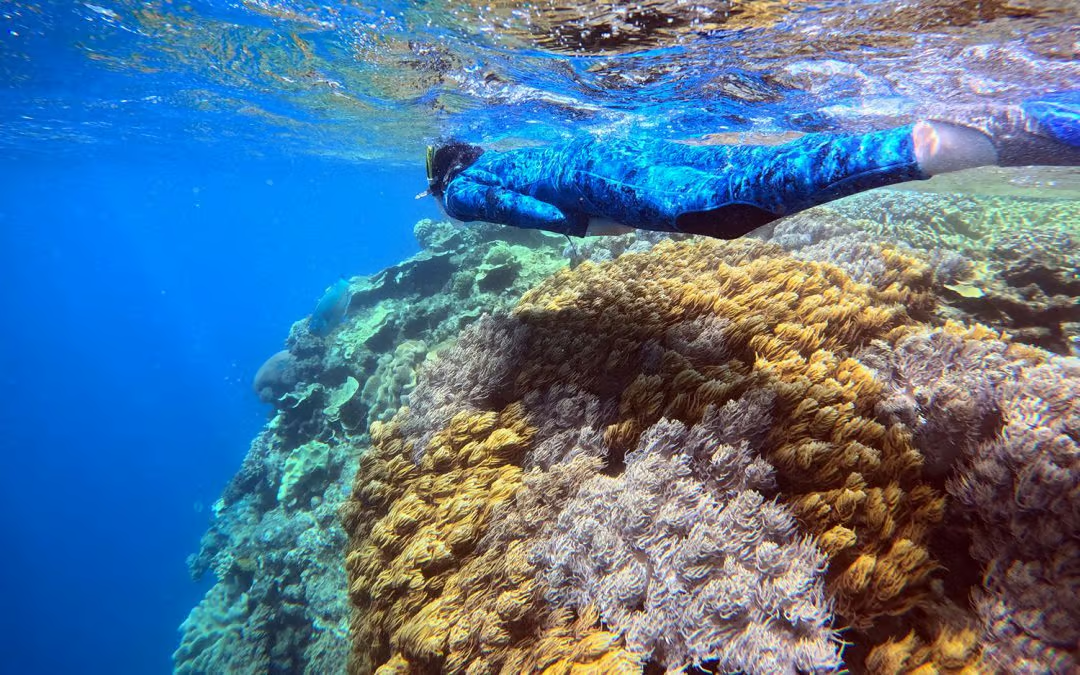
The Reef Authority asks snorkellers and divers to be mindful of all marine life: do not touch, prod or chase animals, and avoid making loud noises. Around sharks, that means:
- Stay calm. Keep still or swim slowly, and simply watch the shark pass.
- Never chase, corner or touch a shark, and never try to hold or ride one.
- Never feed a shark or any other fish.
- Leave resting sharks alone. Whitetip reef sharks and tawny nurse sharks often rest under ledges and in caves. Do not reach in or block their way out.
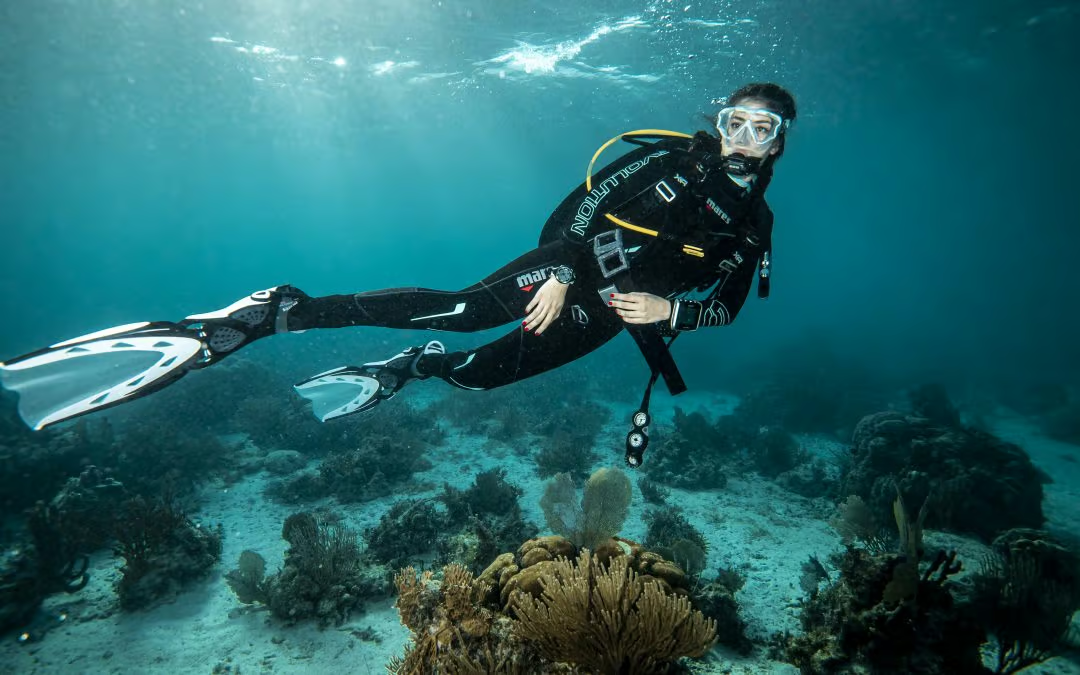
- Divers: control your buoyancy, stay off the bottom and give the shark a clear path.
- Tell our crew. Our marine biologists love hearing what you saw. If you find a sick or injured marine animal, you can report it on 1300 130 372.
See the reef with marine biologists on board
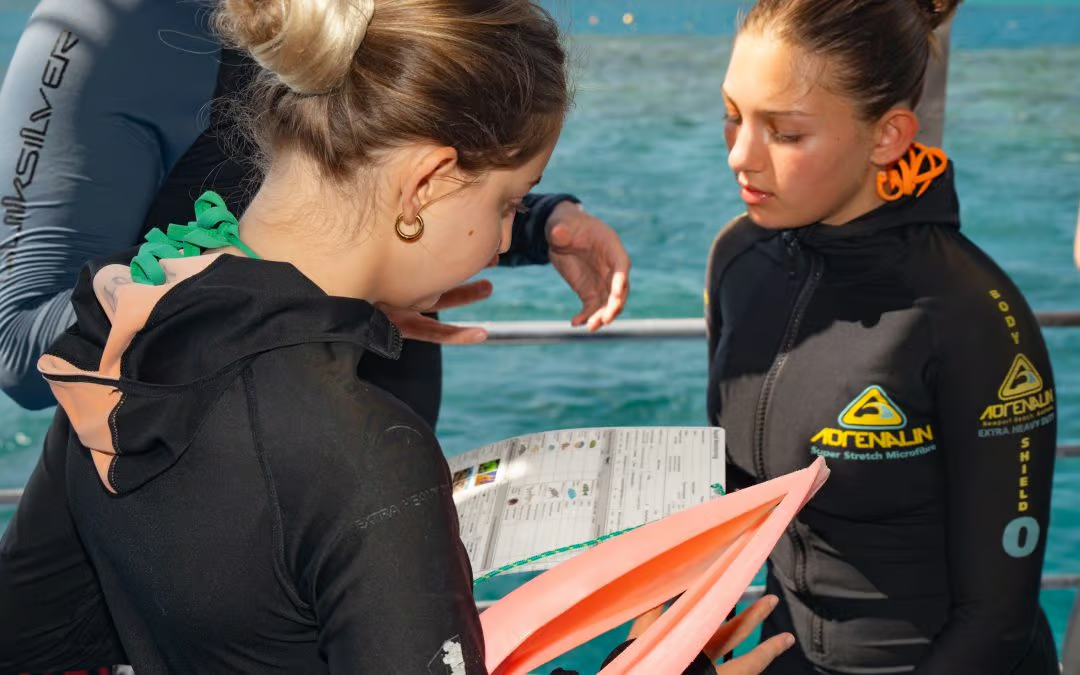
Every Moore Reef day comes with marine biologists who can tell you about the animals you meet, from reef fish to turtles.
Shark FAQs
What sharks live on the Great Barrier Reef?
The sharks most closely tied to coral reefs are reef sharks such as the blacktip reef shark, whitetip reef shark and grey reef shark. Bottom-dwelling species such as the zebra shark (also called the leopard shark) and the tawny nurse shark also live on the reef.
Will I see a shark at Moore Reef?
Sometimes, but never guaranteed. Sharks are wild animals that come and go. If you do see one, enjoy the moment from a respectful distance and tell our marine biologists what you saw.
Are reef sharks dangerous to snorkellers?
Most reef sharks are wary of people and tend to keep their distance. Like any wild animal, they deserve space and respect. Never chase, corner, touch or feed a shark, and follow the advice of our crew in the water.
What should I do if I see a shark while snorkelling?
Stay calm, keep still or swim slowly, and watch it pass. Do not chase it for a photo or try to touch it. If it is resting on the bottom or under a ledge, leave it in peace.
Are sharks protected on the Great Barrier Reef?
Fishing is banned in Marine National Park (green) zones of the Great Barrier Reef Marine Park. In Queensland, several species are no take, including grey nurse sharks, white sharks and hammerheads, and strict limits and rules apply to other sharks.
Sources: Heupel MR, Papastamatiou YP, Espinoza M, Green ME, Simpfendorfer CA (2019) Reef shark science: key questions and future directions. Frontiers in Marine Science 6:12 (Australian Institute of Marine Science, James Cook University); MacNeil MA et al. (2020) Global status and conservation potential of reef sharks. Nature 583:801-806 (Global FinPrint, including James Cook University); Australian Museum, Zebra Shark; Australian Museum, Tawny Shark; Queensland Government, Tidal water size and possession limits; Reef Authority, Cairns zoning map and responsible reef practices; Reef Authority, Know your zones.
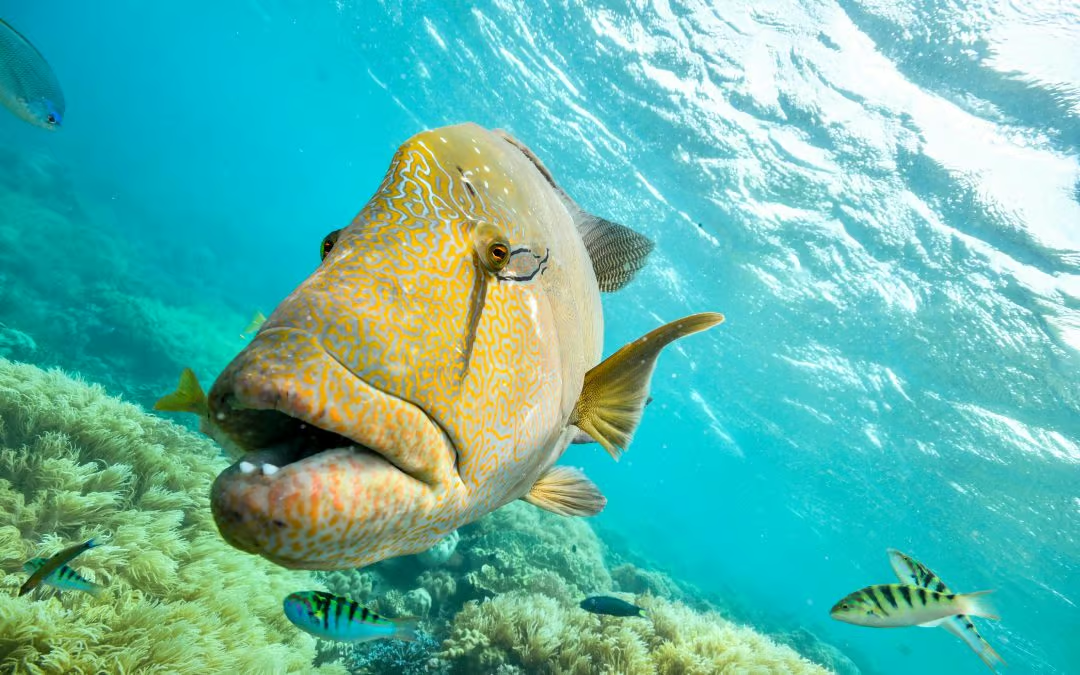
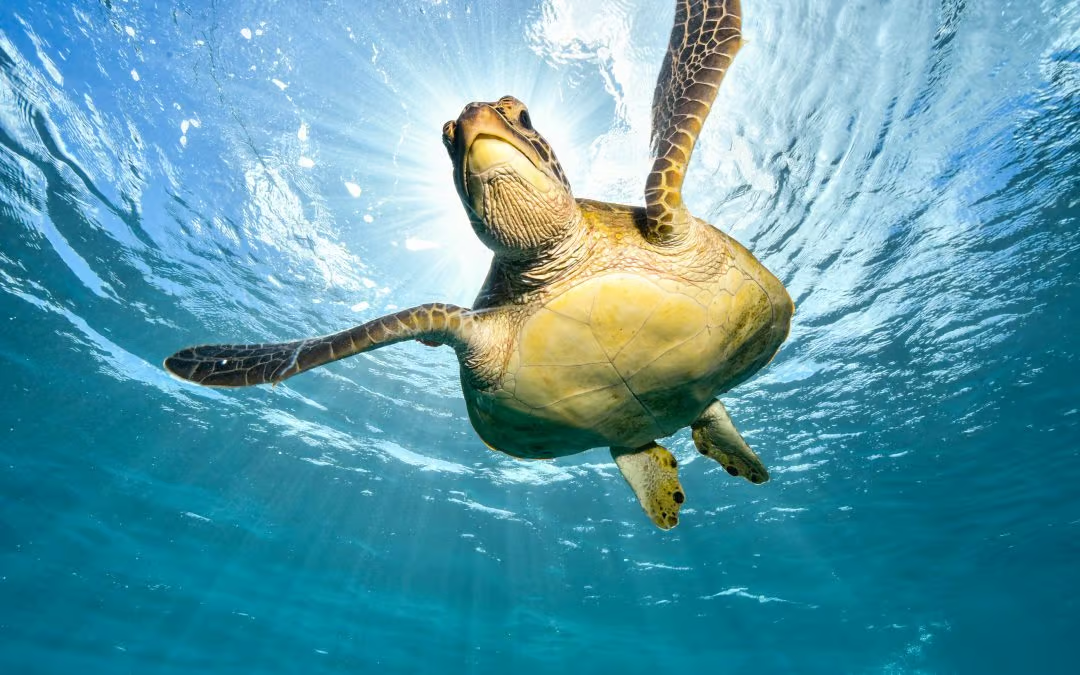
Keep exploring: meet the turtles of Moore Reef, the humphead Maori wrasse or find out how snorkelling works at Moore Reef.
Written by the team at Sunlover Reef Cruises, who run daily trips to Moore Reef on the outer Great Barrier Reef, with marine biologists on board every day.