On Thursday 20 November 2025, something magical happened on the Great Barrier Reef. Dennis, a juvenile hawksbill sea turtle who had spent several months in rehabilitation, was released back into the wild at Moore Reef. His journey — from rescue to recovery and finally to release — was made possible through a collaboration between Sunlover Reef Cruises, the Cairns Turtle Rehabilitation Centre, and James Cook University’s EduQuarium facility.
Quick answer: who was Dennis the sea turtle, and why does his story matter?
Dennis was a juvenile hawksbill turtle — a critically endangered species — rescued, rehabilitated and released back into the wild at Moore Reef in a collaboration between Sunlover Reef Cruises, the Cairns Turtle Rehabilitation Centre, and James Cook University’s EduQuarium.
Key takeaways
- Hawksbill turtles are listed as critically endangered, facing threats from poaching, habitat loss, plastic pollution and warming waters.
- Dennis was rescued dehydrated and underweight, and nursed back to health at JCU’s EduQuarium facility before release.
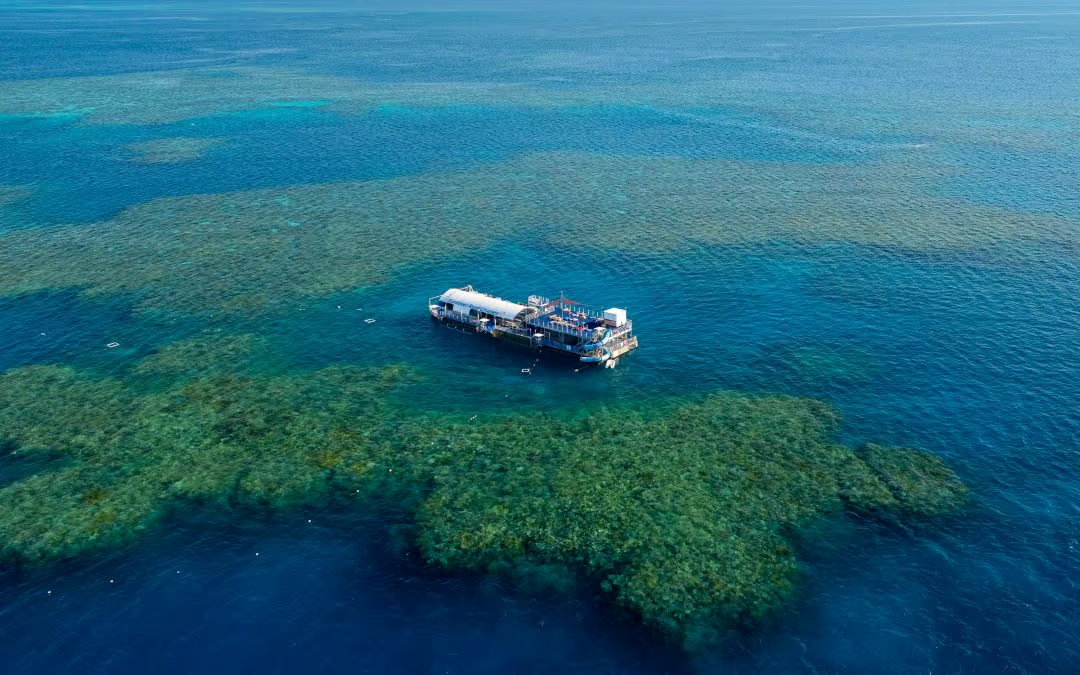
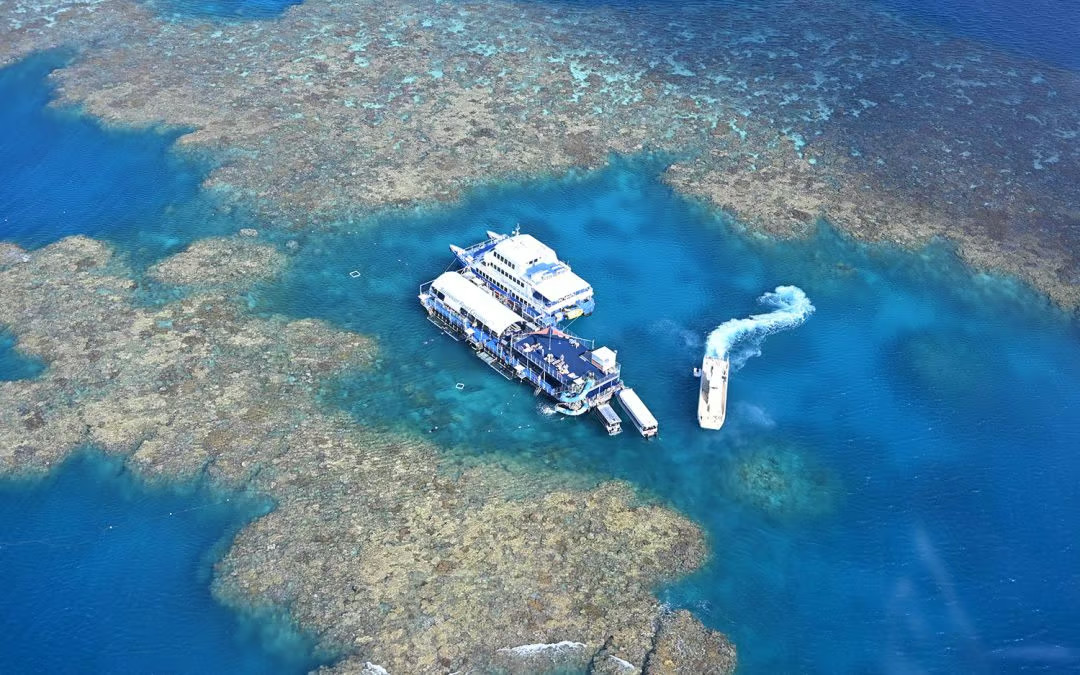
- Moore Reef was chosen for the release because of its safe lagoon environment, known turtle population, and accessibility via Sunlover’s pontoon.
- Guests aboard Sunlover’s tour that day witnessed the release firsthand, with an onboard marine biologist explaining Dennis’s story and how to help protect sea turtles.
Why Dennis matters
Dennis is no ordinary turtle. As a hawksbill, he belongs to a species listed as critically endangered under the IUCN Red List. Hawksbill turtles (Eretmochelys imbricata) are facing sharp population declines due to illegal poaching, habitat degradation, plastic pollution, and climate-related impacts on coral reef systems.
What makes their case even more alarming is the emergence of what’s known as a “zombie population” — a term scientists use to describe a species still seen in the wild but with such low breeding success that the population is effectively doomed without intervention. This is particularly true for hawksbills in some parts of the Indo-Pacific, where nesting numbers have declined by over 80% in the last century.
When Dennis was found, he was dehydrated, underweight, and in urgent need of care. Thanks to the team at the Turtle Rehabilitation Centre, he received the nutrition, rest and medical attention needed to bring him back to full health. His successful return to the reef is a small but meaningful win for the species.

The EduQuarium at JCU: where science meets compassion
Dennis spent his rehab time at the EduQuarium, James Cook University’s innovative education and marine science facility located on its Smithfield campus. Here, he became an ambassador not just for his species, but for the critically endangered status hawksbills hold more broadly. Once heavily hunted for tortoiseshell, hawksbills now face threats from plastic pollution, habitat loss, and warming waters. Each release, like Dennis’s, is a small but important step toward sustaining their future in the wild.
Why Moore Reef was ideal for Dennis’s release
Moore Reef is a Sunlover Reef Cruises exclusive location, selected not only for its beauty but also for its biodiversity and protection status. The reef features a safe lagoon environment and a known turtle population, offering Dennis an ideal environment to reintegrate into the wild. Its accessibility via Sunlover’s pontoon also meant the release could be witnessed and celebrated by guests, adding a layer of education and emotional connection to their reef experience.

A teachable moment for reef visitors
Guests aboard Sunlover’s Moore Reef tour that day witnessed something few ever get to see: the moment a turtle is returned home. The onboard marine biologist gave an informal talk about Dennis’s story, his species, and what everyone can do to help protect sea turtles and reef ecosystems. Cameras clicked, children watched in awe, and Dennis swam off into the blue.
This wasn’t just a day out on the reef — it was a real-world conservation moment. Sunlover Reef Cruises is proud to support the vital work of the Cairns Turtle Rehabilitation Centre and contribute to marine protection through education, responsible tourism, and hands-on initiatives like this.
What you can do
Whether you’re snorkelling at Moore Reef, choosing reef-safe sunscreen, or supporting organisations like the Cairns Turtle Rehabilitation Centre, your choices help sea turtles like Dennis. His story is a reminder that small actions make a big difference — above and below the surface.
Who was Dennis the sea turtle?
Why are hawksbill turtles endangered?
Why was Dennis released at Moore Reef?
How can I help protect sea turtles like Dennis?
See Moore Reef for yourself
Join Sunlover Reef Cruises on a journey to Moore Reef, home to coral gardens, sea turtles, and stories like Dennis’s.
Sources: Cairns Turtle Rehabilitation Centre.