Winter on the Great Barrier Reef: The Humpback Highway Is Open
Winter on the Great Barrier Reef is not grey, cold or sleepy. From Cairns, winter often means blue water, sunshine, lower humidity, fresh sea breezes and one of the most extraordinary wildlife movements on the planet: the annual migration of humpback whales along Australia’s east coast.
Known affectionately as the Humpback Highway, this migration sees humpback whales travel from Antarctic feeding grounds towards warmer Queensland waters, including the Great Barrier Reef World Heritage Area. For visitors heading to Moore Reef, Fitzroy Island or Sunlover’s Reef & Island in a Day tour, winter adds another layer of wonder to an already remarkable day on the water.
Sunlover Reef Cruises does not operate whale-watching tours, and sightings are never guaranteed. But during winter, the journey across the Coral Sea can come with the possibility of seeing migrating humpbacks moving through the same blue-water corridors that connect Cairns, the reef and the wider Queensland coast.
What is the Humpback Highway?
The Humpback Highway is the informal name for the migration route used by humpback whales as they travel along Australia’s coastline. On the east coast, humpbacks move from the cold, food-rich waters of Antarctica towards warmer subtropical and tropical waters where they mate, calve and rest before returning south.
For the Great Barrier Reef region, this migration is especially meaningful. The Reef Authority notes that humpback whales come from Antarctic waters to the Great Barrier Reef World Heritage Area from May to September to calve and build strength over winter before returning south.
That makes winter on the reef about more than good weather. It is also a season of movement, renewal and wild ocean moments.
Why do humpback whales migrate to warmer waters?
Humpback whales feed heavily in cold southern waters, where krill and other prey help them build the energy reserves needed for migration. When winter approaches, many travel north to warmer waters where they breed and give birth.
The warmer waters of Queensland are important because newborn calves have very little fat insulation when they are born. A warm-water environment can help calves conserve energy while they grow, nurse and prepare for the long journey south.
This is one of the reasons the Great Barrier Reef matters as more than a coral destination. It is also part of a broader marine nursery system used by protected species moving through the region each year.
When can whales be seen near the Great Barrier Reef?
Humpback whales are generally associated with Queensland waters from May to November, with northward migration commonly occurring from May to July and southward movement beginning later in winter and continuing into spring.
In the Great Barrier Reef World Heritage Area, the Reef Authority identifies May to September as the period when humpbacks come into the region to calve and build strength. Timing varies each year because whales respond to many factors, including water temperature, sea ice, prey availability, predation risk and conditions in their feeding grounds.
This means the Humpback Highway does not run like a train timetable. Some whales arrive earlier. Some arrive later. Some move offshore. Some travel closer to the coast. That unpredictability is part of what makes a sighting feel so special.
Can you see whales on a Sunlover Reef Cruises tour?
It is possible to see whales during winter while travelling to or from the reef, but sightings are never guaranteed. Sunlover’s tours are focused on Moore Reef, Fitzroy Island and reef experiences, not dedicated whale watching.
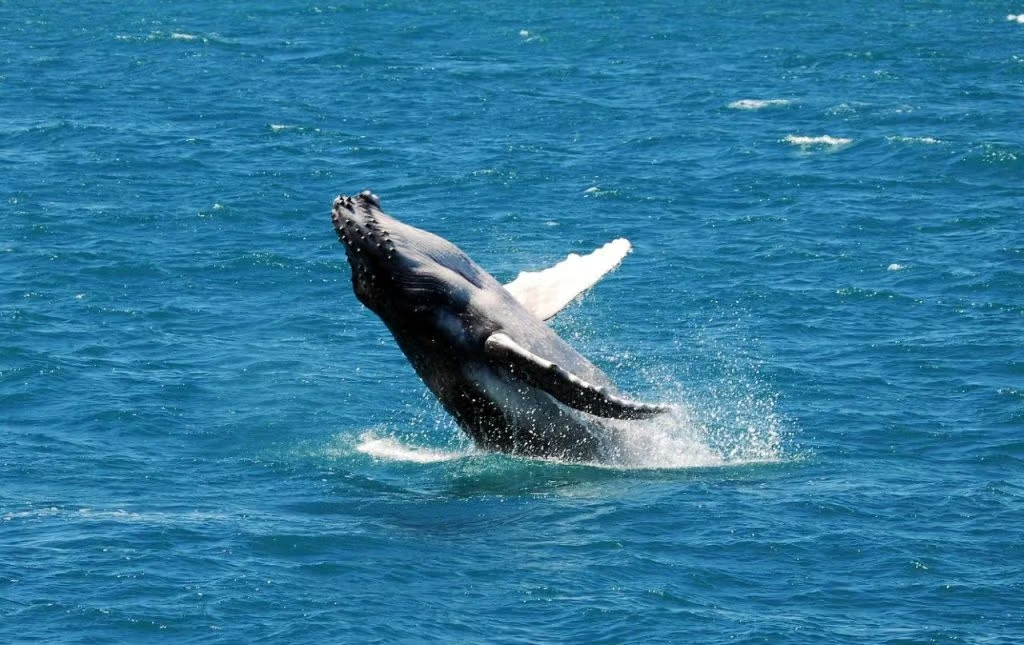
That said, winter gives guests a real chance of being on the water during migration season. A distant blow, a pectoral fin, a tail slap or a breach can turn a beautiful reef day into something unforgettable.
The best way to think about whales on a winter reef trip is as a wild bonus. You book for the reef, the island, the blue water and the sunshine. If the whales appear, the ocean has given you something extra.
Why is the Great Barrier Reef important for humpback whales?
The Great Barrier Reef is not just a scenic backdrop for migration. It forms part of a protected World Heritage Area used by whales and dolphins, including humpback whales, dwarf minke whales and several dolphin species.
The Reef Authority recognises Great Barrier Reef waters as nursery areas for whales and emphasises the need for whales to move through the region without being pressured by human interference. This matters because mothers and calves are especially vulnerable to disturbance.
For visitors, this is an important shift in perspective. Seeing a whale is exciting, but the whale is not performing for us. It is travelling, resting, communicating, feeding a calf or conserving energy during one of the longest journeys made by any mammal.
What makes humpback whales so recognisable?
Humpback whales are famous for their long pectoral fins, knobbly heads, powerful tails and acrobatic surface behaviours. They can breach, tail slap, spyhop and roll at the surface, sometimes making them easier to spot than other whale species.
An adult humpback can reach up to around 16 metres in length. Despite their size, they are known for complex behaviours and long-distance migration. Their tails, or flukes, have unique markings that can be used to identify individuals, much like a fingerprint.
That ability to identify individuals has become increasingly important for science. Researchers and citizen science platforms can use fluke photographs to track whale movements, migration patterns and unusual long-distance journeys.
What do we still not know about humpback whales?
For such a large and visible animal, humpback whales still hold plenty of mystery.
Scientists know the broad migration pattern: feeding in cold southern waters, moving north for breeding and calving, then returning south. But the details are still being studied. Researchers are still learning exactly how whales choose routes, how they respond to changing ocean conditions, how individuals navigate, and how climate-driven changes in prey and water temperature may influence migration timing.
Recent research has also challenged older assumptions about calving. Humpback calves have been recorded farther south than traditionally expected, including during migration. This does not mean tropical breeding areas are unimportant. It means the story is more complex than previously thought.
That is what makes whales so fascinating. Even with decades of research, there is still a great deal we are learning about where they go, why they stop, when calves are born and how a recovering population uses the ocean differently over time.
Why is the east Australian humpback recovery such a powerful story?
The east Australian humpback whale population is one of the great conservation recovery stories. Commercial whaling severely reduced humpback numbers in the 20th century, and the Reef Authority notes that the east Australian population was once reduced to only a few hundred animals.
Protection from whaling changed the future of the species in Australian waters. Today, the population has recovered strongly, and humpbacks are now a familiar part of winter along the east coast.
This recovery is worth celebrating, but it is not an excuse to become careless. A larger whale population also means more overlap with boats, coastal development, shipping, fishing gear and human activity. Responsible boating and respectful viewing remain essential.
How should visitors behave around whales?
The best whale encounters happen when people give whales space. Queensland rules are designed to minimise disturbance and reduce the risk of separating mothers and calves.
In Queensland, boats must follow caution zones and no-approach zones around whales. A whale’s caution zone extends 300 metres from the animal, and boats within that zone must travel slowly. The no-approach zone includes the closest area around the whale and the area directly in front of and behind it.
For guests, the simplest version is this: let the crew manage the vessel, do not pressure the animal, and enjoy the moment respectfully. If a whale chooses to surface nearby, that is a privilege. If it keeps moving, that is exactly what it is meant to do.
Why do we love winter on the reef?
We love winter on the Great Barrier Reef because everything feels a little easier. The humidity drops, the skies often feel clearer, and the water can take on that deep winter blue that looks almost too polished to be real.
For guests travelling to Moore Reef, winter can mean comfortable days on the pontoon, fresh sea breezes and bright conditions for snorkelling, reef viewing and relaxing on deck. For visitors heading to Fitzroy Island, the lower humidity makes beach time, walking and photography feel more comfortable.
Then there are the whales. Even when you do not see them, knowing they are moving through the region changes the feeling of the season. The water is not empty space between Cairns and the reef. It is a living corridor.
Why does Fitzroy Island feel special in winter?
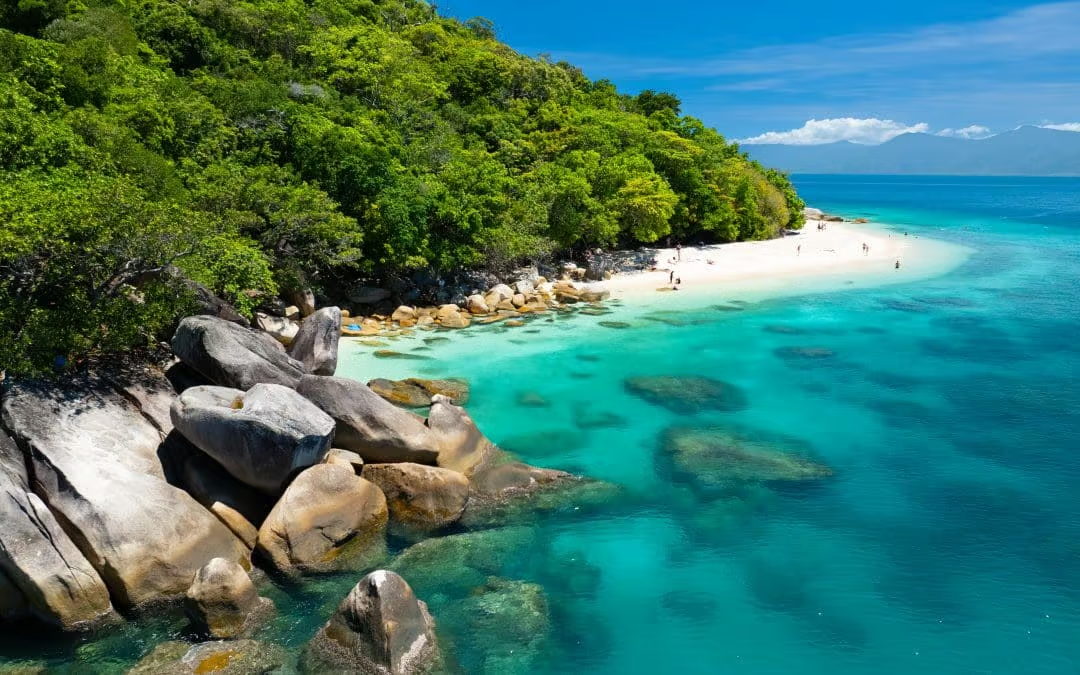
Fitzroy Island is beautiful year-round, but winter suits it especially well. Lower humidity makes the island feel fresh and inviting, while blue skies and calmer days can create the kind of water colour visitors hope to see when they imagine Tropical North Queensland.
A Fitzroy Island day trip is ideal for travellers who want a relaxed winter island experience close to Cairns. The island combines rainforest, coral beaches, boulders and blue water, giving visitors a different perspective from the Outer Reef.
It is also a reminder that the Great Barrier Reef region is not just coral. It is islands, coastlines, rainforest, seagrass, open water and the migratory animals that connect these places.
Why does Moore Reef feel special in winter?
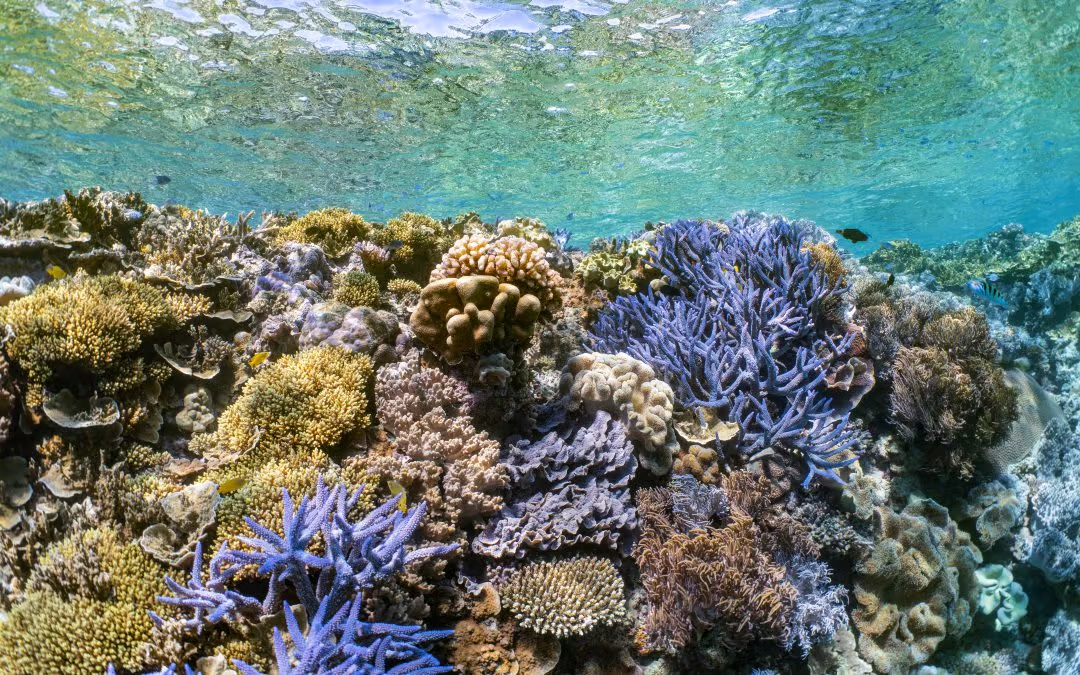
Moore Reef gives visitors the open-water feeling of the Outer Great Barrier Reef. In winter, that experience can feel especially crisp: blue skies overhead, fresh air across the deck and reef colours below the surface.
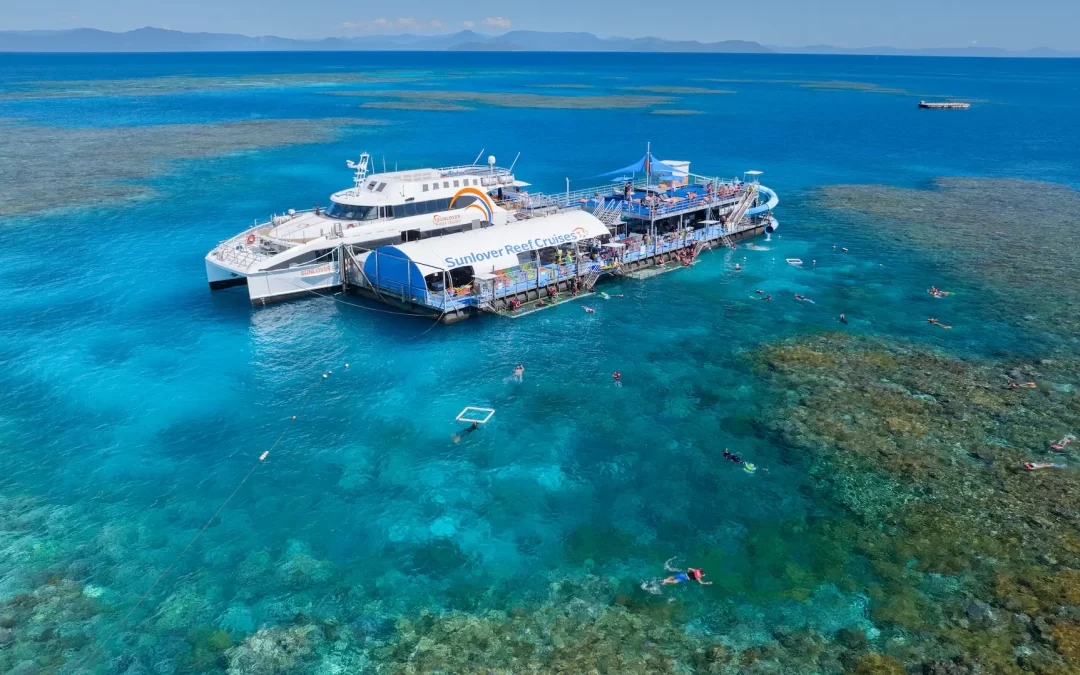
At Moore Reef Pontoon, guests can snorkel, view the reef from the glass bottom boat or semi-submersible, visit the underwater observatory, ride the 30-metre spiral waterslide or simply enjoy the view across the Coral Sea.
For visitors who want a winter reef day with structure, facilities and flexibility, Moore Reef is a strong choice. It allows guests to experience the reef in different ways, whether they are confident swimmers, first-time snorkellers or travellers who prefer to stay dry.
Should you choose Moore Reef, Fitzroy Island or both in winter?
Choose Moore Reef if your winter dream is snorkelling, reef viewing, pontoon activities and wide-open blue water.
Choose Fitzroy Island if you want rainforest, beaches, swimming, island scenery and a slower pace.
Choose the Reef & Island in a Day tour if you want both experiences in one winter day: the Outer Great Barrier Reef and a tropical island escape from Cairns.
Winter is a brilliant time for the combined experience because the day feels varied without feeling heavy. You get reef adventure, island scenery, blue water and the possibility of a whale sighting during the seasonal migration window.
What should visitors bring for a winter reef day?
Winter in Cairns is still warm, but it is a marine day out, so preparation matters. Bring swimwear, a towel, sunglasses, a hat, a change of clothes and SPF 30+ or higher sunscreen. A rashie, lycra suit or wetsuit can add comfort for guests who feel cool after being in the water.
Guests who are prone to motion sickness should consider seasickness prevention before departure. Winter can bring beautiful conditions, but the Coral Sea is still open water.
A camera is also worth bringing, especially during whale migration season. Just remember that the best wildlife moments often happen quickly. Sometimes the memory is better than the photo.
Why winter on the Great Barrier Reef is more than a pretty season
Winter on the Great Barrier Reef is easy to love for the obvious reasons: blue water, sunshine, lower humidity and beautiful days from Cairns. But the deeper reason is that winter reveals the reef as part of a much larger living system.
This is the season when humpback whales move through Queensland waters. It is the season when mothers and calves may be travelling, resting and building strength. It is the season when the Coral Sea becomes a migration corridor, not just a scenic route.
That is what makes winter in the tropics so special. It is not just warm weather while the rest of the country cools down. It is reef, island, sky, sea and migration all happening at once.
Plan your winter Great Barrier Reef and Fitzroy Island day from Cairns
If you are visiting Cairns in winter, make time for the water. Travel to Moore Reef, spend the day on Fitzroy Island, or combine both with Sunlover’s Reef & Island in a Day tour.
Winter on the Great Barrier Reef means blue skies, blue water, lower humidity and the possibility of sharing the season with migrating humpback whales.
The Humpback Highway is open. The reef is waiting. And honestly, this is winter doing its very best work.
Frequently Asked Questions
Can you see whales on the Great Barrier Reef in winter?
Yes, humpback whales migrate through Queensland waters during winter, including the Great Barrier Reef World Heritage Area. Sightings are possible during reef and island transfers, but they are never guaranteed.
What is the Humpback Highway?
The Humpback Highway is the informal name for the migration route used by humpback whales as they travel along Australia’s coastline between cold southern feeding grounds and warmer northern breeding and calving waters.
When is whale migration season in Queensland?
Humpback whales are generally seen in Queensland waters from May to November. Northward migration commonly occurs from May to July, with southward migration later in winter and spring.
Is Sunlover Reef Cruises a whale-watching tour?
No. Sunlover Reef Cruises operates Great Barrier Reef and Fitzroy Island tours from Cairns. During winter, guests may see migrating whales during the journey, but whale sightings are a wild bonus and are not guaranteed.
Why do humpback whales come to the Great Barrier Reef?
Humpback whales travel from Antarctic waters to warmer Queensland waters, including the Great Barrier Reef World Heritage Area, to breed, calve and build strength during winter.