Caring for the Reef
Coral bleaching is back in the news every summer, and a strong El Niño means it will be again this year. Here is what bleaching actually is, what the latest science says about the Great Barrier Reef, and what it means if you are planning a trip.
The short version
- Coral bleaching happens when water stays too warm for too long and corals push out the algae that feed and colour them.
- Bleached is not dead. Corals can recover if the water cools in time.
- AIMS surveys published in August 2026 found coral cover held steady or rose in all 3 regions of the reef, after the 2024 and 2025 mass bleaching events.
- A strong El Niño is under way, so summer 2026–27 carries a higher risk of heat stress. It does not make bleaching certain.
- The reef is still very much worth seeing, and seeing it with a marine biologist is the best way to understand what is happening to it.
What is coral bleaching?
A coral is a colony of tiny animals called polyps. Living inside their tissue are microscopic algae (zooxanthellae) that turn sunlight into sugars and hand most of them to the coral. Those algae are also where most of a coral’s colour comes from.
When the water stays too warm for too long, that partnership breaks down. The coral pushes the algae out. Its tissue turns see-through, the white limestone skeleton shows through, and the coral looks bleached.
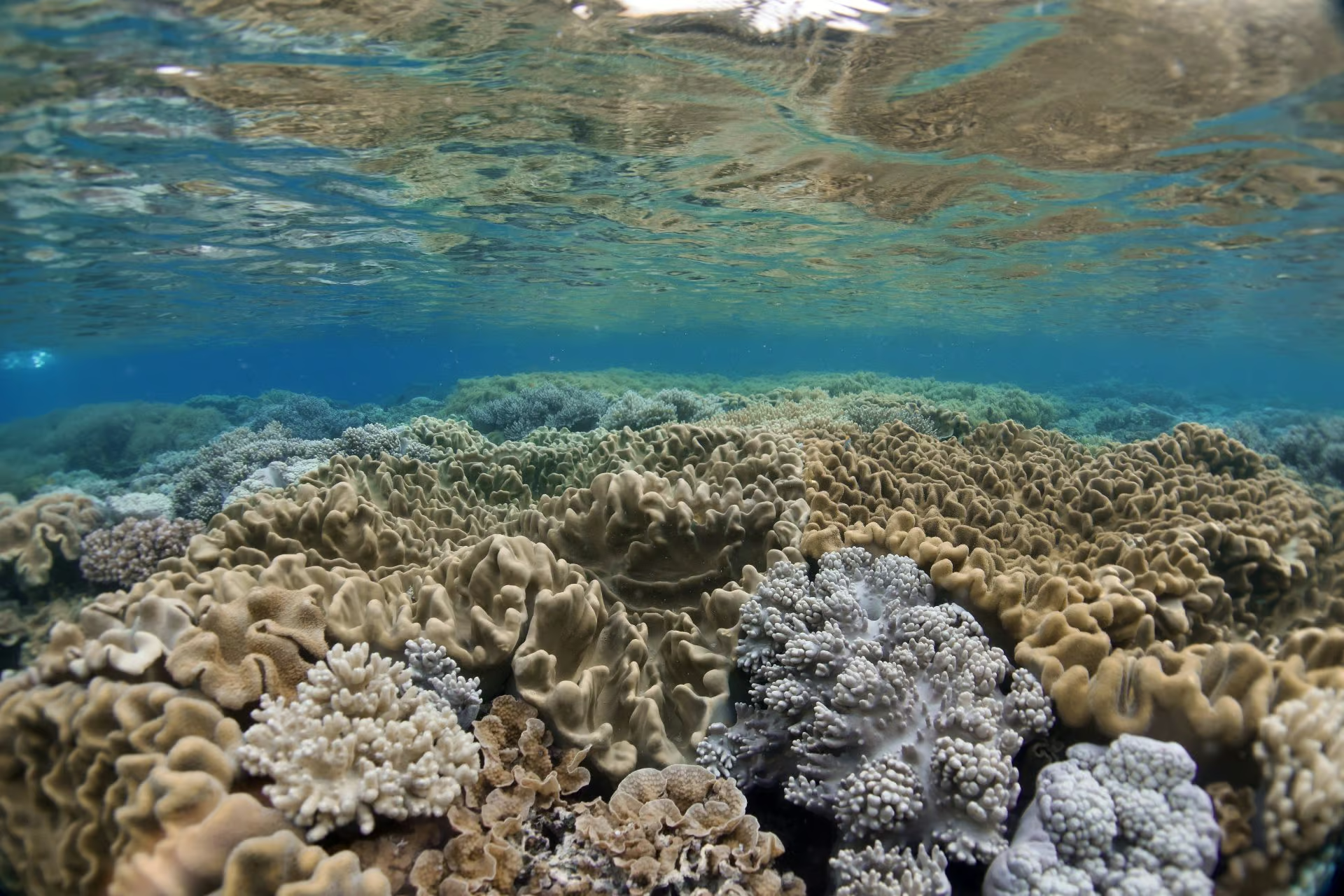
Is bleached coral dead?
No, and this is the part most people get wrong. A bleached coral is stressed and starving, but it is alive. If the water cools in time, it can take algae back in and regain its colour. If the heat goes on too long, it starves and dies.
That is why scientists talk about how hot the water gets and for how long. A short spike is very different from weeks of heat.
| What you see | What is going on |
|---|---|
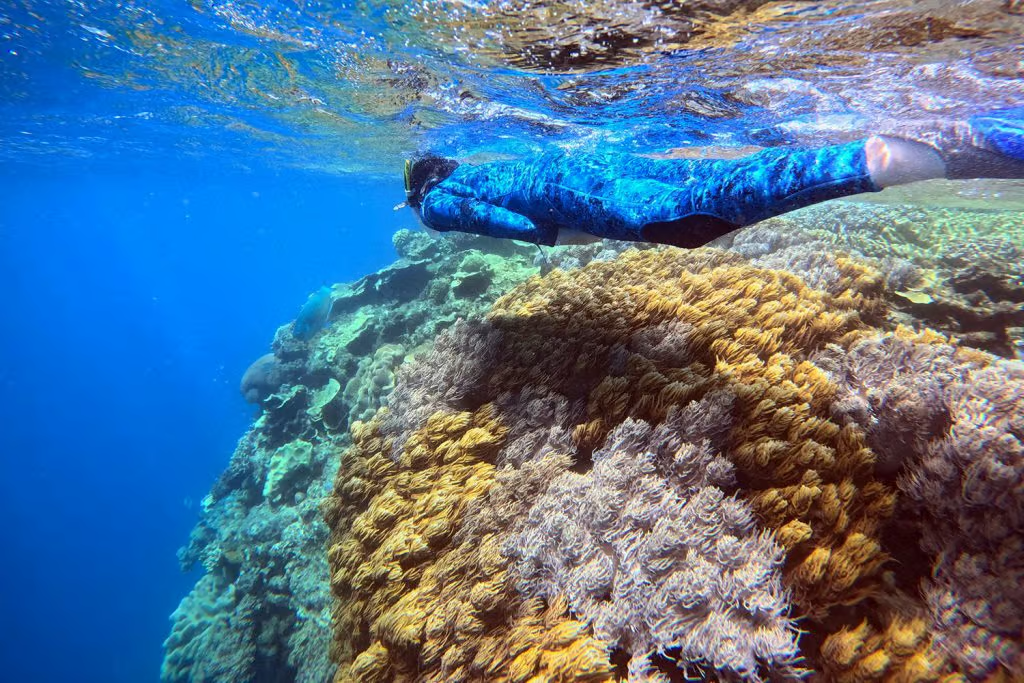
| Rich browns, greens, blues and purples | Healthy coral with its algae in place. |
| Pale or patchy colour | Stressed coral that is starting to lose its algae. It can still recover. |
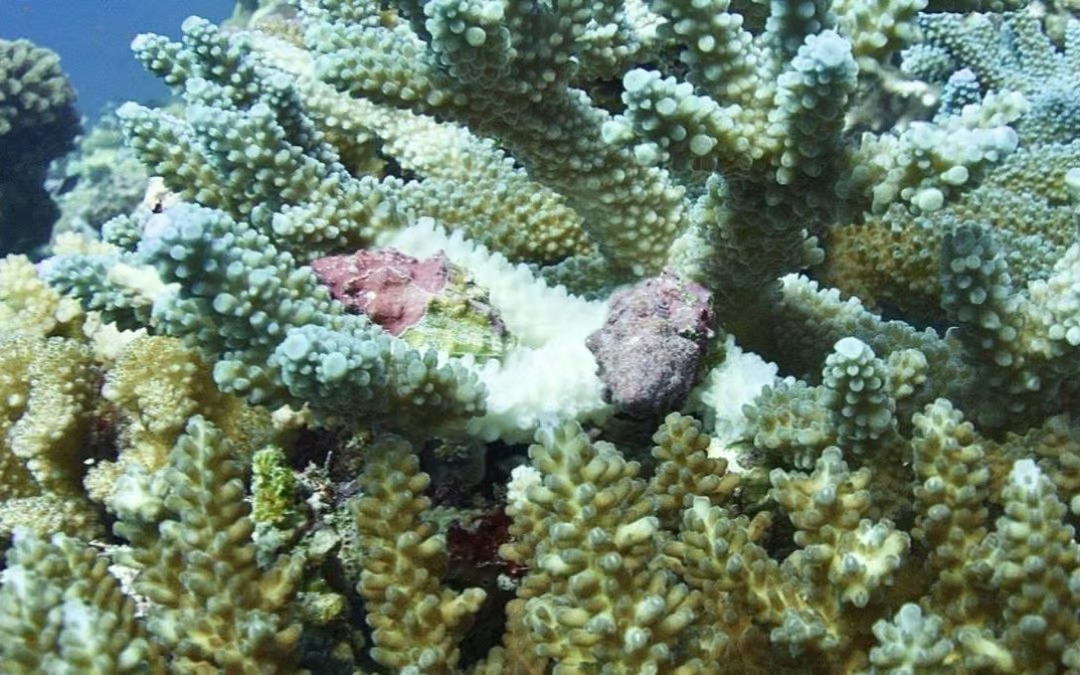
| Bright, bone-white coral with clean tissue | Bleached. Still alive, but under real pressure. |
| White or grey skeleton under a brown, fuzzy film | Dead coral that algae has grown over. |
| A clean white patch spreading from one spot | Often a feeding scar from a crown-of-thorns starfish or Drupella snails, not bleaching. How to tell the difference. |
What causes coral bleaching?
On the Great Barrier Reef, the main cause is a marine heatwave: sea temperatures that sit above the usual summer maximum for weeks at a time. Freshwater flood plumes and other stresses can add to it, but heat is the big one.
Climate change is making marine heatwaves more frequent and more intense, and this is now a global problem, not just an Australian one. In June 2026, the US National Oceanic and Atmospheric Administration (NOAA) reported that the world’s fourth global bleaching event, which began in 2023, likely ended in mid-2025. Bleaching-level heat stress reached 84% of the world’s coral reef area, and mass bleaching was recorded in at least 83 countries and territories.
“We are now in the era where reefs will bleach on a near-annual basis.”
Derek Manzello, Coordinator of NOAA’s Coral Reef Watch, June 2026
How many times has the Great Barrier Reef bleached?
Mass bleaching was first recorded on the Great Barrier Reef in 1998. Since 2016, it has happened 6 times.
| Summer | What happened |
|---|---|
| 1998 | First mass bleaching event recorded on the reef. |
| 2002 | Second mass bleaching event. |
| 2016 and 2017 | Back-to-back mass bleaching, with the northern reef hit hardest. |
| 2020 | Mass bleaching event. |
| 2022 | Mass bleaching event. |
| 2024 | Mass bleaching that caused substantial coral cover declines, according to AIMS. |
| 2025 | Mass bleaching event. AIMS later reported it had limited impact. |
| 2026 | A regional bleaching event in the Northern region and localised low levels elsewhere. Monsoon cloud and rain reduced the heat. |
How is the Great Barrier Reef going in 2026?
In August 2026, the Australian Institute of Marine Science (AIMS) published its annual long-term monitoring results, covering 121 reefs surveyed over the 2025–26 season.
| Region | Hard coral cover 2025 | Hard coral cover 2026 |
|---|---|---|
| Northern | 30% | 35.1% |
| Central | 28.6% | 31.6% |
| Southern | 26.9% | 26.4% |
“We did not see a repeat of the 2024 and 2025 mass bleaching events.”
AIMS Long-Term Monitoring Program, August 2026
AIMS was also clear about the risk. Much of the coral cover is made up of fast-growing Acropora corals, which are also the most sensitive to heat, and AIMS warned that gains on these reefs could be reversed within a year. It also reported rising crown-of-thorns starfish numbers in the Northern region, the start of the fifth recorded wave of outbreaks since the 1960s.
Will the Great Barrier Reef bleach in summer 2026–27?
No one can say yet, and anyone who tells you otherwise is guessing. Here is what is known:
- In August 2026 the Bureau of Meteorology confirmed a strong El Niño, expected to last into autumn 2027. El Niño summers tend to be warmer and drier in north-east Australia.
- The Reef Authority reported that sea temperatures through June were about 0.5–0.7°C above the long-term average in all regions.
- Heat stress usually peaks in late summer, around February and March.
“It is too early to determine whether these conditions will lead to significant heat stress during the 2026–27 summer.”
Great Barrier Reef Marine Park Authority, reef health update, July 2026
Weather can still change the outcome. In 2025–26, monsoon cloud, rain and cyclones cooled the water and limited the bleaching. We cover the climate side in more detail in what a strong El Niño means for the Great Barrier Reef.
Is it still worth visiting the Great Barrier Reef?
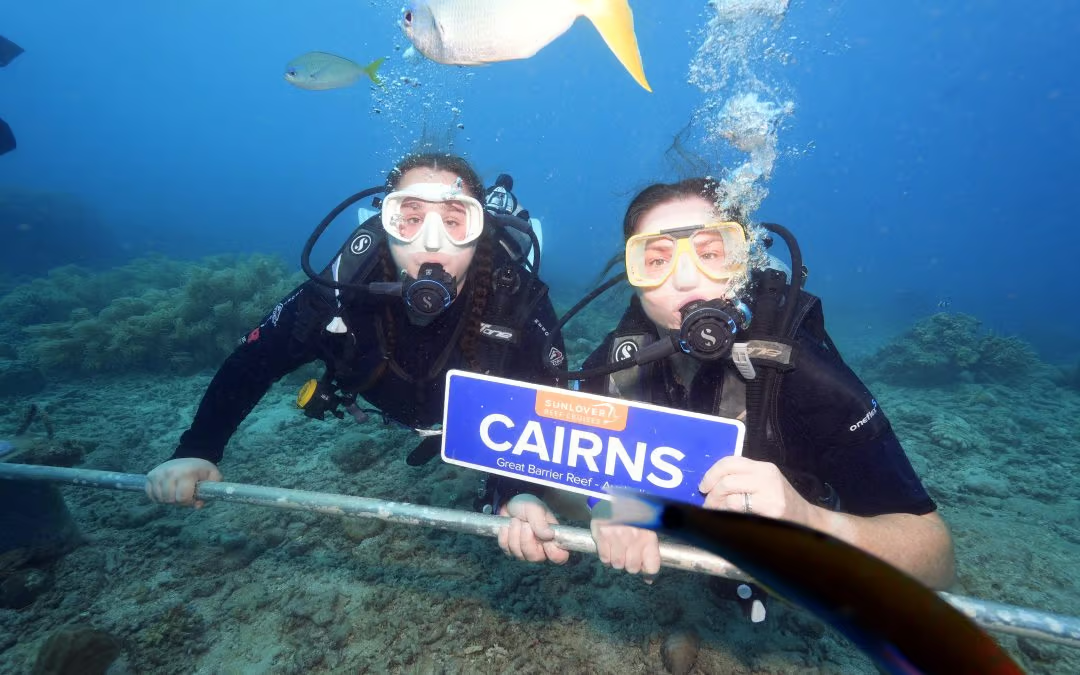
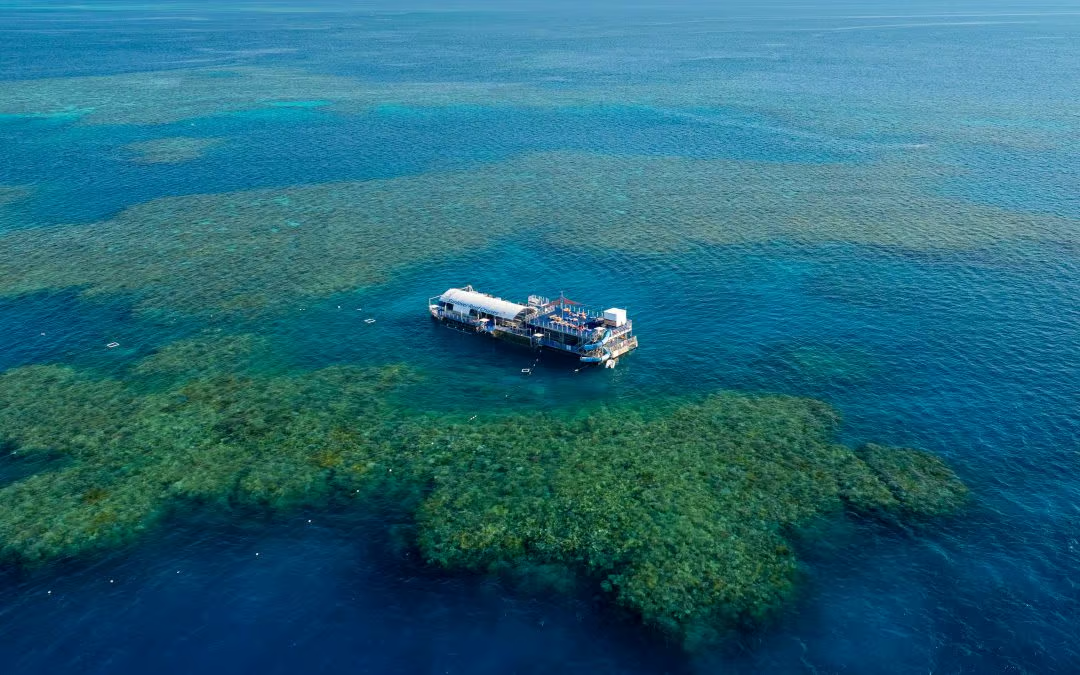
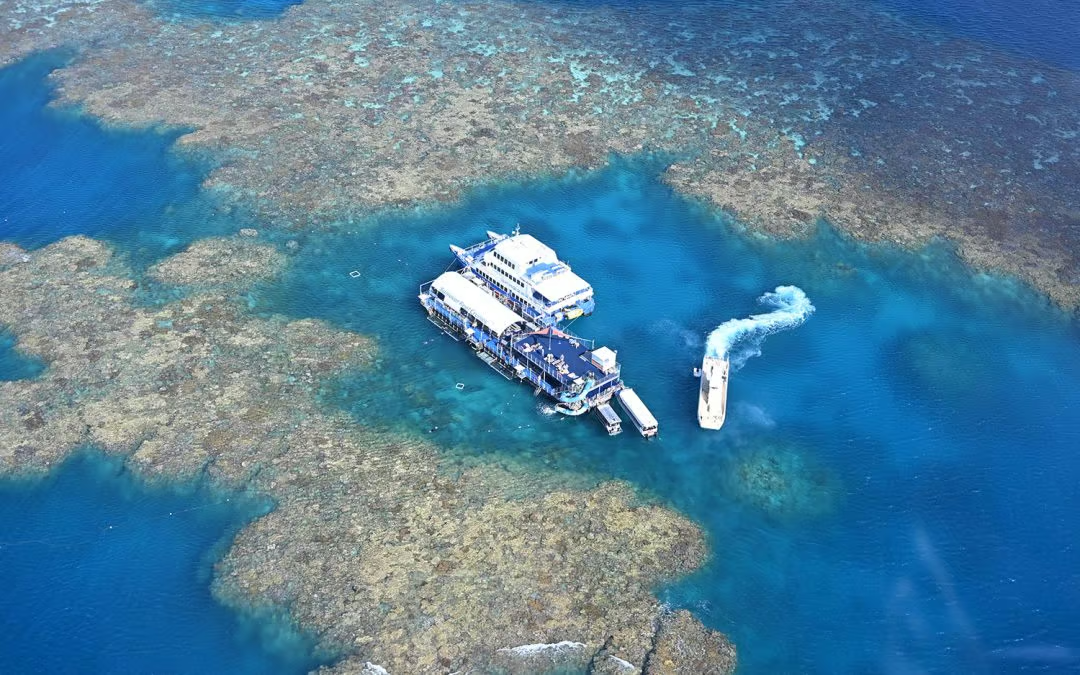
Yes. The Great Barrier Reef is made up of almost 3,000 reefs, and bleaching is patchy. It changes from reef to reef and even from one coral to the next. At Moore Reef you swim over coral gardens full of fish, and turtles are regular visitors.
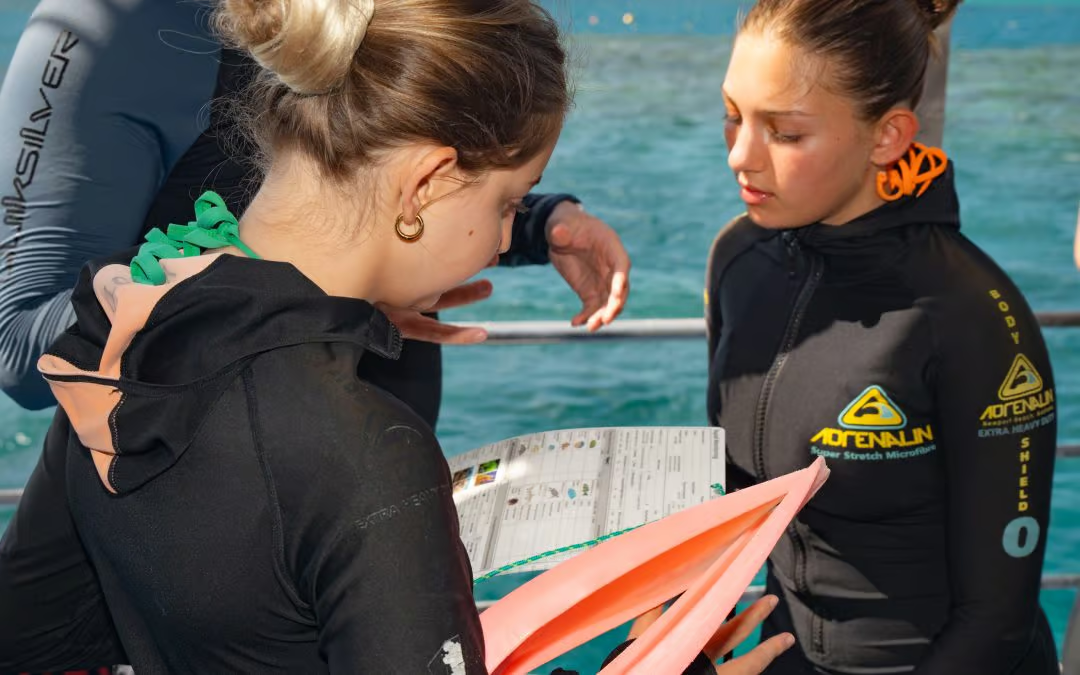
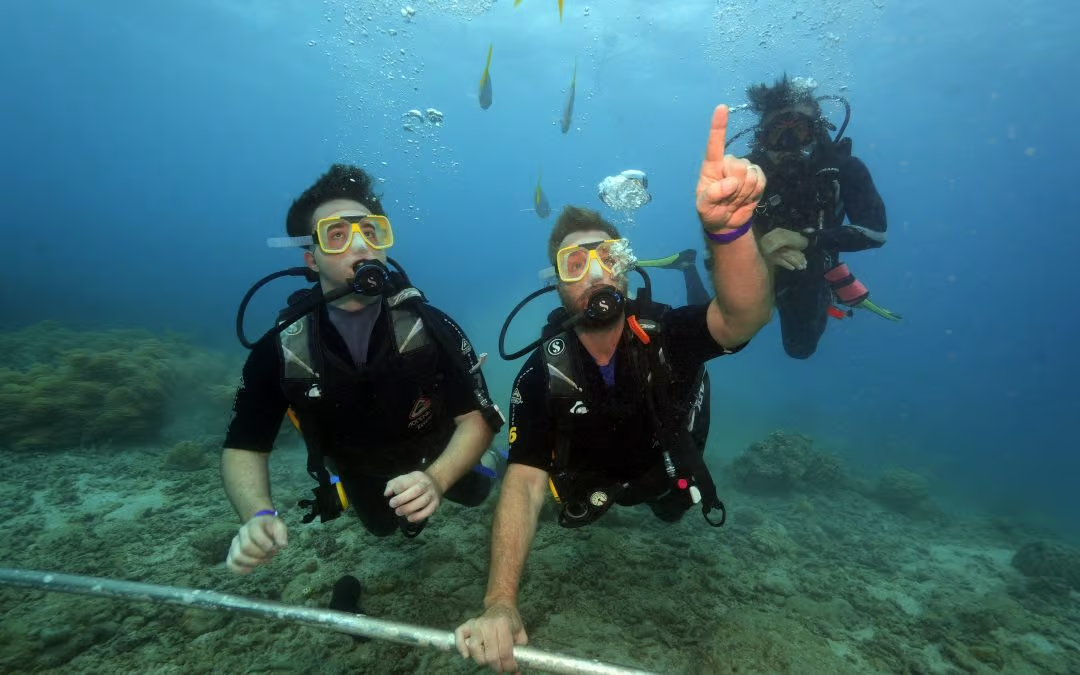
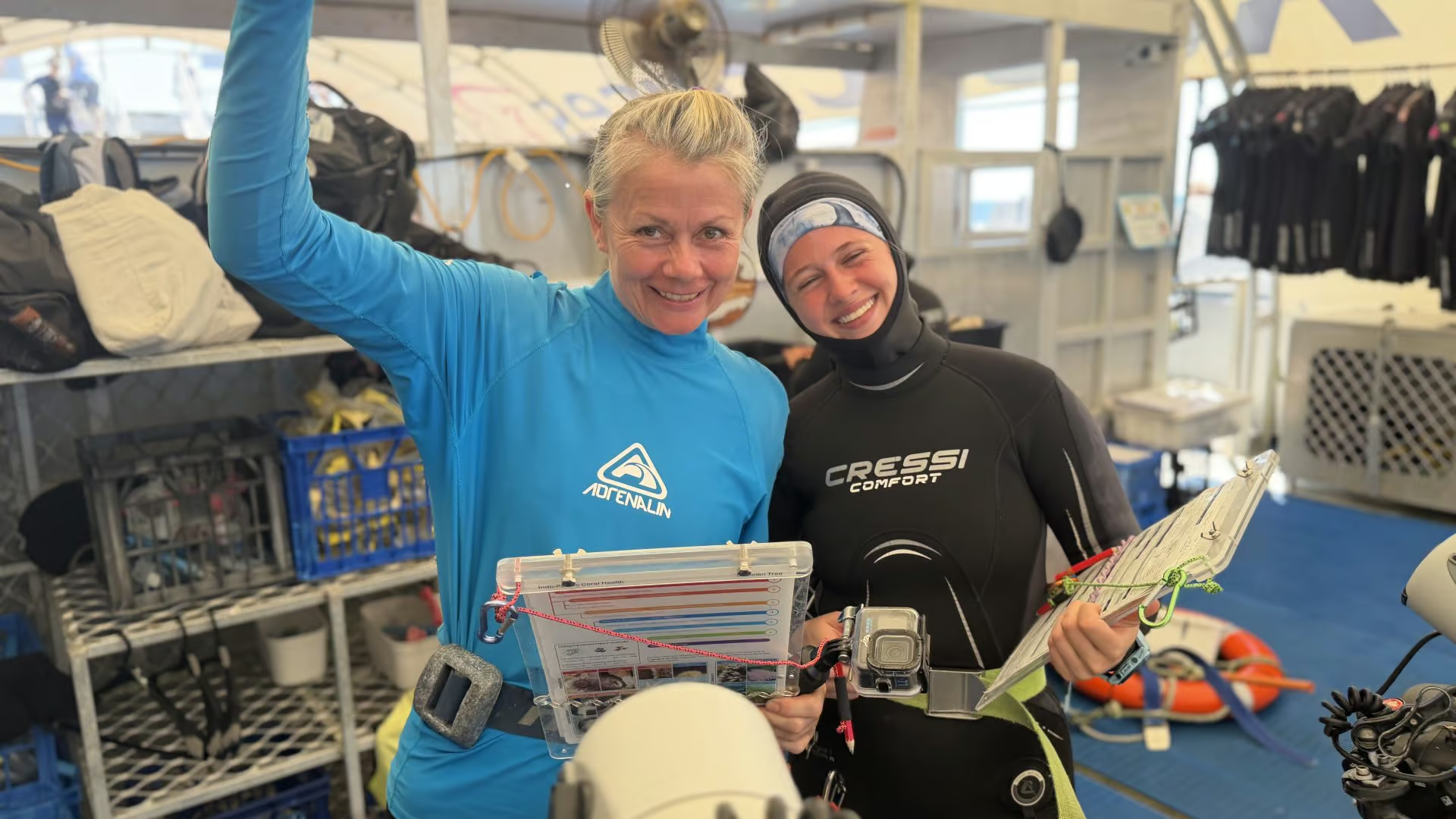
A visit is also the best way to understand what bleaching actually looks like. Our marine biologists are on the Moore Reef pontoon with guests every day. They can show you healthy coral, explain what stress looks like, and answer the questions you won’t find in a news headline.
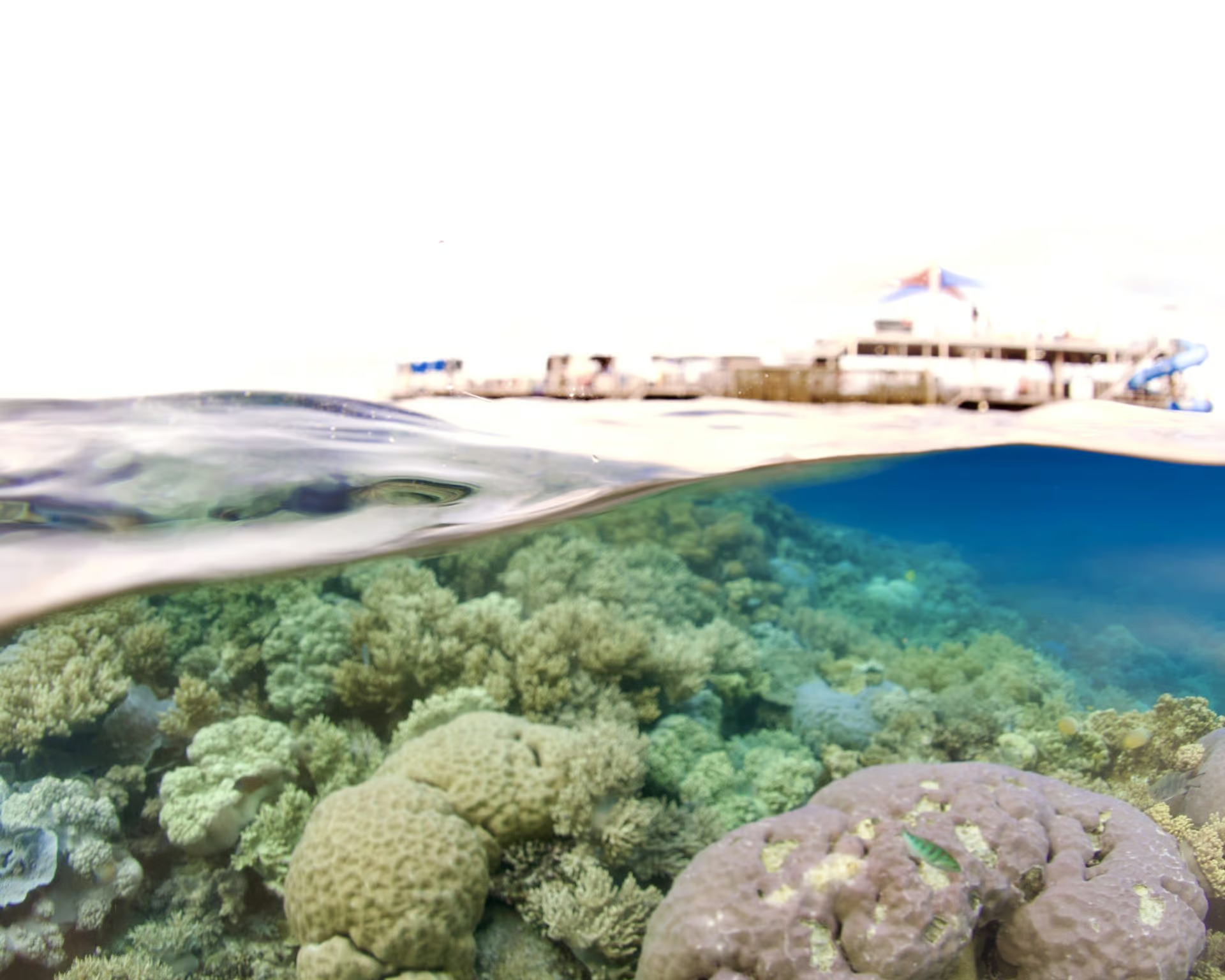
Can’t swim? You can still see the coral. Every Moore Reef tour includes a glass bottom boat, a semi-submersible and an underwater observatory.
How are scientists and reef tourism helping coral adapt?
Bleaching is driven by a warming ocean, and the only long-term fix is cutting global emissions. Alongside that, a growing set of programs is trying to help corals get through the heat that is already coming: growing more coral, helping it resettle damaged reef, and learning which corals cope best.
The Coral Nurture Program
The Coral Nurture Program is a partnership between scientists, reef tourism operators and Traditional Owners that began on the Great Barrier Reef in 2018. It started at Opal Reef off Port Douglas, with Wavelength Reef Cruises working alongside researchers from the University of Technology Sydney, and has grown to 35 sites with 8 operators across the Cairns–Port Douglas and Whitsunday regions.
The idea is simple. Tourism crews visit the same reefs again and again, so they are well placed to look after them. Crews grow coral fragments in floating underwater nurseries, using “corals of opportunity” (pieces that have broken off naturally) where they can, then attach them to the reef with a small device called the Coralclip, developed with Wavelength Reef Cruises.
| Coral Nurture Program | At a glance |
|---|---|
| Started | 2018, at Opal Reef |
| Reach today | 35 sites with 8 tourism operators |
| Corals planted | 63,632 corals across 23 sites with 5 operators over 3.5 years (cost study) |
| Survival | Typically around 80% of planted corals |
| Coralclip | 15% or fewer failed after 3–7 months |
| Cost | About US$2.34 per coral per trip, before allowing for losses |
A 2026 case study of the program, published in Frontiers in Marine Science, is refreshingly honest about the limits. The authors found that restoration outcomes are highly site-specific
. In one study, growing corals in nurseries for a year reduced their heat tolerance. Shading the nurseries did not reduce bleaching, although lowering them deeper improved survival at one site. The authors also name sustainable funding and regulation as ongoing challenges.
That honesty is the point. Restoration can make a real difference on a single reef, and it gives local crews a hands-on role in looking after it. It does not replace cutting emissions.
Is Sunlover part of the Coral Nurture Program? No, we are not directly involved. Our Moore Reef site does not currently have areas that need coral outplanting, so our work there focuses on reporting reef health and removing coral predators. We share the program here because, as reef specialists, we think visitors should know what is happening across the whole Great Barrier Reef, not just at the reef they visit. You can learn more about the program and support its work at coralnurtureprogram.org.
The Reef Restoration and Adaptation Program
On a bigger scale, the Reef Restoration and Adaptation Program (RRAP) brought together AIMS, CSIRO, the Great Barrier Reef Foundation and several universities from 2020 to research ways to help the reef resist, adapt to and recover from climate change. Its research covered coral aquaculture, “enhanced” corals, cooling and shading, stabilising coral rubble so new coral can settle, and freezing coral for the future (cryopreservation).
The first research phase finished on 30 June 2026. AIMS now leads a Pilot Deployments Program, funded to 2029, that is testing these methods at a larger scale.
Will these programs stop bleaching? No. They are tools to help reefs hold on and recover while the world cuts emissions. The scientists running them say the same thing.
What can visitors do to help?
You cannot stop a marine heatwave on your own. But you can help the reef cope with everything else, and add to what scientists know about it.
- Don’t touch or stand on coral. Coral that is already under heat stress has less energy to heal a break or a scrape.
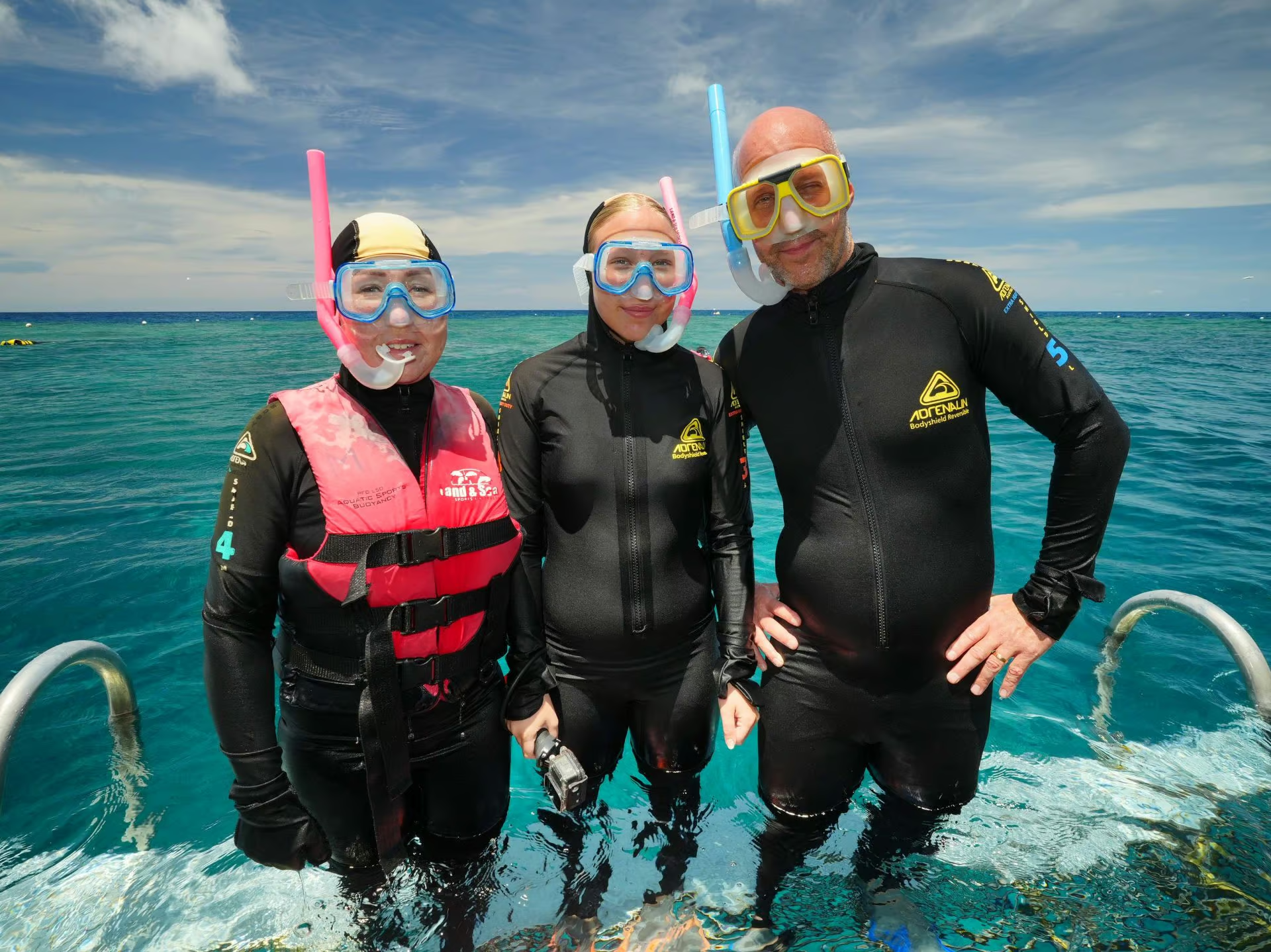
- Wear a lycra suit. It covers most of your skin, so you need less sunscreen. Lycra suits are included on every Moore Reef tour.
- Choose an eco certified operator. Look for operators accredited under the ECO Certification program and working with the Reef Authority.
- Log what you see. Photos added to our Moore Reef project on iNaturalist become data that scientists can use.
- Cut your own emissions. Climate change drives marine heatwaves. The biggest long-term help for the reef is less carbon in the atmosphere.
What does Sunlover do about coral bleaching?
Sunlover is contracted under the Reef Authority’s Tourism Reef Protection Initiative, under which tourism operators are contracted to help look after the reefs they visit. Our crews report reef health, bleaching and marine life sightings to the Reef Authority’s Eye on the Reef program.
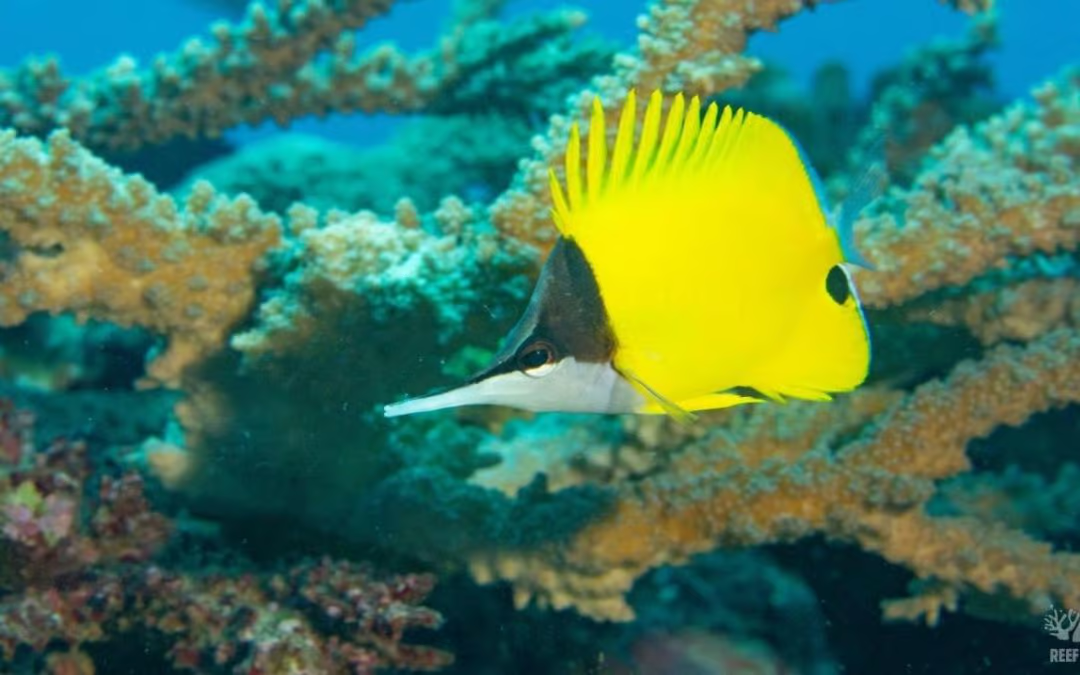
We also remove crown-of-thorns starfish and Drupella snails when we find them in damaging numbers. Neither causes bleaching, but both eat coral, and a reef with fewer of them is in better shape to handle a hot summer. You can read more in what eats coral, and about the fish that tell us how a reef is going in our butterflyfish guide.
See the reef for yourself
Spend the day at Moore Reef on the outer Great Barrier Reef, with marine biologists on the pontoon who can show you what healthy coral looks like and explain what bleaching means for it.
Coral bleaching FAQs
What is coral bleaching?
Coral bleaching is a stress response. When the water stays too warm for too long, corals push out the microscopic algae that live in their tissue and give them most of their food and colour. Without the algae, the tissue turns see-through and the white limestone skeleton shows through, so the coral looks bleached.
Is bleached coral dead?
No. A bleached coral is stressed and starving, but it is still alive. If the water cools in time, it can take the algae back in and regain its colour. If the heat goes on too long, it can die, and dead coral is soon covered in a fuzzy film of algae.
What causes coral bleaching on the Great Barrier Reef?
The main cause is a marine heatwave: sea temperatures that sit above the usual summer maximum for weeks at a time. Freshwater flood plumes and other stresses can add to it. Climate change is making these marine heatwaves more frequent.
Is the Great Barrier Reef bleached right now?
The most recent bleaching was over summer 2025–26, when the Reef Authority recorded a regional bleaching event in the Northern region and localised low levels elsewhere. AIMS reported in August 2026 that this event had limited impact. Bleaching builds over summer, so the Reef Authority’s reef health updates are the place to check through the season.
When does coral bleaching happen on the Great Barrier Reef?
Heat stress builds through summer and usually peaks in late summer, around February and March. That is when bleaching is most likely to show up, if it happens at all.
Will the Great Barrier Reef bleach in summer 2026–27?
No one knows yet. A strong El Niño is under way and sea temperatures were above average through winter, which raises the risk. The Reef Authority said in July 2026 that it is too early to tell whether these conditions will lead to significant heat stress. Cloud, rain and cyclones can still change the outcome, as they did in 2025–26.
How many times has the Great Barrier Reef bleached?
Mass bleaching was first recorded on the Great Barrier Reef in 1998, then again in 2002. Since 2016 there have been 6 more mass bleaching events: 2016, 2017, 2020, 2022, 2024 and 2025.
Is it still worth visiting the Great Barrier Reef?
Yes. AIMS surveys published in August 2026 found coral cover in the Northern region at 35.1%, the Central region at 31.6% and the Southern region at 26.4%. Bleaching is patchy and changes from reef to reef, and a marine biologist on the day can show you what is healthy, what is stressed and why it matters.
What is the Coral Nurture Program?
The Coral Nurture Program is a partnership between scientists, reef tourism operators and Traditional Owners on the Great Barrier Reef, started in 2018 at Opal Reef. Tourism crews grow coral fragments in underwater nurseries and attach them to the reef with a device called the Coralclip. It has grown to 35 sites with 8 operators, and planted corals typically survive at around 80%.
Can coral adapt to warmer oceans?
Scientists are working on it. Programs like the Reef Restoration and Adaptation Program research coral aquaculture, enhanced corals, cooling and shading, and freezing coral for the future. These methods can help individual reefs hold on and recover, but they do not replace cutting global emissions.
Does Sunlover plant coral at Moore Reef?
No. Sunlover is not part of the Coral Nurture Program, and our Moore Reef site does not currently have areas that need coral outplanting. Our work there focuses on reporting reef health to the Reef Authority’s Eye on the Reef program and removing crown-of-thorns starfish and Drupella snails when we find them in damaging numbers.
Can tourists help reduce coral bleaching?
You cannot stop a marine heatwave on your own, but you can help the reef cope. Don’t touch or stand on coral, wear a lycra suit so you need less sunscreen, travel with an eco certified operator, and log what you see so scientists get more data.
Where can I check the latest reef health updates?
The Great Barrier Reef Marine Park Authority (the Reef Authority) publishes reef health updates through summer, and the Australian Institute of Marine Science (AIMS) publishes its annual coral cover results each August.
Sources: AIMS: Relief for recovering Reef as monsoon cools waters (August 2026) · Reef Authority: Reef snapshot, summer 2025–26 · Reef Authority: reef health updates (July 2026) · Bureau of Meteorology: ENSO outlook (August 2026) · NOAA: World’s fourth mass coral bleaching event likely ended in 2025 (June 2026) · Camp et al. (2026), The Coral Nurture Program: a science–practitioner partnership for stewardship-based reef restoration, Frontiers in Marine Science · Coral Nurture Program · Reef Restoration and Adaptation Program. Quotes are reproduced verbatim.
Written by the team at Sunlover Reef Cruises, who run daily trips to Moore Reef on the outer Great Barrier Reef, with marine biologists on board every day. Reef monitoring and stewardship is delivered through the Tourism Reef Protection Initiative.