Of the 3 eastern capitals, Brisbane is the one where this comparison is genuinely close — and where the arguments most people make are the wrong ones.
Brisbane has good training conditions. The “learn somewhere warm and clear” argument that works against Sydney and Melbourne does not really work against Moreton Bay.
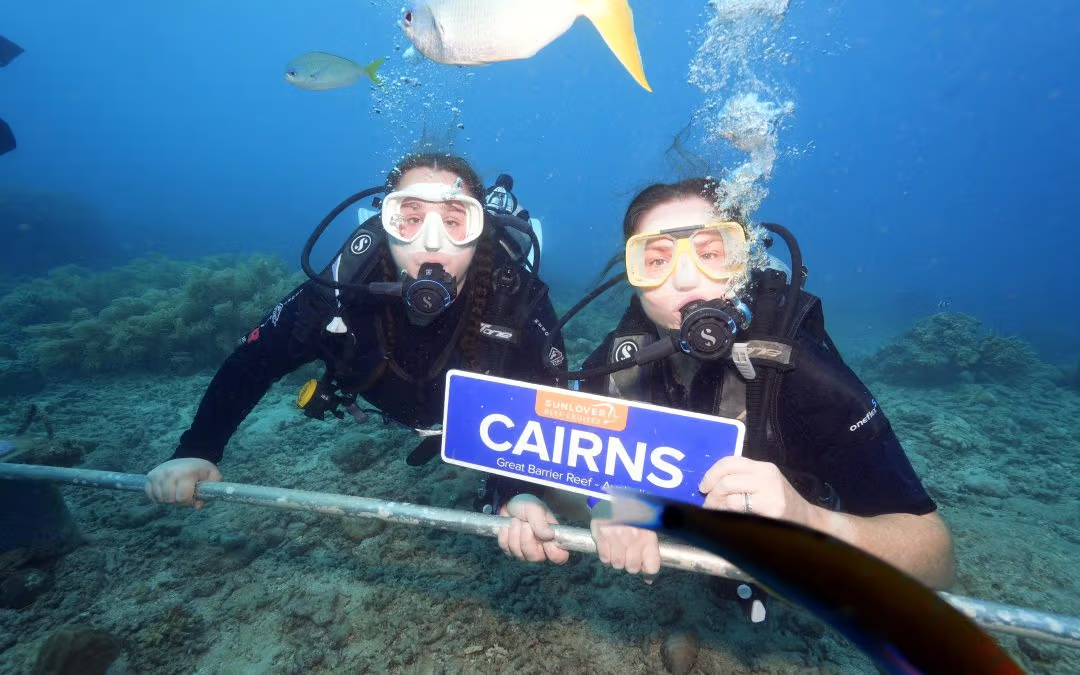
What is different is the trip. Cairns is a 2-hour flight, which makes certifying on the Great Barrier Reef a long weekend rather than an expedition — and no other capital can say that.
Let us not pretend Brisbane is hard
We could run the same argument here that we run for the southern capitals — cold water, poor visibility, difficult entries. It would not be true.
Moreton Bay water sits around 21 to 23 degrees for much of the year. A thin wetsuit does the job. And the Tangalooma Wrecks are, objectively, an excellent place to learn: fifteen scuttled ships in shallow, sheltered water, teeming with fish, with almost none of the hazards that make first dives difficult elsewhere. Plenty of instructors would put it among the best training sites in the country.
Flinders Reef gives you the highest coral diversity in South East Queensland. The Gold Coast Seaway is an hour away. Julian Rocks at Byron, with its leopard sharks and turtles, is a comfortable drive.
So no, you are not compromising by learning in Brisbane. The honest case for coming north is a different one.
The actual case: the trip is trivial
2 hours in the air. No time zone change. Domestic terminal, carry-on only, several flights a day.
For someone in Melbourne, certifying on the Great Barrier Reef is a proper trip that has to be planned around. For you it is a long weekend with a Friday off, and that changes the arithmetic completely.
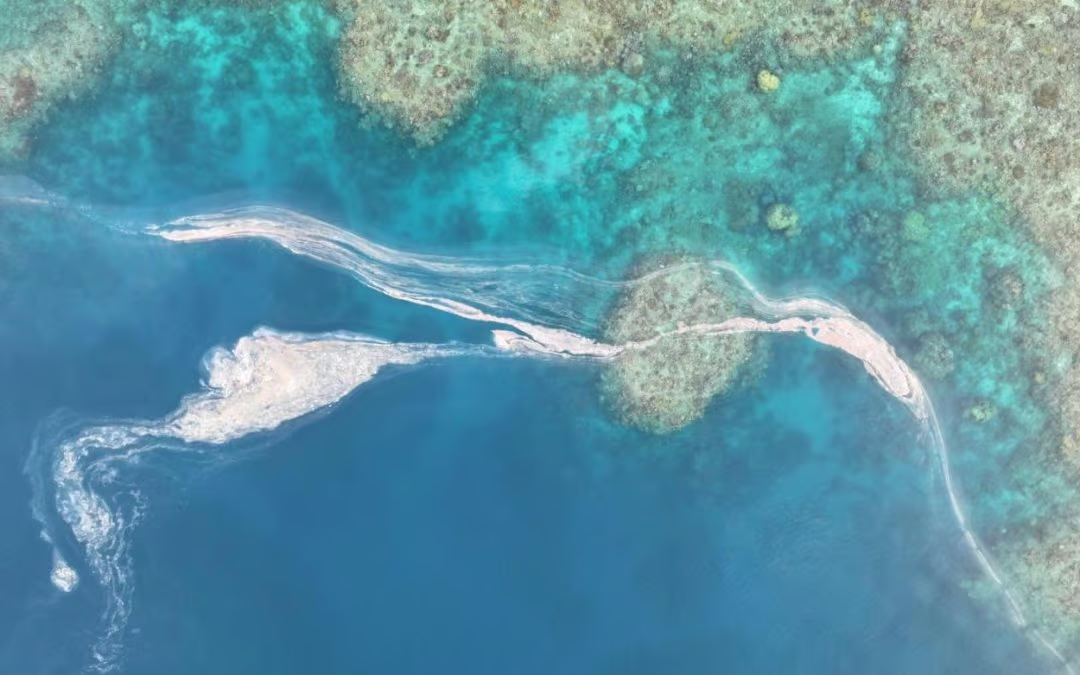
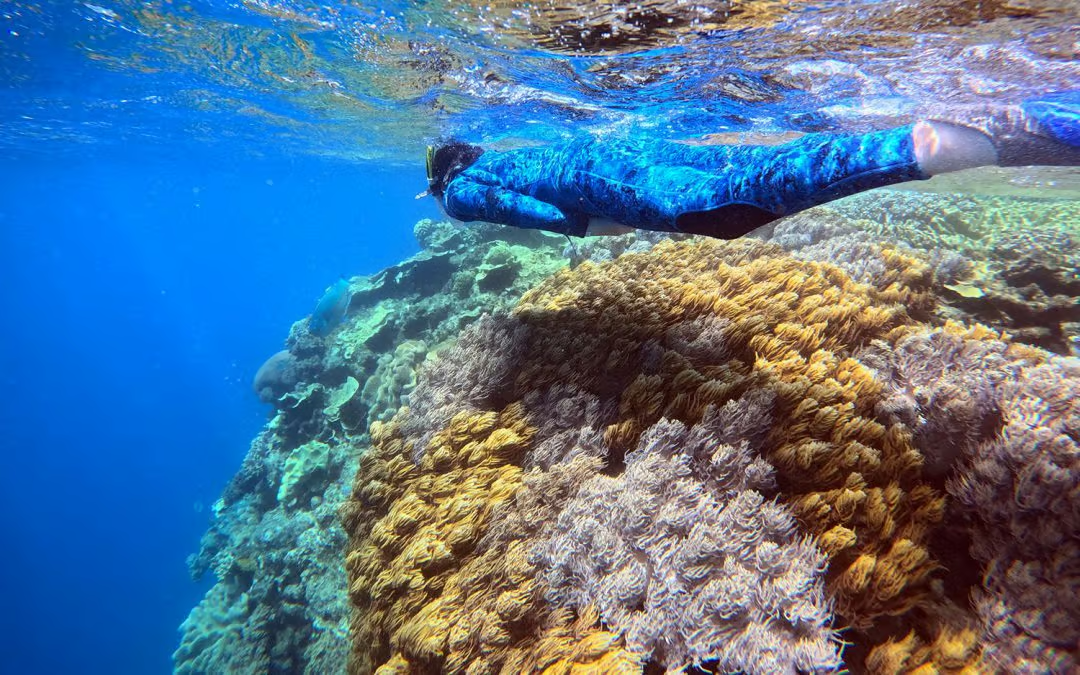
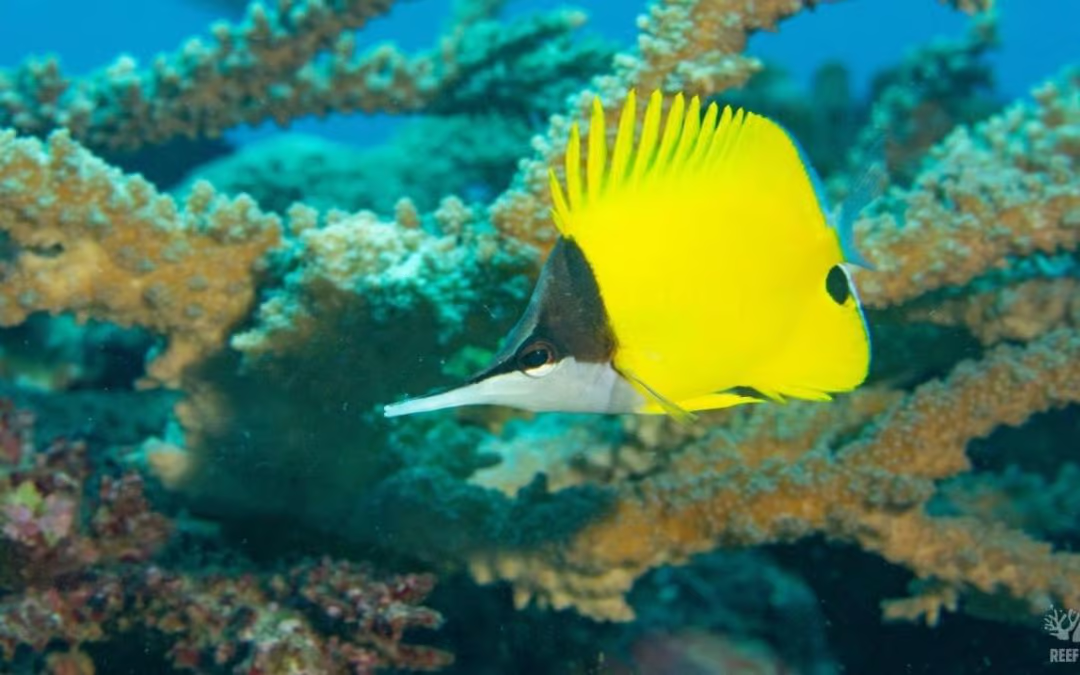
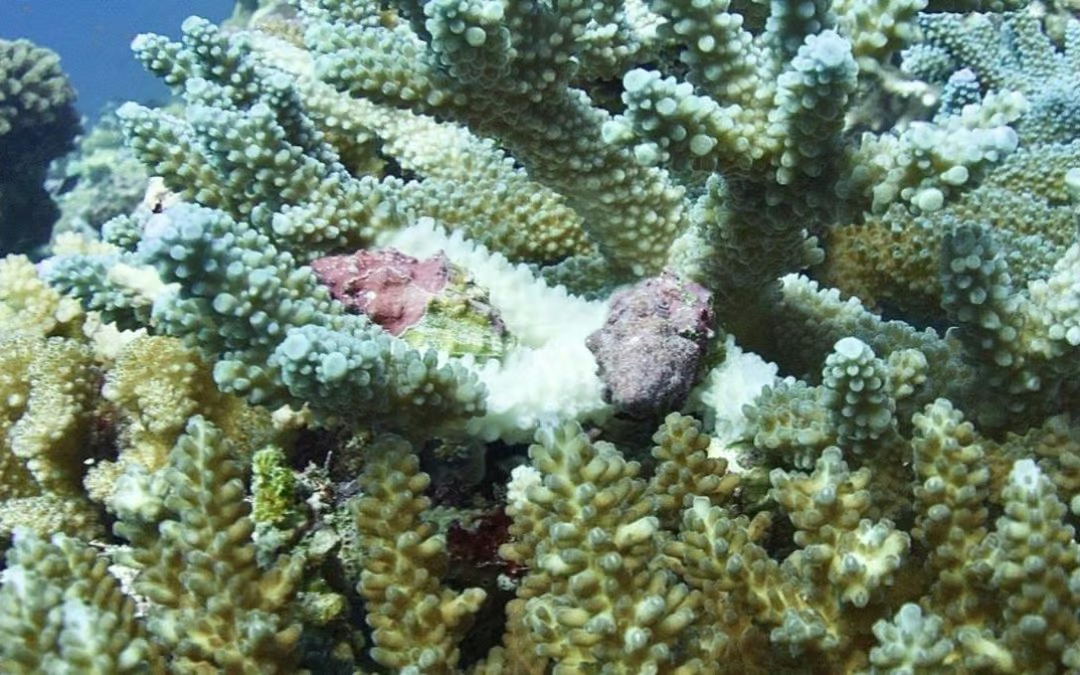
The other half of it is what you are actually diving. Moreton Bay is very good subtropical diving. The outer Great Barrier Reef is a different order of thing — hard coral gardens, reef sharks, turtles, a Maori wrasse that will come and look at you. Both are worth doing. Only one of them is a World Heritage Area, and it is a 2-hour flight from your house.
What it costs, and what it does not
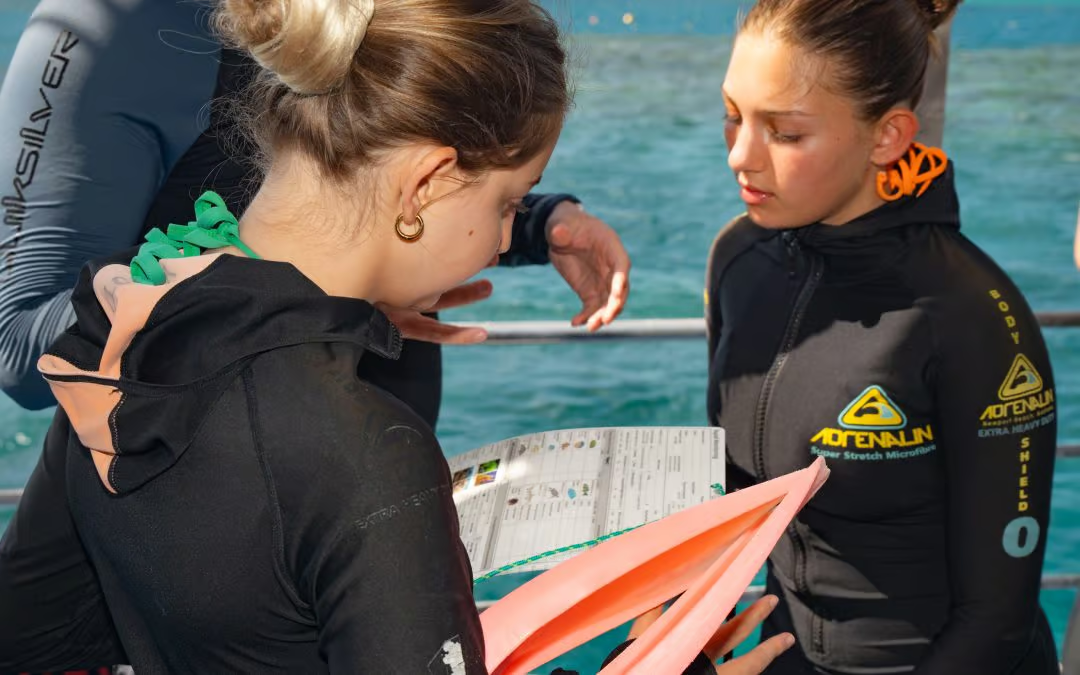
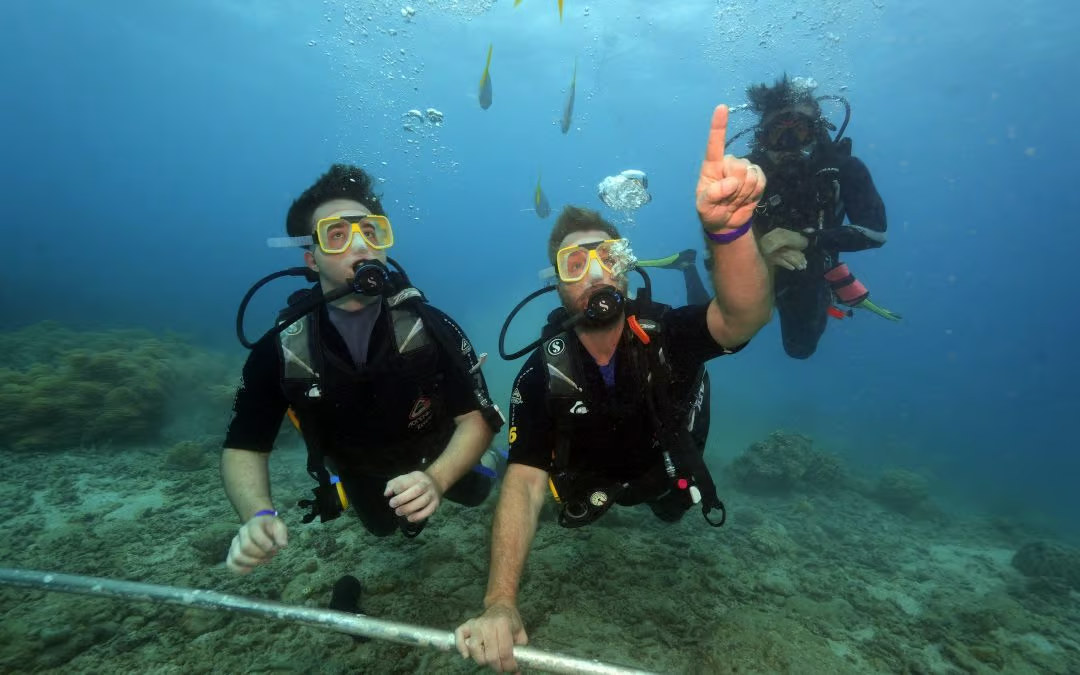
Our SSI Open Water Diver course is $1,030, covering online study, 3 days at the Moore Reef pontoon, 9 training dives, all equipment, reef fees and certification.
A Brisbane course will typically be less. But the flights are the cheapest of any capital, and if a Cairns trip was on your list this year regardless — for the reef, for the rainforest, for the islands — then the real cost of certifying here is the gap between 2 course prices, not the whole holiday.
Run that number honestly before you decide. For Brisbane it is usually a smaller gap than people assume. The full breakdown of what moves dive course pricing is here.
Timing it well
September to December is generally the calmest and clearest stretch on the outer reef, with light winds and good visibility. It is also when courses fill.
Queensland school holidays run 19 September to 5 October this year, and our courses are bookable now. If you have a child of 10 or older who wants to learn alongside you, that is the window — and a parent and child certifying together is a genuinely good use of a school holiday.
From November to May it is stinger season and a stinger suit is standard on the reef. Ours are free and available year round rather than only in season — they are not uncomfortable, they double as sun protection, and they are not a reason to change your dates.
How the 2 stack up
| Brisbane | Moore Reef | |
|---|---|---|
| Water temperature | 21–23°C | ~25°C year round |
| Training format | Pool plus day boat, weekends | 3 consecutive days, reef only |
| Course price | Generally lower | $1,030 all in |
| Getting there | Drive | 2-hour flight |
| What you dive | Wrecks, subtropical reef | Outer Great Barrier Reef |
| Non-diving partner | Stays home | Snorkels beside you |
Which one
Certify in Brisbane if you want to keep diving Moreton Bay regularly, you would rather train over several weekends than in one block, or the course price is the deciding factor.
Certify on the reef if you were coming to Cairns anyway, you want your qualifying dives on the Great Barrier Reef specifically, you are travelling with people who will snorkel rather than dive, or you would rather get it done in one trip than across a month of weekends.
There is also referral: theory and pool work with a Brisbane centre, open-water dives up here. Shorter trip, less holiday used, and most centres arrange it without fuss.
Common questions
Is the certification the same?
Identical. One standard, worldwide recognition, no expiry, wherever you earn it.
How many days do I need in Cairns?
5 is comfortable for a 3-day course, 6 if you want room for weather. Leave a clear day before flying — at least eighteen hours after your last dive. Do not book the Sunday evening flight home after a Sunday afternoon dive.
Can I drive instead?
You can, and it is about nineteen hours. Almost nobody does it for a dive course.
Can my kids do it?
The SSI Open Water Diver course starts at 10, with 10 and 11 year olds limited to 12 metres and taught in smaller groups. Introductory dives are 12 and over. Anyone certified under 15 holds a Jr Open Water certification until they turn 15, and under-18s need a parent or guardian to consent and be present.
What if the weather turns?
It occasionally moves a day. Building one spare day into a 5 or 6-day trip removes almost all of that risk.
2 hours from home, on the outer reef
Our SSI courses are bookable now — 3 days at the Moore Reef pontoon, 9 training dives, maximum 4 divers per instructor, back in Cairns every night.
More on the whole process in our guide to getting scuba certified in Australia, and on choosing an operator in scuba diving courses in Cairns.