Cairns certifies more divers than anywhere else in Australia, and probably more than most places on earth. That is good news if you want choice, and bad news if you want to choose well, because from a search results page every operator looks broadly the same.
We run dive training here, so treat this as informed rather than neutral. What follows is how the options actually differ, including where we are not the right answer.
The 4 ways to certify in Cairns
Almost every course in town is one of these 4 shapes. Working out which shape suits you narrows the field faster than comparing prices.
1. Pool plus day boat
Confined skills in a pool in town, then 2 or 3 days out to the reef on a day boat. The most common format, and usually the cheapest. You sleep in your own bed, and the pool makes the first skills low-pressure.
Suits: nervous beginners, anyone on a budget, anyone who wants the option of stopping after the pool day.
2. Liveaboard
2 or 3 nights sleeping on the boat, usually on the outer reef or the Ribbon Reefs. More dives, better sites, and a genuinely memorable trip.
Suits: confident water people who want maximum dives and do not mind close quarters. Does not suit: anyone prone to seasickness, anyone who wants an exit if they dislike the first day, or anyone travelling with a non-diving partner.
3. Pontoon-based
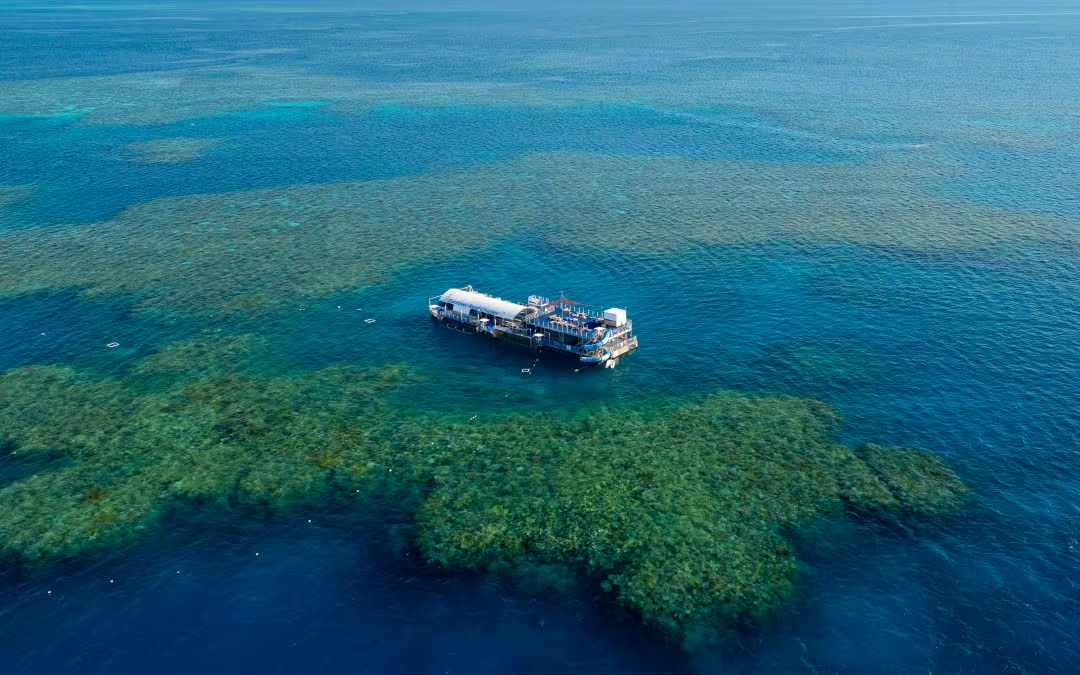
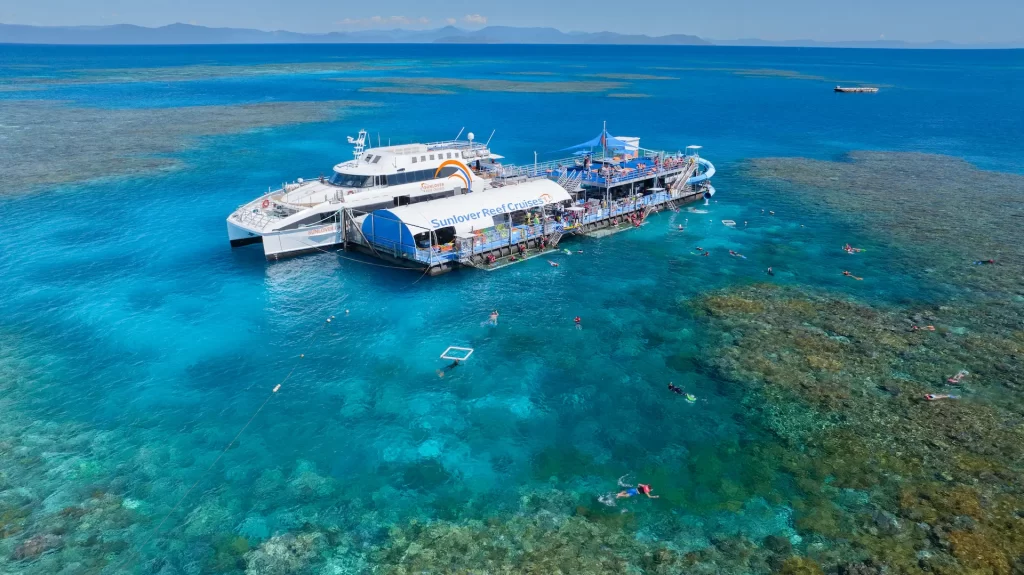
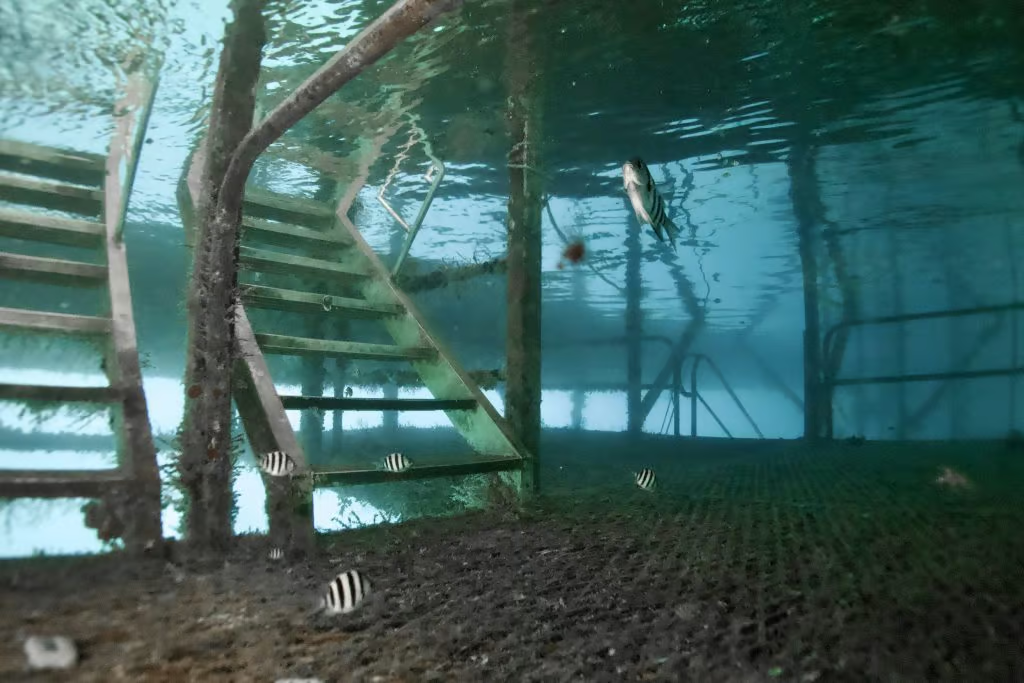
All training from a fixed platform moored on the outer reef. Skills happen in shallow water beside the pontoon rather than a pool, and you return to Cairns each evening.
Suits: people who want reef training without sleeping on a boat, and people travelling with family who are snorkelling rather than diving. This is what we run.
4. Referral
You complete theory and pool work at home, then do only the open-water dives here. Shorter, and it uses less of your holiday.
Suits: people with a local dive centre and limited time in Cairns.
The questions that actually separate operators
Price is the easiest thing to compare and the least informative. These are better.
How many students per instructor?
Ask for a number. “Small groups” means nothing. 4 to one is good. 6 to one is workable. 8 to one means you will spend a lot of your course watching other people try things.
This single number affects your experience more than anything else on the list, and it is the main reason 2 courses can differ by hundreds of dollars.
Where do the training dives actually happen?
“The Great Barrier Reef” covers a lot of ground, from inner-shelf sites forty minutes out to the outer reef. Neither is wrong, but they are different days. Ask which reef, and how long the transit is.
How many dives do I get?
Agency minimum for Open Water is 4. Courses vary from 4 to 9 or more. More dives means more time actually diving rather than doing skills, which is the part people remember.
What happens if I need more time?
Some people need an extra session on mask clearing or equalising. Ask what that costs and whether it is even possible on their schedule, before you are the person who needs it.
Who owns the boat?
Some dive centres own their vessels. Others book you onto someone else’s. That is not a problem in itself, but it determines who is accountable when weather changes the plan, and how much flexibility exists.
Weather, and being honest about September to December
Cairns diving is good year-round, but the conditions are not identical.
September through December is generally the calmest, clearest stretch of the year — light winds, warm water, and the best visibility. It is also when Cairns is busiest, so courses fill.
From roughly November to May it is stinger season, and a stinger suit is standard for in-water activity. Ours are free and available year round, not just in season — they are not uncomfortable, they double as sun protection, and they are not a reason to change your dates.
Wind is the variable that actually affects your day. A strong south-easterly makes the outer reef bumpy and can move a schedule. Any operator who tells you weather never affects them is selling, not explaining.
Where we fit, and where we do not
Our courses run entirely from the pontoon at Moore Reef, on the outer reef. 9 training dives across 3 days, maximum 4 divers per instructor, all equipment included, back in Cairns every night. Open Water is $1,030.
That is a good fit if you want reef training rather than pool training, you are travelling with people who are not diving, you would rather not sleep on a boat, or the stability of a fixed platform matters to you.
It is not the right fit if you want the cheapest available certification, or if you want the maximum possible dives and the remote sites that come with a multi-night liveaboard. Those are real advantages and we do not offer them.
We would rather you booked the format that suits you than booked ours and wished you had done the other thing.
Practical things people get wrong
Booking the course for the last days of the trip. Leave a clear day before you fly — at least eighteen hours after your final dive. Put the course early in your stay instead, and you also have room to move if weather shifts a day.
Leaving the medical form to the morning. Read it before you book. If anything applies to you, see a GP at home. Our guide to the medical requirements covers what the form asks.
Doing the theory here. The online study is designed to be done at home. Arrive with it finished and you spend your days diving instead of reading.
Common questions
How many days do I need in Cairns?
4 as an absolute minimum for a 3-day course, 5 to be comfortable, plus the clear day before flying. 6 days gives you room for a weather change.
Is it better to certify here or at home?
The certification is identical. Here, your training dives are on the Great Barrier Reef in warm, clear water. At home, they are cheaper and closer. Both are legitimate answers.
What is the minimum age?
Introductory, non-certified dives start at 12. The SSI Open Water Diver course starts at 10, with divers aged 10 and 11 limited to 12 metres and trained in smaller groups. Anyone certified under 15 holds a Jr Open Water certification until they turn 15, and under-18s need a parent or guardian to consent and be present.
Can non-divers come along?
On a pontoon-based course, yes — they can snorkel, use the underwater observatory, or just sit in the sun while you train. On a liveaboard, much less so.
Next step
Work out which of the 4 formats fits your trip, then ask the 5 questions above of whoever you are considering. If the pontoon format is the one, our SSI courses are bookable now — details on the Learn to Dive page.
The broader process is covered in our guide to getting scuba certified in Australia, and the full price breakdown is here.