Quick answer: Fitzroy Island or the Frankland Islands?
These are very different kinds of island trip. Fitzroy Island is a single, developed continental island 45 minutes from Cairns by fast catamaran, with a resort, a restaurant, a turtle rehabilitation centre and 4 walking tracks. The Frankland Islands are a remote group of 5 continental islands 45km south-east of Cairns with almost no visitor infrastructure — no resort, no restaurant — but camping and fishing are both permitted, which neither Fitzroy Island nor Green Island allow. Want an easy day trip with real facilities? Fitzroy wins. Want a genuinely wild, back-to-basics island escape? The Franklands are hard to match.
Both sit inside the Great Barrier Reef World Heritage Area and both are national park, but that’s close to where the similarities end. One is built for a comfortable day out with lunch, a shop and a marked trail. The other asks you to bring everything you need, pitch a tent on undeveloped ground, and manage your own tides, food and rubbish for the whole trip. Neither option is “better” in the abstract — it depends entirely on what kind of island day (or night) you’re after.
Key takeaways
- The Frankland Islands aren’t a single island — they’re a group of 5 continental islands (High, Normanby, Mabel, Round and Russell/Commonwealth Island), 45km south-east of Cairns and about 10km offshore from the Russell and Mulgrave river mouths.
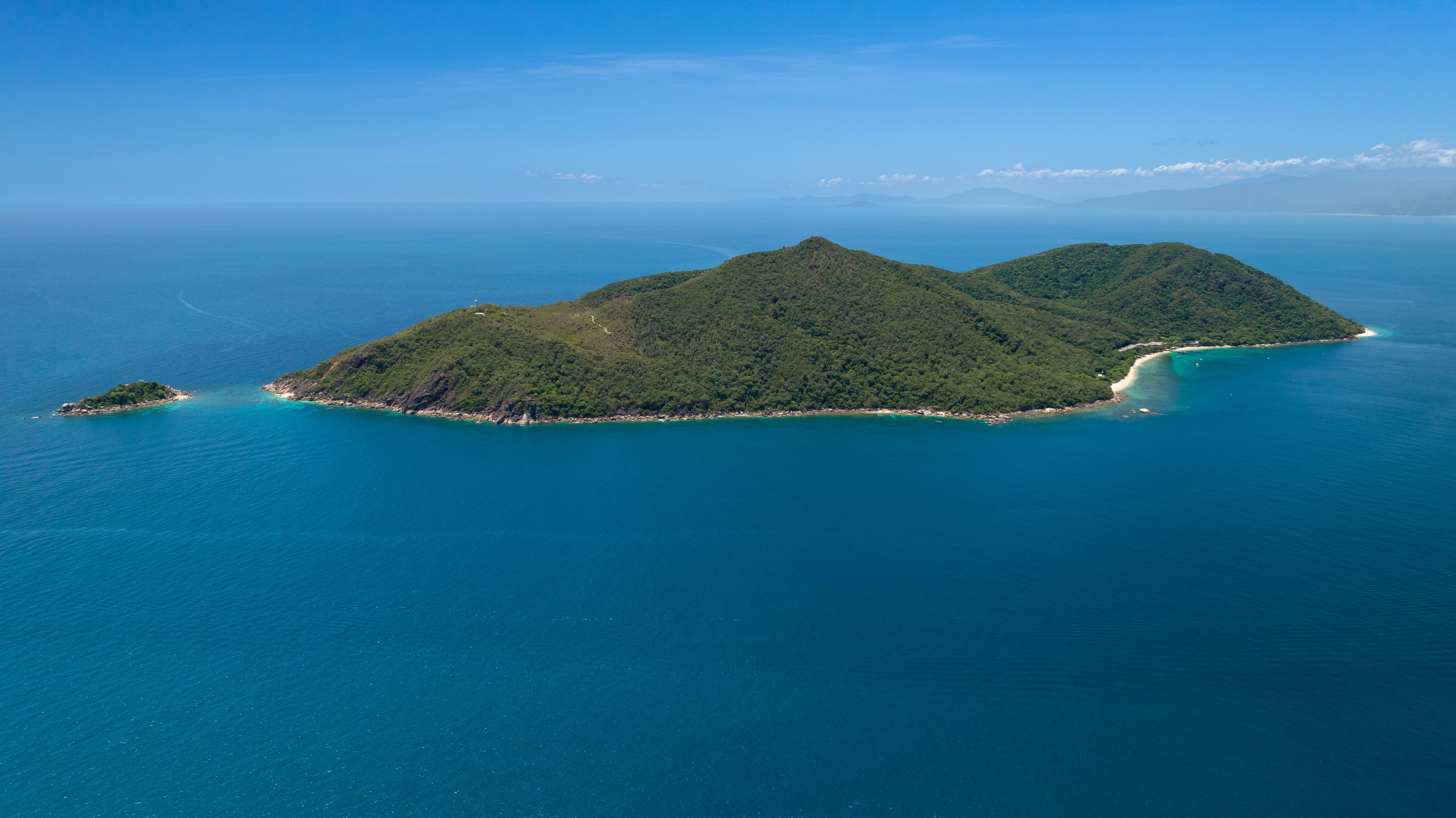
- Fitzroy Island is a single continental island 25km east of Cairns, a 45-minute fast catamaran ride away.
- Both islands were named by Lieutenant James Cook in 1770 — Fitzroy Island became national park in 1989; 4 of the 5 Frankland Islands (High, Normanby, Mabel, Round) were declared national park in 1936.
- Camping and fishing are both permitted at the Frankland Islands (free camping on Russell Island, 4 sites, maximum 16 people) — something neither Fitzroy Island nor Green Island allow.
- Fitzroy Island has 4 walking tracks up to 4km return; the Frankland Islands have 1 known short track (Normanby Island circuit, 1km return, 20 minutes).
- Fitzroy Island has a resort, a restaurant and a turtle rehabilitation centre. The Frankland Islands have toilets and mooring points, and little else — no bins, no campfires, no accommodation beyond camping.
Fitzroy Island vs the Frankland Islands at a glance
Here’s how the 2 compare on the facts that matter most when you’re deciding where to spend your day (or night) on the reef.
| Feature | Fitzroy Island | Frankland Islands |
|---|---|---|
| Distance from Cairns | 25km east, ~45 minutes by fast catamaran | 45km south-east; ~10km offshore from the Russell/Mulgrave river mouths |
| Number of islands | 1 | 5 (High, Normanby, Mabel, Round, Russell/Commonwealth) |
| Island type | Continental (granite) island | Continental islands (rocky outcrops, rainforest) |
| National park gazetted | 1989 | 1936 (4 of the 5 islands) |
| Named by Cook | 1770 | 1770 |
| Camping | Not permitted | Permitted (Russell Island — 4 free sites, max 16 people) |
| Fishing | Not permitted in protected waters | Permitted |
| Walking tracks | 4 tracks, 700m–4km return | 1 known track (Normanby Island circuit), 1km return, 20 minutes |
| Vegetation | Rainforest, open woodland, mangroves, coral beaches | Rocky outcrops, dense rainforest, mangroves, coastal vegetation |
| Facilities | Resort, Foxy’s, kiosk, turtle centre, day-use areas | Toilets and mooring points only — no bins, no campfires, no shop |
| Wildlife highlight | Turtle rehabilitation centre, Ulysses butterflies, monitor lizards | Nesting seabirds (protected sand spits), extensive fringing reef |
Getting there: Cairns to Fitzroy Island vs Cairns to the Frankland Islands
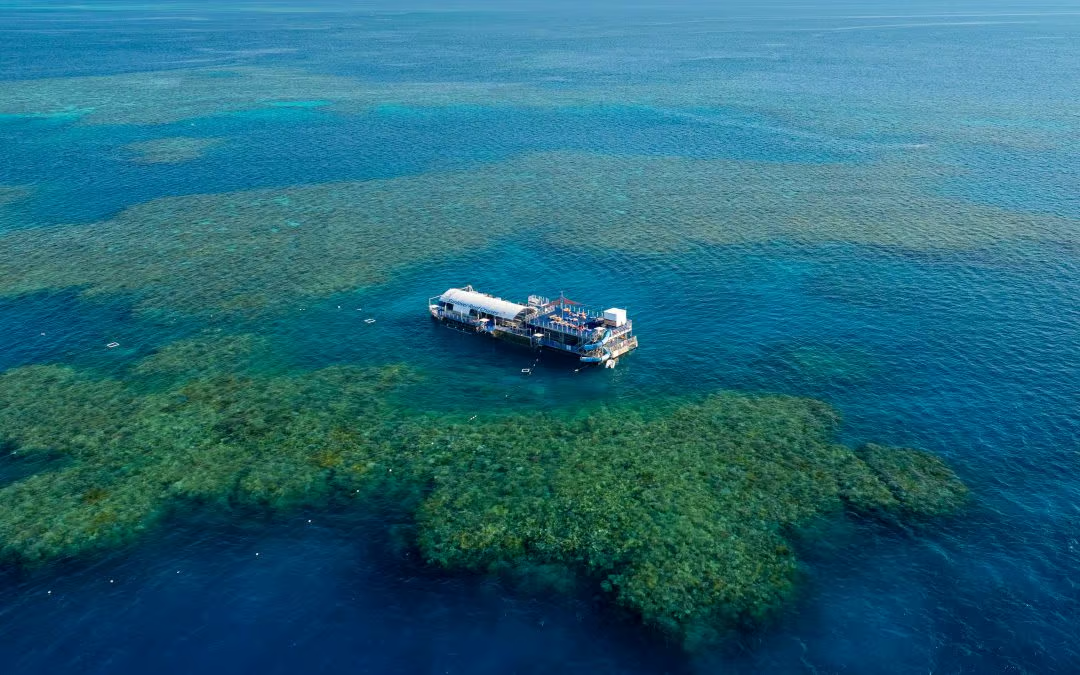
Fitzroy Island sits 25km east of Cairns. Sunlover runs the crossing by fast catamaran in around 45 minutes, departing directly from the Cairns waterfront. It’s close enough that Sunlover’s Reef & Island in a Day tour combines it with a morning on the Outer Great Barrier Reef at Moore Reef in a single day.

The Frankland Islands sit further out — 45km south-east of Cairns, and about 10km offshore from the mouths of the Russell and Mulgrave rivers, south of the city. Reaching them typically involves a road transfer south followed by a boat crossing from the river mouth, rather than a direct departure from the Cairns waterfront — a genuinely different kind of journey to Fitzroy Island’s short, direct catamaran hop.
Whichever island you’re aiming for, book ahead in peak season — the earliest departures tend to fill first. Because the Frankland Islands have no jetty or marina infrastructure to speak of, crossings there are more tide- and weather-dependent than Fitzroy Island’s marina-to-marina catamaran run, so it pays to build a little flexibility into your travel dates if the Franklands are the plan.
Why are these islands protected? World Heritage waters, different rules
Both Fitzroy Island and the Frankland Islands sit inside the Great Barrier Reef World Heritage Area, and both are surrounded by extensive fringing reef. But the rules on the water are noticeably different. Queensland Parks and Wildlife Service confirms that fishing is permitted around the Frankland Islands, and camping is permitted on Russell Island — a much more relaxed set of allowances than Fitzroy Island, where fishing isn’t permitted in the protected waters and camping isn’t permitted at all. The Frankland Islands’ surrounding waters were only added to the Great Barrier Reef Marine Park in 1983, more than 45 years after the islands themselves were first declared national park.
Seasonal environmental protections apply too: sand spits on Normanby and Russell islands are fenced off from 1 September to 31 March each year to protect nesting seabirds — a reminder that even with camping and fishing allowed, the Frankland Islands are still an actively managed conservation area, not an unregulated free-for-all.
Best time to visit
Both island groups sit close enough to Cairns to share its broad climate pattern. According to the Bureau of Meteorology’s long-term Cairns climate averages, the warmest, wettest months are January and February (mean maximums around 31.5°C, with 400mm+ of rain each month), while the cooler, drier months from June to August sit around 26°C with far less rain (as low as 27mm in August). Cairns records rainfall in every month of the year, so there’s no genuine “dry season” to bank on — the trend simply eases through the middle of the year.
If you’re planning to camp at the Frankland Islands, the cooler months (June–September) mean more comfortable nights and less risk of a washed-out trip. Remember too that the seabird-nesting sand spit closures run 1 September to 31 March, which can affect where you’re able to walk or land during that window.
Both are continental islands — so what’s actually different?
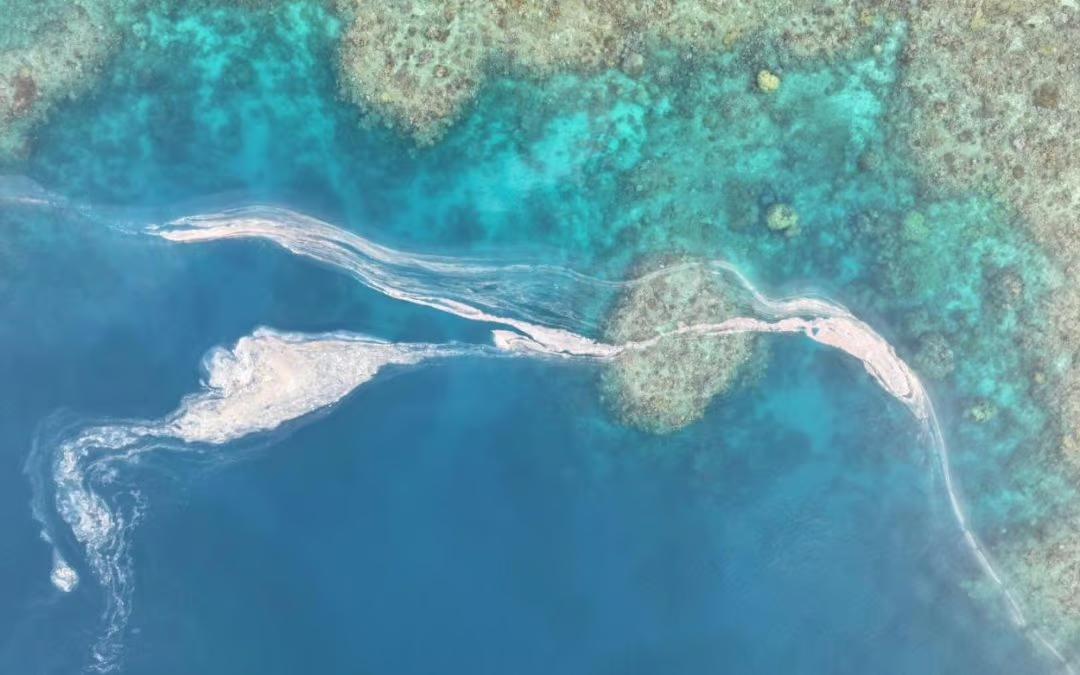
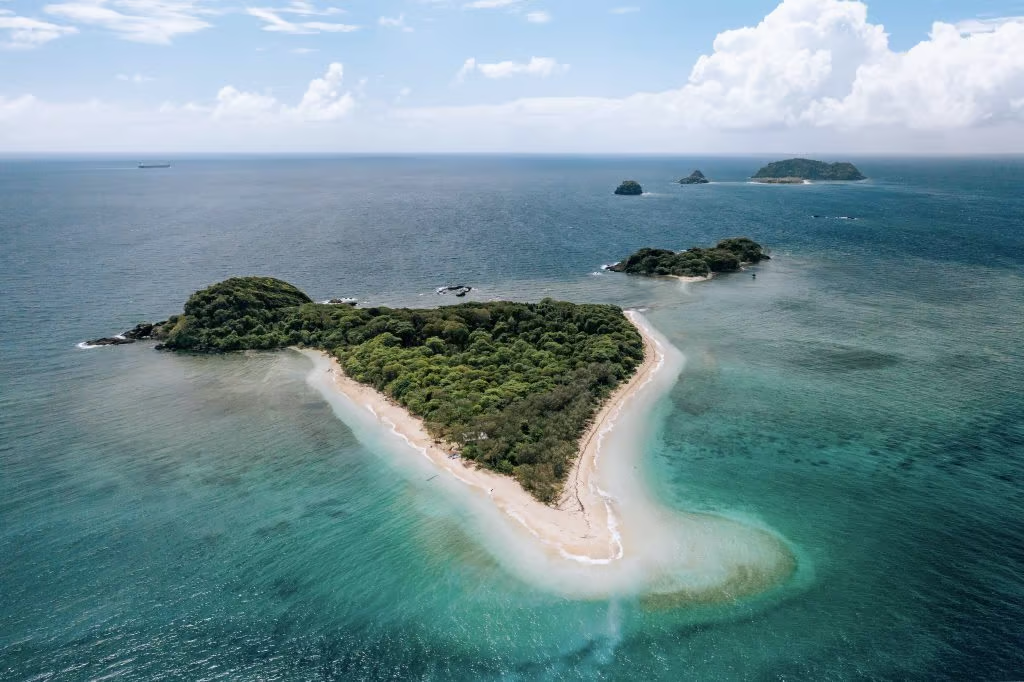
Unlike the Fitzroy Island vs Green Island comparison, this isn’t a continental-island-vs-coral-cay story — Fitzroy Island and the Frankland Islands are both continental islands, cut off from the mainland by rising seas rather than built up from coral. The real difference here is scale and development.
Fitzroy Island is a single island, sized and resourced for day-trippers and resort guests: a marina, a restaurant, a kiosk, graded walking tracks and a turtle rehabilitation centre. The Frankland Islands are a scattered group of 5 separate islands — High, Normanby, Mabel, Round and Russell (also called Commonwealth Island) — with almost none of that infrastructure. Queensland Parks and Wildlife Service describes the terrain as “rocky outcrops, dense rainforest, mangroves and coastal vegetation,” and the only facilities noted are toilets and mooring points, with no rubbish bins and no campfires allowed. It’s the same broad continental-island geology as Fitzroy, but a completely different visitor experience — remote and self-sufficient rather than resort-served.
Walking tracks: a clear gap
Fitzroy Island’s national park has 4 signed walking tracks, all within Queensland Parks and Wildlife Service’s official grading:
- Secret Garden track — 700m return, allow 25 minutes. A short rainforest walk past granite boulders to a viewing platform over a seasonal creek.
- Nudey Beach track — 1.2km return, allow 45 minutes. Rainforest and coastal woodland walking to one of Australia’s most photographed beaches.
- Lighthouse Road — 3.6km return, allow 2 hours. A steeper concrete wheel track through rainforest, with ocean views and the chance of whale sightings in winter.
- Summit Track — 4km return (including part of Lighthouse Road), allow 3 hours. Climbs to the island’s 269m summit through granite slabs and casuarina trees, with panoramic views over the island and reef.

The Frankland Islands have just 1 documented walking track: the Normanby Island circuit, a 1km return, 20-minute easy walk passing through rocky outcrops, dense rainforest, coastal vegetation and mangrove communities. If graded walking tracks and a proper hike matter to your trip, Fitzroy Island is the clear choice.
Snorkelling and marine life
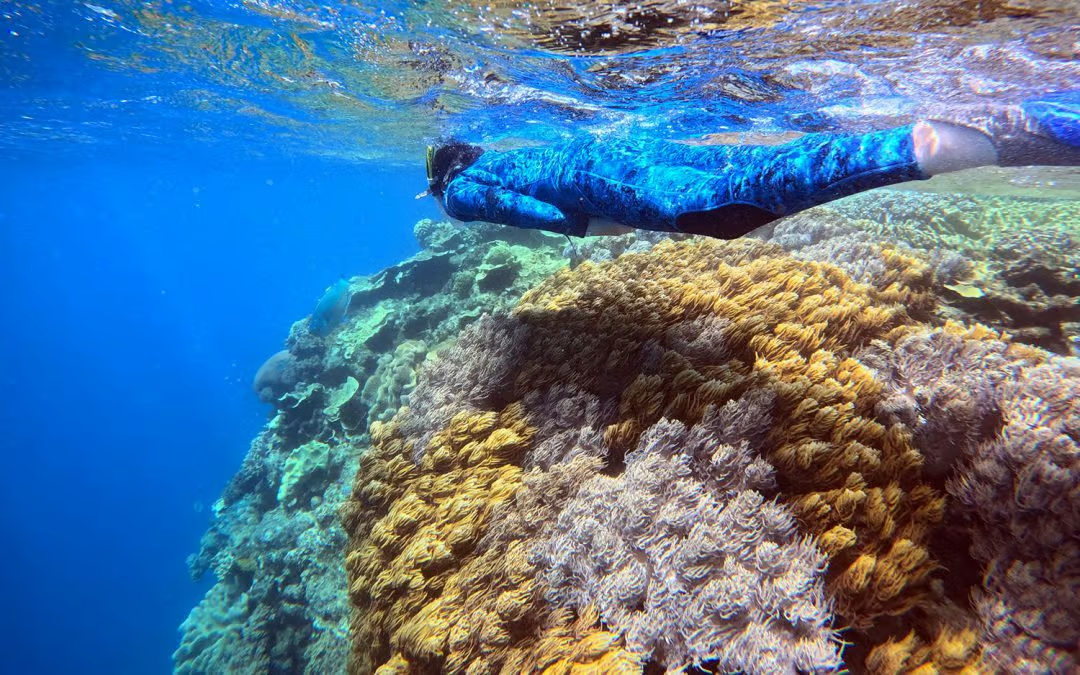
Both destinations sit inside the Great Barrier Reef World Heritage Area, surrounded by fringing reef.
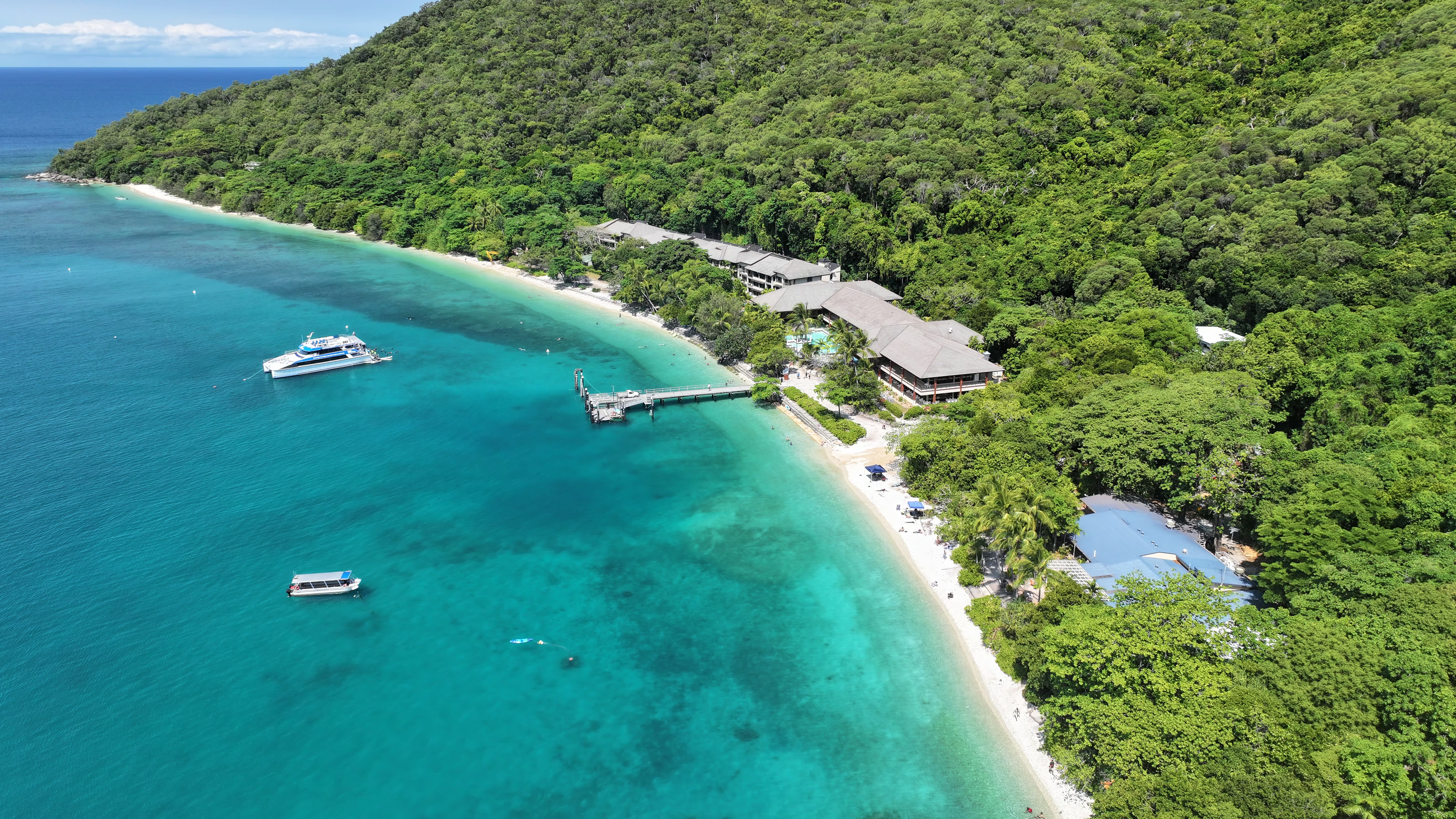
At Fitzroy Island, the fringing reef around Welcome Bay and off Nudey Beach is where most snorkelling happens, with Queensland Parks and Wildlife Service noting diverse fish species living on the coral right off the beach. Sunlover’s Fitzroy Island day packages also include a glass-bottom boat for guests who’d rather stay dry and still see the reef.
At the Frankland Islands, Queensland Parks and Wildlife Service specifically recommends the north and south-west sides of Normanby Reef, and the north and west edges of Russell Island, as the best snorkelling spots. Because fishing is permitted in these waters (unlike Fitzroy Island’s protected zone), the marine life mix and management approach is genuinely different — a more multi-use marine environment rather than a strict no-take zone.
Bring your own mask, snorkel and fins to the Frankland Islands — there’s no kiosk or dive shop to hire gear from, unlike Fitzroy Island where equipment hire and a glass-bottom boat are both available on the day. Anyone heading out from either island should also keep the standard tropical North Queensland precautions in mind: check current marine stinger advice before swimming, and stay alert for crocodiles in the shallows and around river mouths, particularly near the Russell and Mulgrave crossings to the Franklands.
Wildlife and nature
Fitzroy Island’s standout for wildlife lovers is its turtle rehabilitation centre, where sick and injured sea turtles recover before being released back to the reef. On land, Queensland Parks and Wildlife Service notes Fitzroy Island is home to Ulysses butterflies and monitor lizards, alongside the marine stingers and crocodile warnings typical of tropical North Queensland waterways.
The Frankland Islands’ standout is nesting seabirds — the sand spits on Normanby and Russell islands are fenced off every year from 1 September to 31 March specifically to protect nesting birds, and the surrounding reef is extensive enough to support real biodiversity. Queensland Parks and Wildlife Service also flags crocodile and marine stinger warnings here, the same regional caution as Fitzroy Island.
History: the same year, very different paths
Both places share an unusual coincidence: Lieutenant (later Captain) James Cook named both Fitzroy Island and the Frankland Islands in the same year, 1770, during his charting of the Australian east coast. From there, their stories diverge. Fitzroy Island became a quarantine station in 1876 for Chinese arrivals heading to the Palmer River Goldfields, gained its current lighthouse in 1970 (reportedly the last staffed lighthouse purpose-built in Australia), and wasn’t gazetted as national park until 1989.
The Frankland Islands moved faster on paper: a lighthouse was built on Russell Island in 1929, and High, Normanby, Mabel and Round islands were declared national park in 1936 — more than 50 years before Fitzroy Island. Their surrounding waters weren’t added to the Great Barrier Reef Marine Park until 1983. Queensland Parks and Wildlife Service also recognises the Mandingalby Yindinji and Gungandji Aboriginal peoples as Traditional Owners of this sea country.
It’s a useful reminder that “national park” and “Great Barrier Reef Marine Park” are separate layers of protection, gazetted at different times and covering different things — the land above the high-water mark versus the water and reef around it. At the Frankland Islands, more than 45 years separate the dates: the islands themselves became national park in 1936, but it wasn’t until 1983 that the surrounding reef and waters gained Marine Park status. Fitzroy Island’s timeline is more compressed by comparison, with national park gazettal following not long after its working history as a quarantine station wound down.
Facilities, camping and accessibility
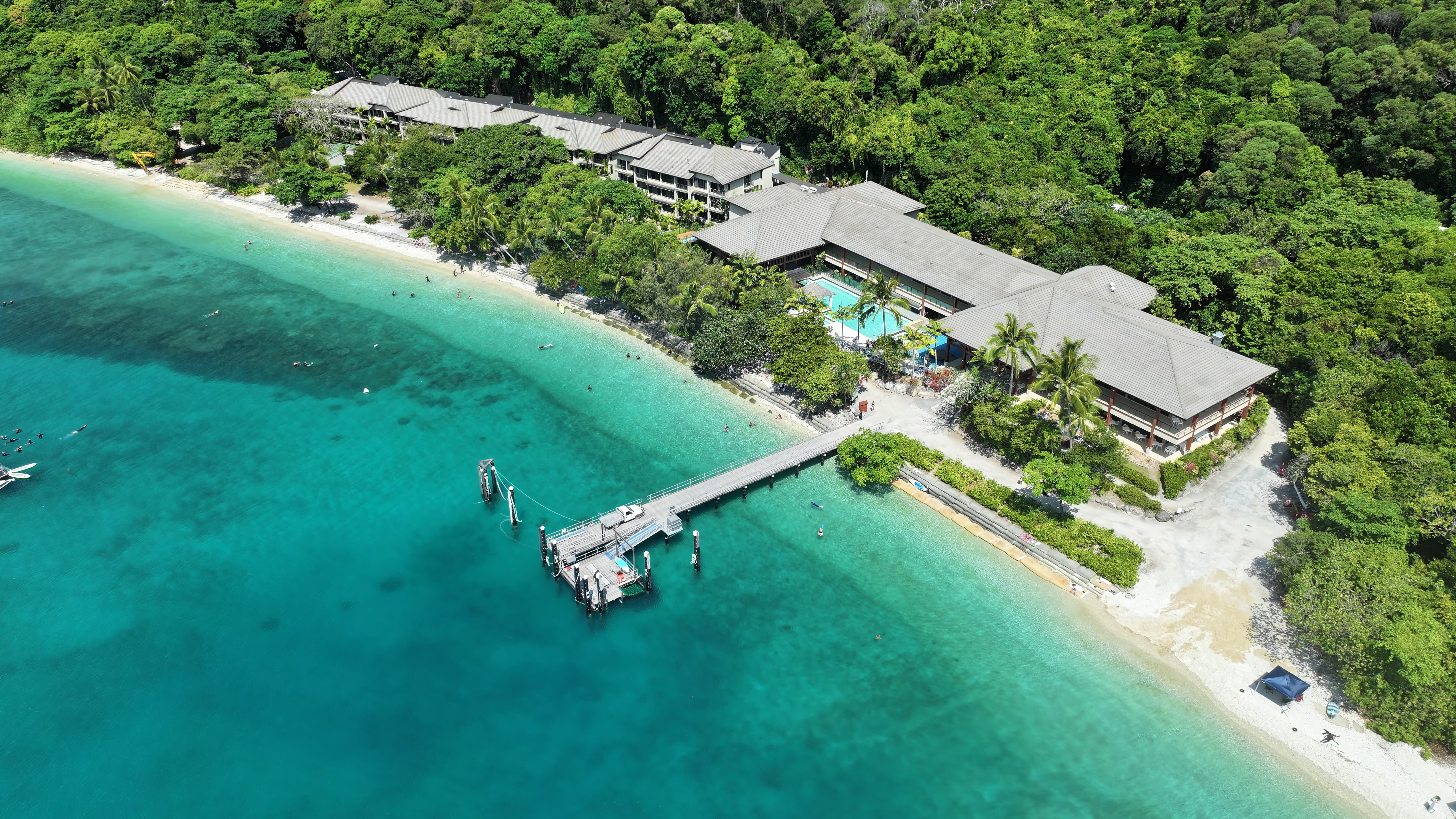
Fitzroy Island has the larger footprint of visitor infrastructure by far: a resort, Foxy’s (the island’s casual eatery), a kiosk, day-use picnic areas and the turtle centre. It’s set up for a full day trip, or longer if you’re staying at the resort.
The Frankland Islands have almost none of that. Queensland Parks and Wildlife Service lists toilets and mooring points as the only facilities, with no rubbish bins (pack out everything you bring in) and campfires prohibited. What the Franklands do offer that Fitzroy Island doesn’t is actual overnight camping — 4 free campsites on Russell Island, capped at 16 people, with strict rules around human waste disposal (buried at least 15cm deep and 100m from campsites and tracks) that make clear this is genuine wilderness camping, not a resort campground.
Planning ahead: permits, tides and what to pack
Fitzroy Island and the Frankland Islands need very different levels of preparation. A Fitzroy Island day trip is close to grab-and-go: buy a ferry ticket or package and turn up at the Cairns waterfront. A picnic box is included if you’ve booked the Best of Island package; otherwise, grab lunch at Foxy’s or bring your own. You’ll still want a hat, reef-safe sunscreen and swimwear, but nothing you can’t sort out on the day.
A Frankland Islands camping trip needs real planning. Because it’s a Queensland national park camping ground, an overnight stay on Russell Island requires a camping permit booked in advance through the Queensland Parks and Wildlife Service booking system — camping without one isn’t permitted, and sites are limited to begin with (just 4 sites, capped at 16 people total). With no shop, no bins and no fresh water supply on the island, you’ll need to carry in everything you’ll eat and drink and carry every scrap of it back out again, including all rubbish. Fuel stoves are the only cooking option, since open campfires aren’t allowed. If fishing is part of the plan, check current Queensland fishing rules and size/bag limits before you go, since these can change independently of the island’s camping and access rules.
Tides matter more at the Frankland Islands too. Because there’s no dedicated jetty, getting ashore (and getting your gear ashore) is more exposed to tide and sea conditions than Fitzroy Island’s marina landing, which is one more reason to build a buffer day into your schedule if you’re travelling any distance to camp there.
What does a Fitzroy Island day trip cost?
Sunlover’s current Fitzroy Island pricing (per person, valid for travel from 1 April 2026 to 31 March 2027; family = 2 adults + 2 children aged 4–15, with the second child free):
- Return ferry only — $109 adult / $63 child / $281 family
- Island Essentials Package — $134 adult / $85 child / $353 family
- Island Value Package — $166 adult / $110 child / $442 family
- Best of Island Package — $202 adult / $137 child / $541 family
- Reef & Island in a Day (Moore Reef pontoon in the morning, the afternoon on Fitzroy Island) — $347 adult / $195 child / $889 family, fuel levy included
Fitzroy Island fares don’t carry a fuel levy; Reef & Island in a Day does, and it’s already included in the price above.
So which should you choose?
Fitzroy Island and the Frankland Islands suit genuinely different travellers.
- Choose Fitzroy Island if: you want an easy day trip with real facilities — a restaurant, a kiosk, graded walking tracks, a turtle centre — or you want to combine it with a morning on the Outer Great Barrier Reef in a single day.
- Choose the Frankland Islands if: you want a genuinely remote, back-to-basics island experience, you’re keen to camp overnight on a national park island, or fishing is part of your trip.
- Can’t decide? Sunlover’s Reef & Island in a Day tour is currently the only way to pair the Outer Reef with Fitzroy Island in one trip.
There’s also a simple time-and-effort test worth applying to your own trip. Fitzroy Island suits a single day, a family group, or anyone who wants the reef and an island both sorted without extra planning. The Frankland Islands suit a longer, self-planned trip — ideally with at least one full day up your sleeve either side of tide-dependent crossings — and travellers who are comfortable being fully self-sufficient once they’re on the ground.

Is the Frankland Islands a single island or several?
Several — the Frankland Islands (or Frankland Group) is a cluster of 5 continental islands: High Island, Normanby Island, Mabel Island, Round Island and Russell Island (also called Commonwealth Island). Fitzroy Island, by contrast, is a single island.
How far are the Frankland Islands from Cairns?
The Frankland Islands sit about 45km south-east of Cairns, roughly 10km offshore from the mouths of the Russell and Mulgrave rivers.
How far is Fitzroy Island from Cairns?
Fitzroy Island is 25km east of Cairns. Sunlover’s fast catamaran makes the crossing in around 45 minutes.
Can you camp on Fitzroy Island or the Frankland Islands?
Camping is not permitted on Fitzroy Island. The Frankland Islands are the exception among these comparisons — Russell Island has 4 free campsites, capped at 16 people, making it a genuine option for a wilderness camping trip.
Can you fish at the Frankland Islands or Fitzroy Island?
Fishing is permitted in the waters around the Frankland Islands. It isn’t permitted in Fitzroy Island’s protected waters. This is one of the biggest practical differences between the 2.
Which has better walking tracks?
Fitzroy Island, by a clear margin. It has 4 graded national park tracks from 700m to 4km return, including a climb to its 269m summit. The Frankland Islands have just 1 documented track — the Normanby Island circuit, a 1km return, 20-minute easy walk.
Which is better for snorkelling?
Both offer genuine reef snorkelling. Fitzroy Island’s snorkelling is concentrated around Welcome Bay and Nudey Beach, with a glass-bottom boat option for non-swimmers. At the Frankland Islands, Queensland Parks and Wildlife Service recommends the north and south-west sides of Normanby Reef and the north and west edges of Russell Island.
Does Fitzroy Island have accommodation?
Yes — Fitzroy Island Resort offers overnight stays, alongside day-trip facilities like Foxy’s and a kiosk. The Frankland Islands have no resort accommodation at all — camping on Russell Island is the only overnight option.
What wildlife will you see at each?
Fitzroy Island’s highlight is its turtle rehabilitation centre, plus Ulysses butterflies and monitor lizards on land. The Frankland Islands are known for nesting seabirds — sand spits on Normanby and Russell islands are seasonally fenced off (1 September to 31 March) to protect them — alongside an extensive fringing reef.
Which island is better for families with young kids?
Fitzroy Island, for most families — calm bays, easier walking tracks, a glass-bottom boat, a turtle rehabilitation centre and real dining options make for an easier day out. The Frankland Islands’ lack of facilities (no shop, no bins, no accommodation beyond camping) suits older kids and more self-sufficient, adventurous families better than young children.
When were Fitzroy Island and the Frankland Islands named?
Both in 1770, by Lieutenant James Cook during his charting of the Australian east coast. Fitzroy Island wasn’t declared national park until 1989, while 4 of the 5 Frankland Islands (High, Normanby, Mabel, Round) were declared national park back in 1936.
Do you need a permit to camp at the Frankland Islands?
Yes. Russell Island’s 4 campsites are part of a Queensland national park camping ground, so an overnight stay needs to be booked and paid for in advance through the Queensland Parks and Wildlife Service booking system. Turning up without a booking isn’t an option, and with only 4 sites capped at 16 people, availability is limited.
Is there food, water or a shop at the Frankland Islands?
No. There’s no shop, no bins and no fresh water supply on the Frankland Islands, so campers need to carry in all their own food, drinking water and cooking gear (fuel stoves only — campfires aren’t allowed) and carry every piece of rubbish back out again. Fitzroy Island, by contrast, has a resort,
a restaurant and a kiosk.
Ready to explore Fitzroy Island?
Combine the Outer Great Barrier Reef with an afternoon on Fitzroy Island in a single day.
Sources: Queensland Parks and Wildlife Service — Fitzroy Island National Park and Frankland Group National Park park guides (about, things-to-do). Great Barrier Reef Marine Park Authority — Marine Park zoning framework. Bureau of Meteorology — Cairns Aero climate averages (station 031011). Pricing per Sunlover Reef Cruises, current price list, travel 1 April 2026 – 31 March 2027.