Reef Wildlife
Big, blue-green and full of personality, the humphead Maori wrasse is one of the stars of the Great Barrier Reef. Here is what scientists know about this gentle giant, and how to enjoy an encounter without harming it.
The short version
- The humphead Maori wrasse is the largest wrasse in the world, reaching up to 2.3 m and 190 kg.
- It lives across the whole Great Barrier Reef, with larger fish on outer reef slopes.
- Every Maori wrasse starts life as a female. Some change into males later in life.
- It is no take in Queensland. Never touch, chase or feed one; let it come to you.
How to recognise a Maori wrasse
You will know a Maori wrasse when you see one. Its scientific name is Cheilinus undulatus, and the Australian Museum describes it as the largest member of the wrasse family. Look for:
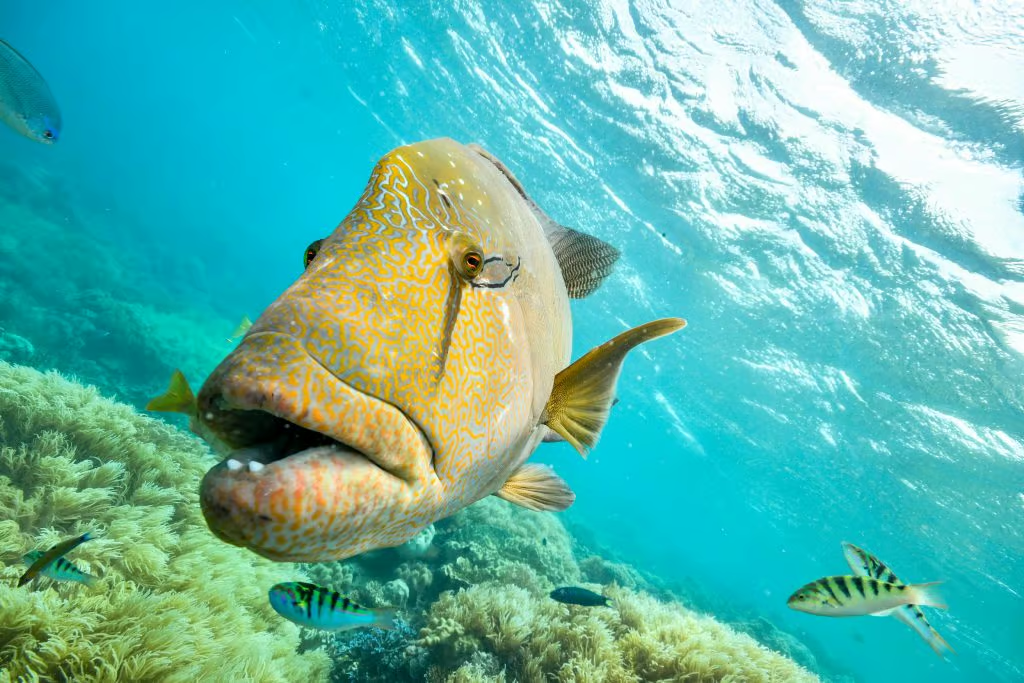
- A big, solid body, often blue-green, much larger than the reef fish around it
- A hump on the forehead, which becomes more obvious in larger adults
- Thick lips and wavy lines on the face, which gave the species its name, undulatus
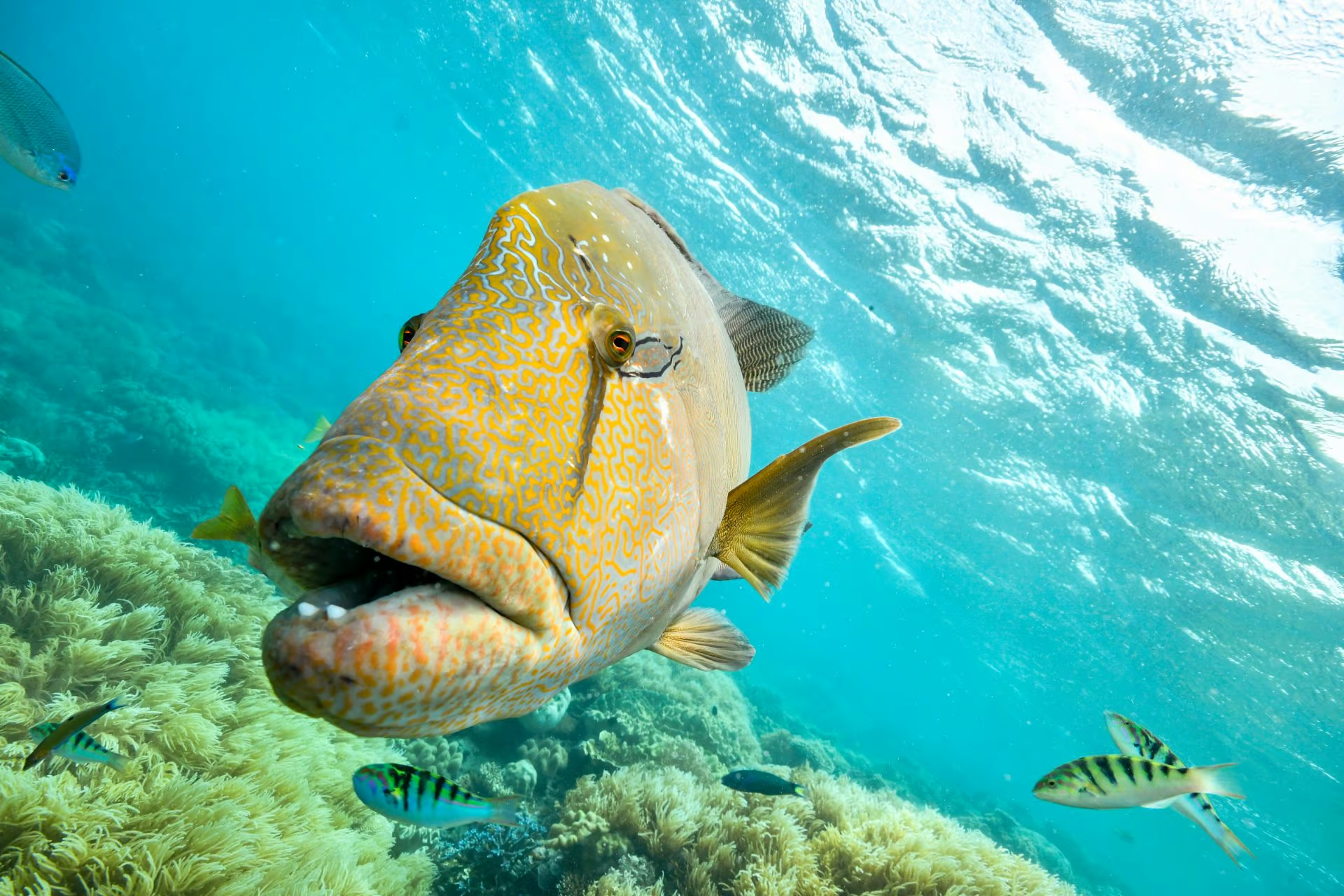
Our resident wrasse at Moore Reef
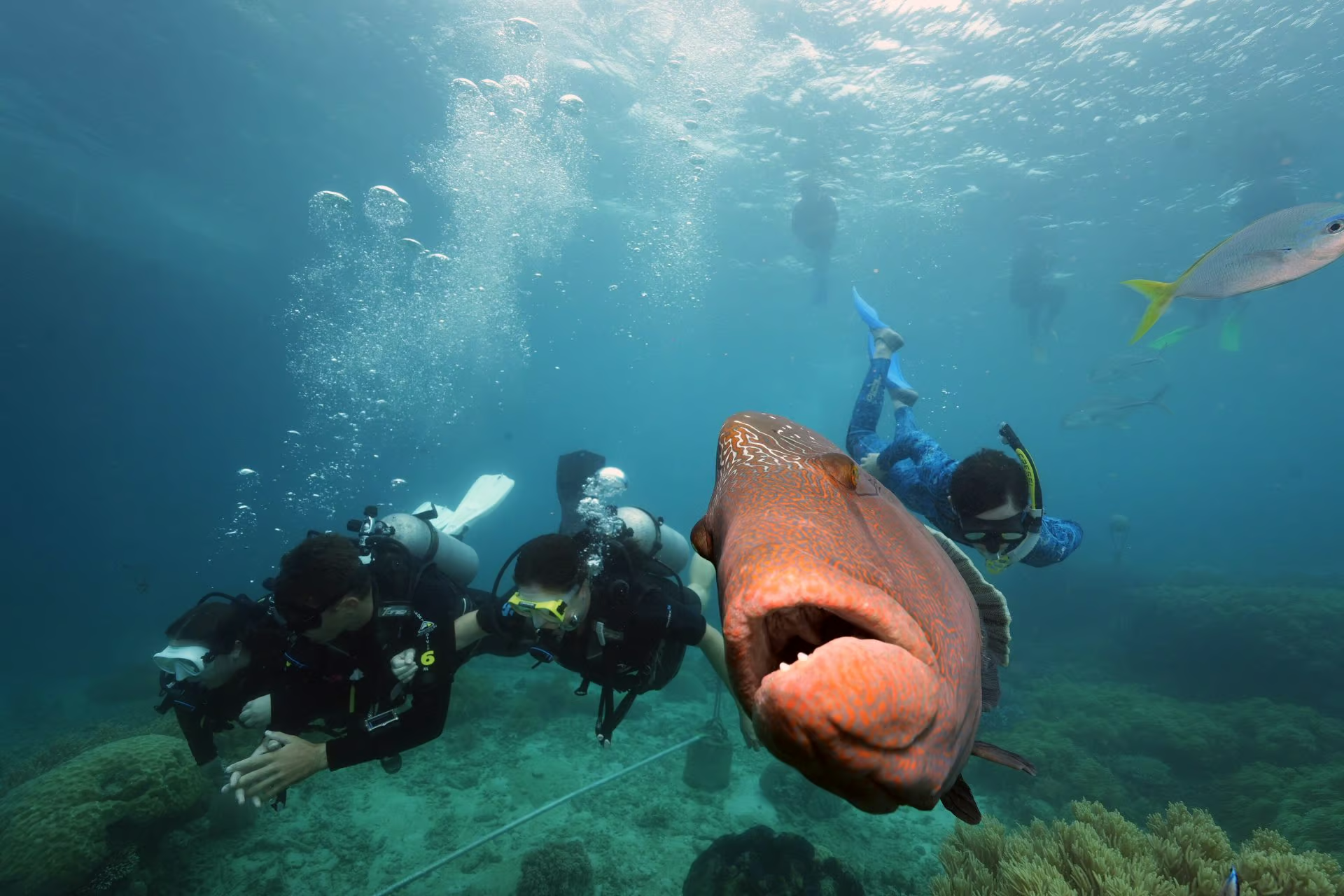
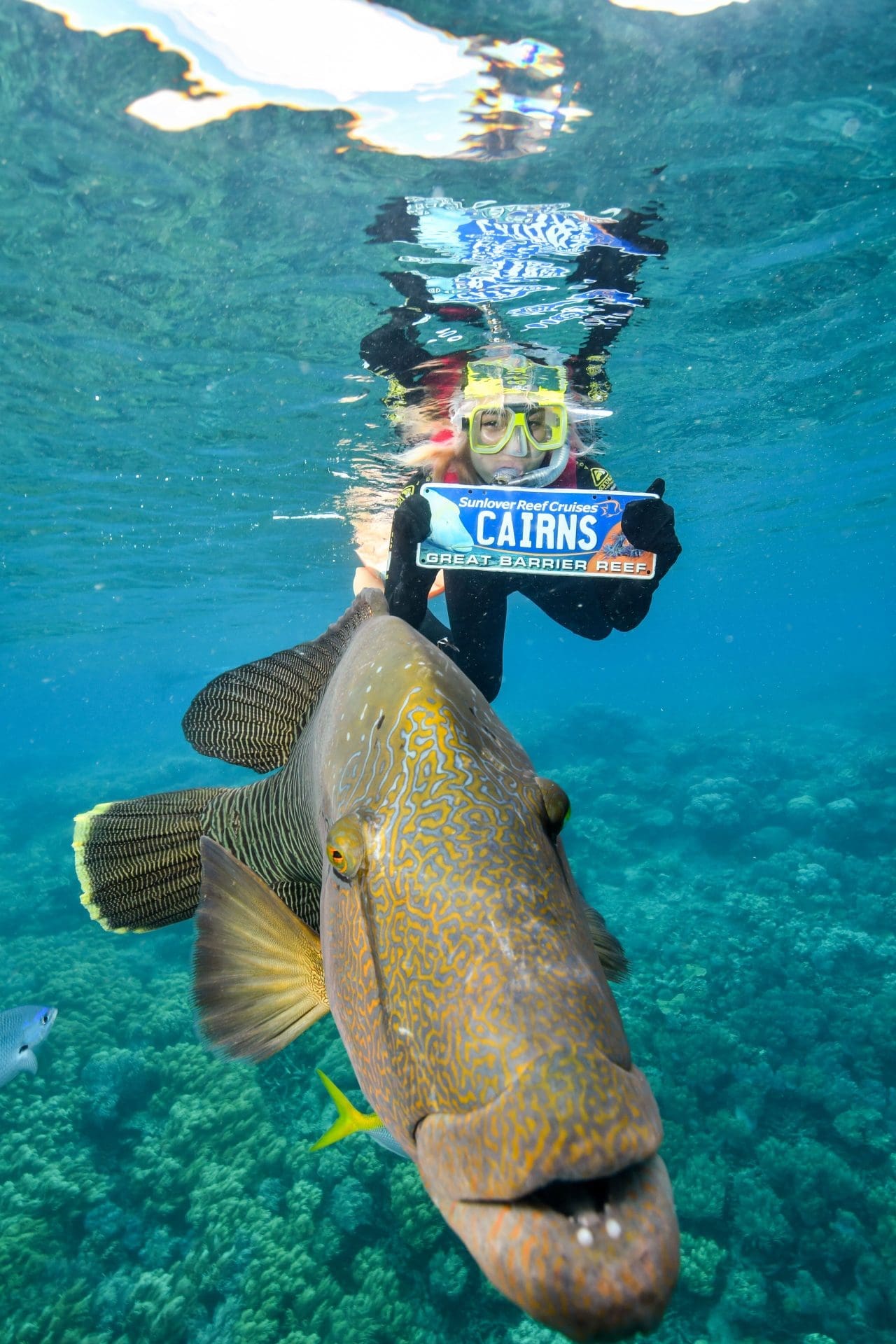
Moore Reef has its own resident Maori wrasse, a familiar face to our crew, divers and snorkellers. It often cruises up to people in the water around our pontoon, which makes it one of the most photographed animals on our reef days. Meeting a fish this large, this close, is something guests talk about long after they get home.
What do Maori wrasse eat?
The Australian Museum lists molluscs, fishes, sea urchins and crustaceans on the Maori wrasse menu. Its strong jaws and teeth let it crunch through shells and spiny animals that other fish leave alone.
A slow life on the reef
Researchers from James Cook University studied the age and growth of humphead wrasse on the Great Barrier Reef. Choat and colleagues found that:
- Females live longer: females were found up to 30 years old and males up to 25 years old.
- All start as females: the species changes sex from female to male, a pattern called protogyny.
- Males come later: males appeared from about 9 years old and about 70 cm long.
- Not every fish changes: some females never change into males.
- Males grow bigger: males reached about 140 cm in length.
A long life and a slow start mean a population takes a long time to recover if large fish are removed. That is one reason the humphead Maori wrasse is fully protected from fishing in Queensland.
Where to see one
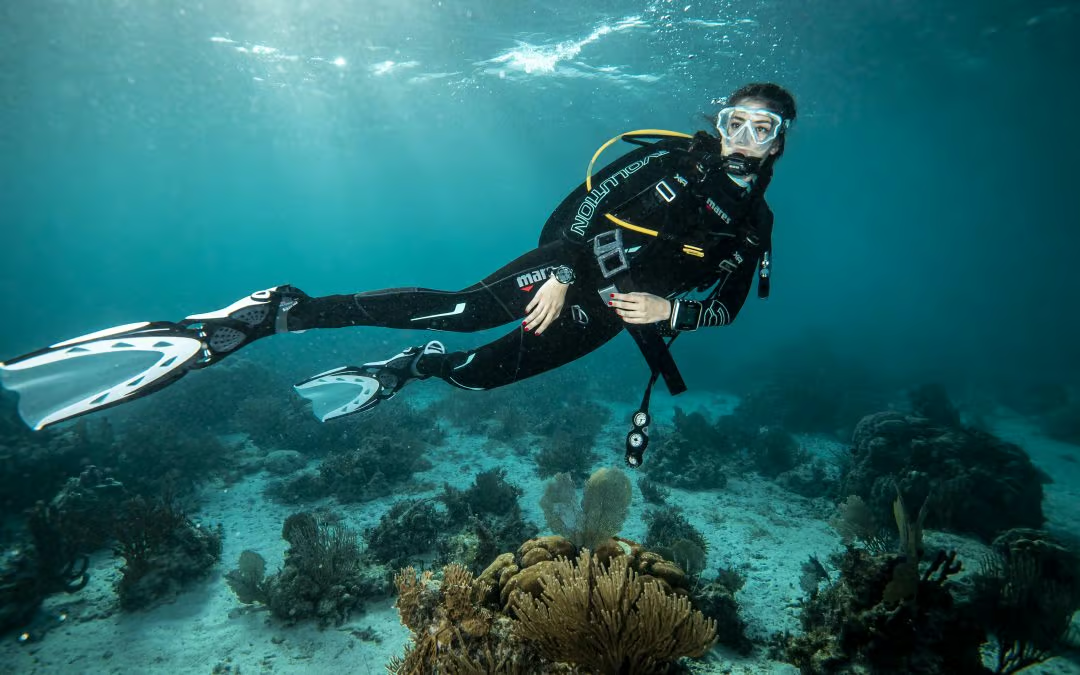
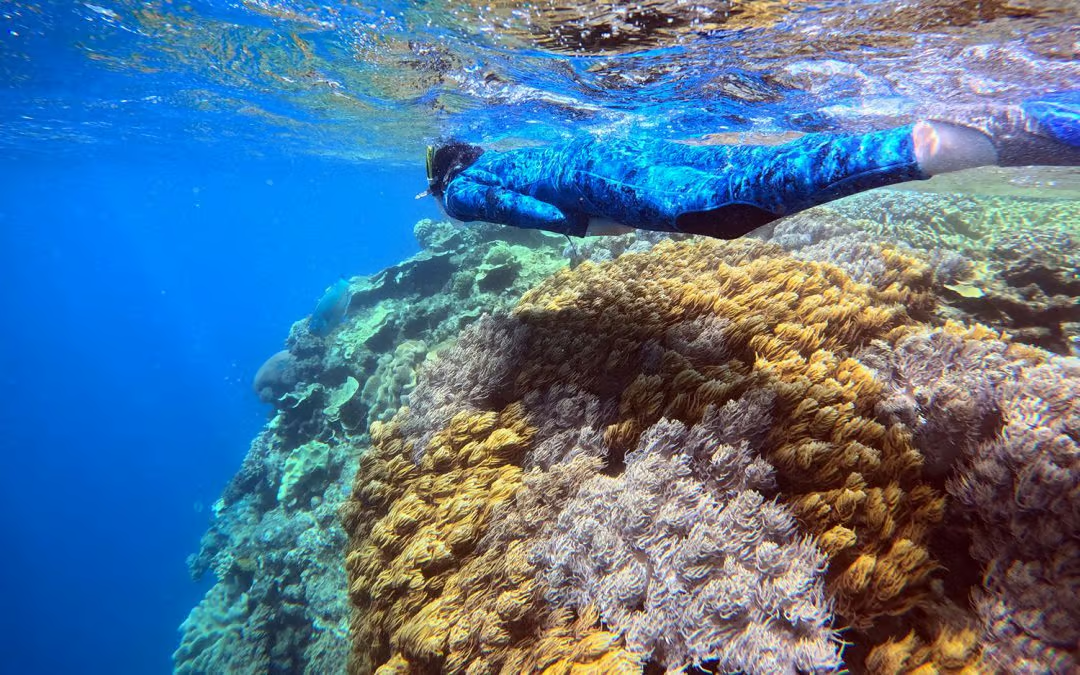
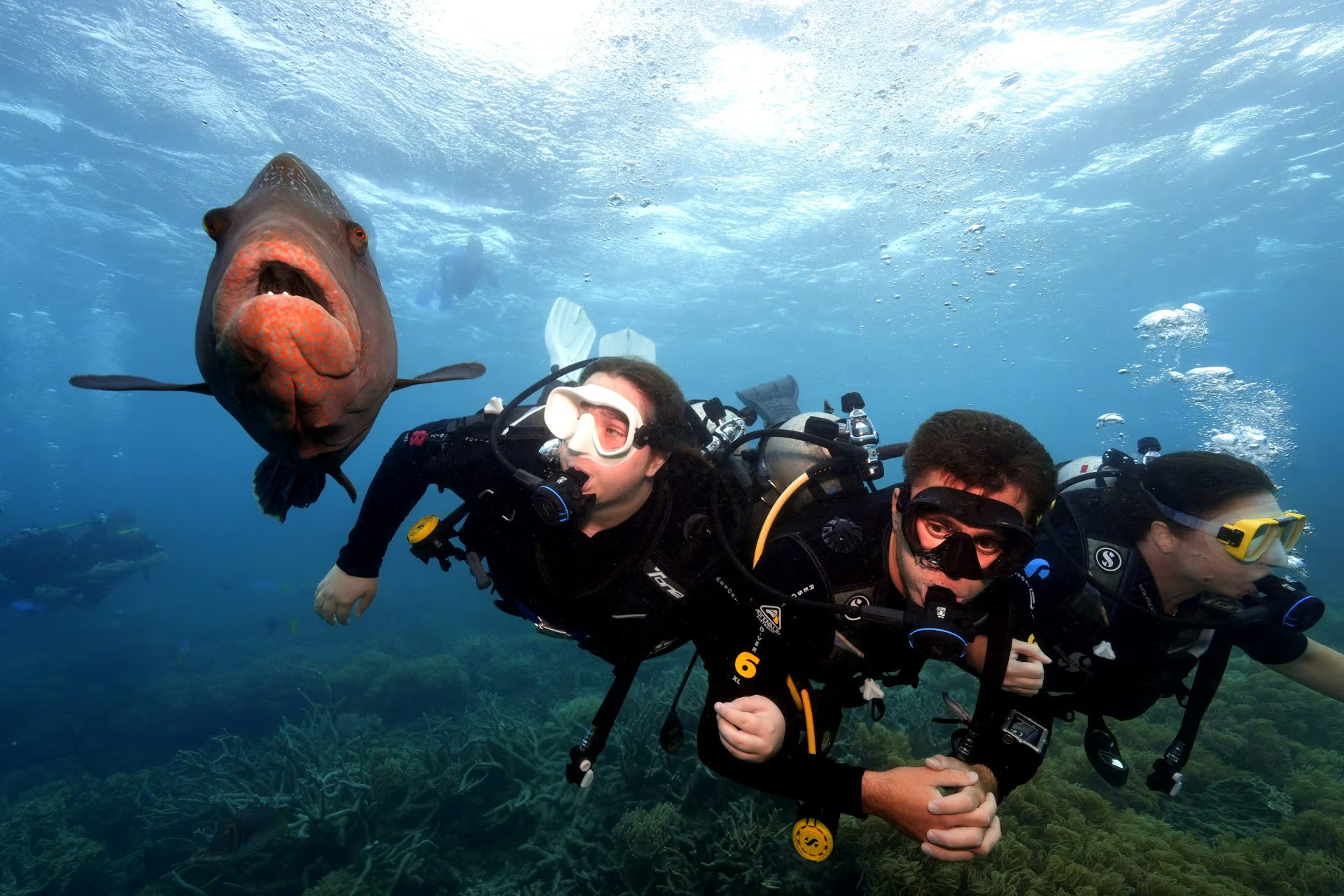
The Australian Museum notes the Maori wrasse is found throughout the Great Barrier Reef, with larger fish usually on outer reef slopes in about 10 to 100 m of water. That makes outer reefs like Moore Reef a great place to meet one, whether you are snorkelling from the pontoon, taking a guided snorkel tour or diving.
How to behave around a Maori wrasse
The Reef Authority asks snorkellers and divers to be mindful of all marine life: do not touch, prod or chase animals, and avoid making loud noises. A curious wrasse makes that easy, because it often comes to you.
- Let it come to you. Stay still and enjoy the moment.
- Never touch, hold or try to ride the wrasse. Touching can damage the protective slime coat that covers its body.
- Never feed it. Human food is not part of a healthy wrasse diet.
- Do not chase it for a photo. The best photos come when the fish is relaxed.
- Divers: keep your buoyancy under control and stay off the reef.
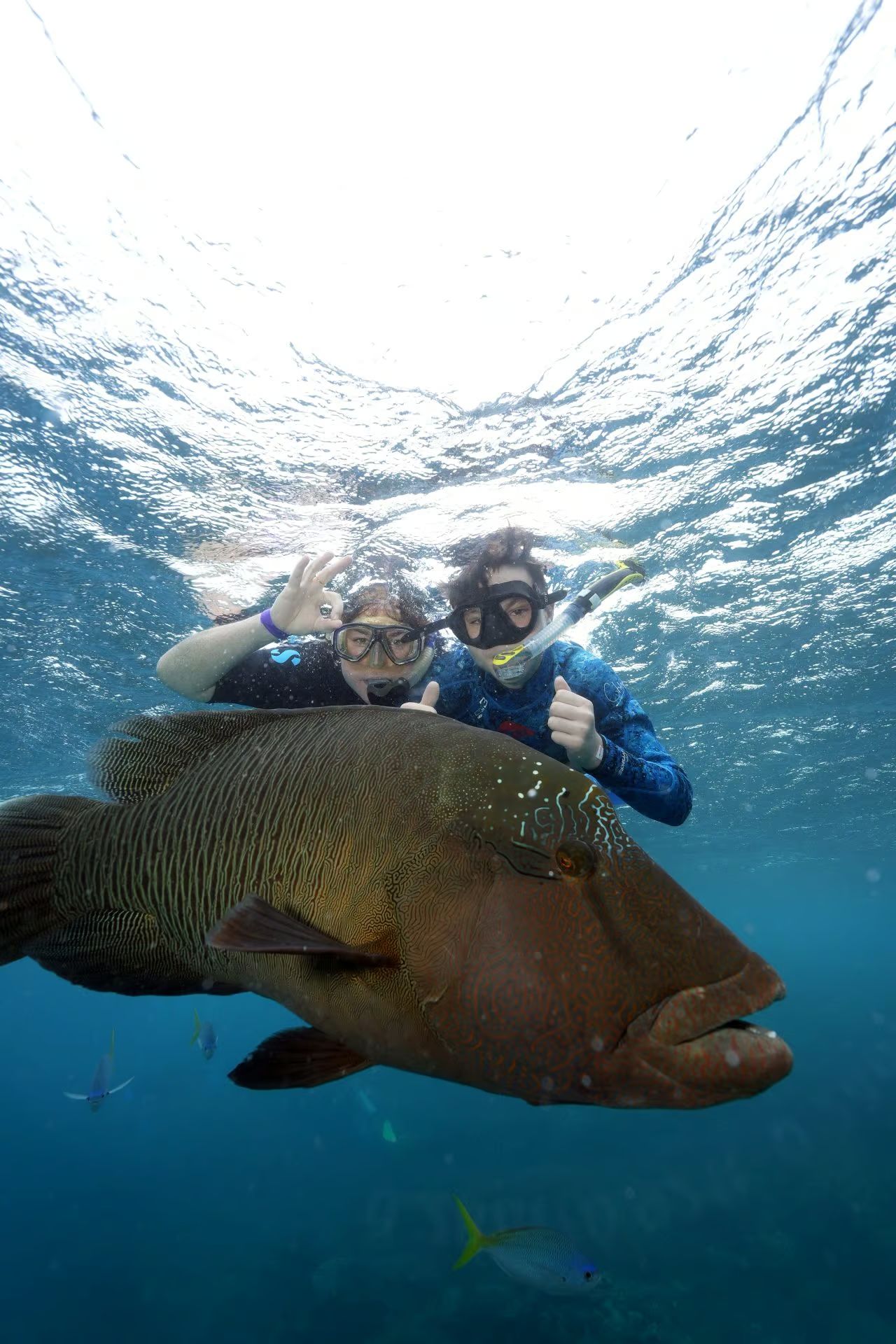
Meet the wrasse at Moore Reef
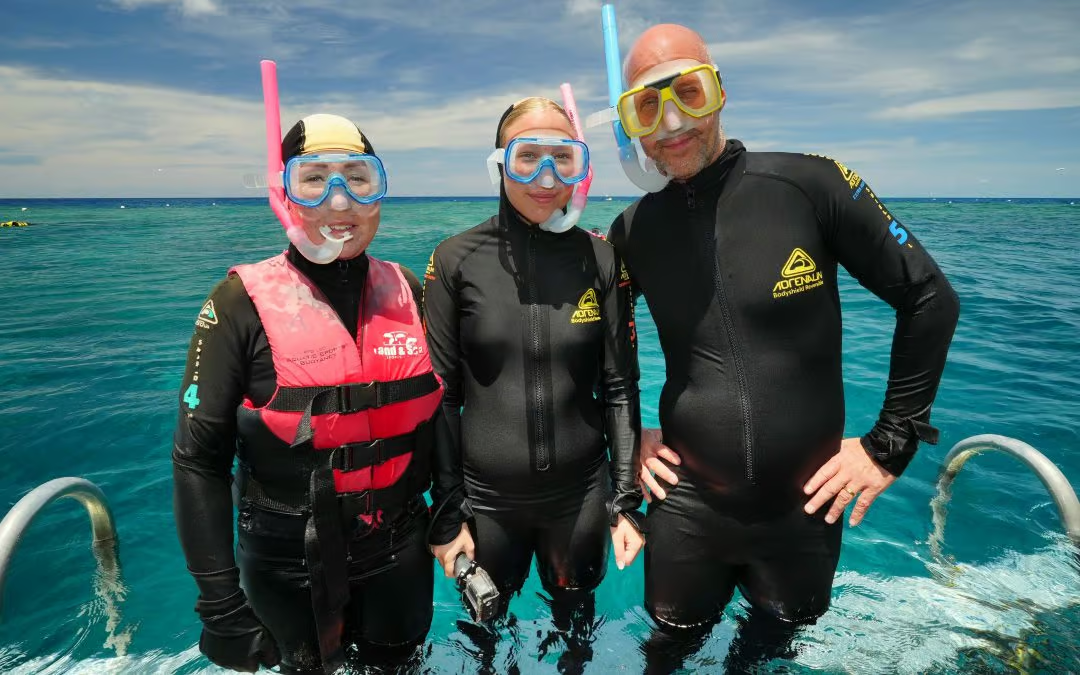
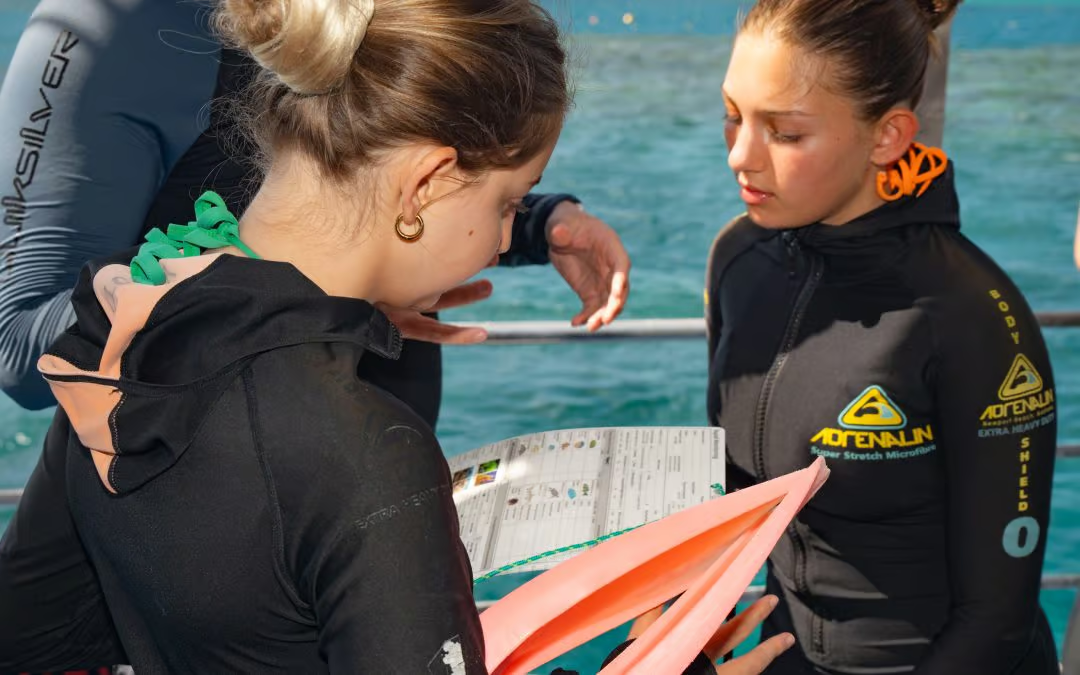
Snorkel, dive or take a guided snorkel tour from our Moore Reef pontoon, with marine biologists on board every day.
Maori wrasse FAQs
How big do Maori wrasse get?
The humphead Maori wrasse is the largest wrasse in the world. The Australian Museum reports it can reach 2.3 m and 190 kg, although most fish you see on the reef are much smaller.
Is the Maori wrasse friendly?
Maori wrasse are often curious and may swim up close to snorkellers and divers, especially our resident wrasse at Moore Reef. They are still wild animals, so let them come to you and never touch or feed them.
Can I touch a Maori wrasse?
No. Like other fish, wrasse are covered in a protective slime coat, and touching them can damage it and cause stress. Enjoy the encounter by watching, not touching.
Why is it called a humphead wrasse?
Larger adults develop a prominent hump on the forehead, which gives the fish its name. Its scientific name, Cheilinus undulatus, refers to the wavy lines on its face.
Is the Maori wrasse protected?
Yes. In Queensland the humphead Maori wrasse is no take, which means it cannot be kept by recreational fishers.
Sources: Australian Museum, Humphead Maori Wrasse; Choat JH, Davies CR, Ackerman JL, Mapstone BD (2006) Age structure and growth in a large teleost, Cheilinus undulatus, with a review of size distribution in labrid fishes. Marine Ecology Progress Series 318:237-246 (James Cook University); Queensland Government, Tidal water size and possession limits; Reef Authority, Cairns zoning map and responsible reef practices.
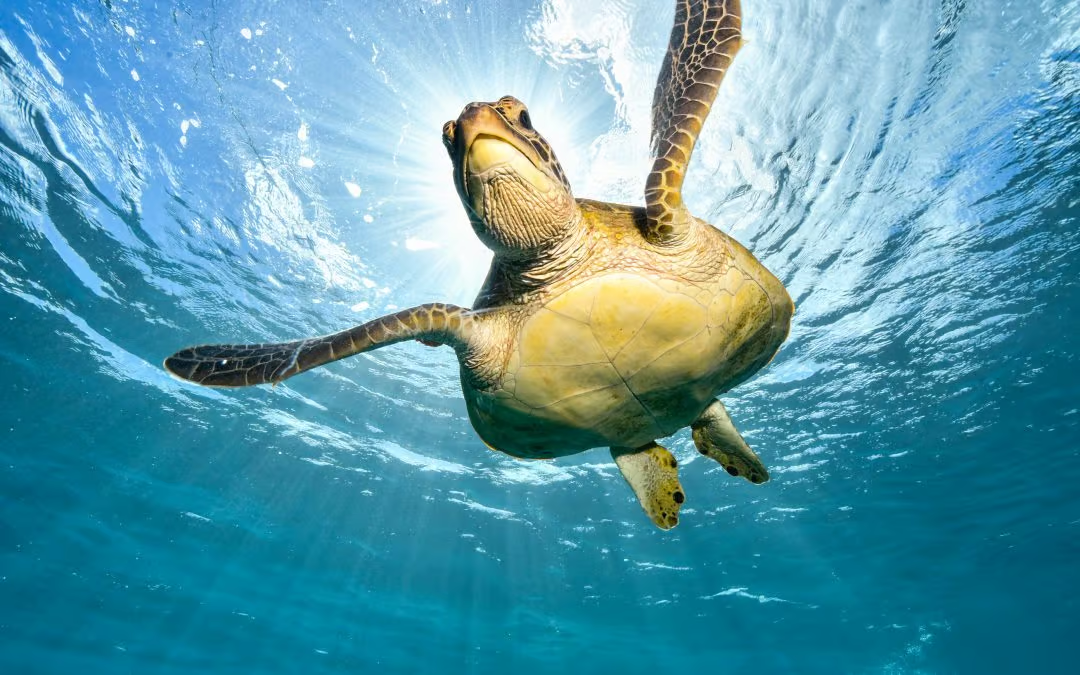
Keep exploring: meet the green and hawksbill turtles of Moore Reef, or see diving at Moore Reef.
Written by the team at Sunlover Reef Cruises, who run daily trips to Moore Reef on the outer Great Barrier Reef, with marine biologists on board every day.