It is the question people ask us quietly, usually just before they book: what happens if I can’t do it? There is surprisingly little straight information about this online, so here is ours — including what it costs, which is the part most operators leave out.
Quick answer: no, but you can run out of time
Scuba certification is competency-based, not pass or fail. You are signed off on each skill once you can do it safely, and if a skill is not there yet you practise it until it is. There is no written exam to fail and no limit on attempts. What does occasionally happen is that people run out of days — and that has several solutions.
Key takeaways
- There is no exam to fail. Each skill is signed off when you can perform it safely.
- Needing extra time on a skill is normal and expected. It is not a mark against you.
- If you run out of days, we look at getting you back out on a later trip or issuing an SSI referral so you can finish elsewhere. Case by case, both options are real.
- Your completed training stays on your record — you never repeat the parts you have already done.
- If a doctor will not clear you to dive and you tell us before training starts, we refund the course in full.
- We have trained more than 110,000 divers off Cairns. Repeated skills and first-dive nerves are our normal, not an exception.
Can you actually fail a scuba course?
Not in the way a driving test or a school exam has a fail. There is no single moment where someone tells you that you did not make it.
Recreational dive training is competency-based. Your instructor works through a list of skills with you — clearing a mask, sharing air, controlling your buoyancy, an emergency ascent — and signs each one off when you can perform it safely and repeat it. If you cannot yet, you practise it again. Then again, if that is what it takes. The standard does not bend, but there is no limit on attempts.
So the honest answer is that people do not fail scuba courses. Occasionally people run out of time, which is a completely different problem.
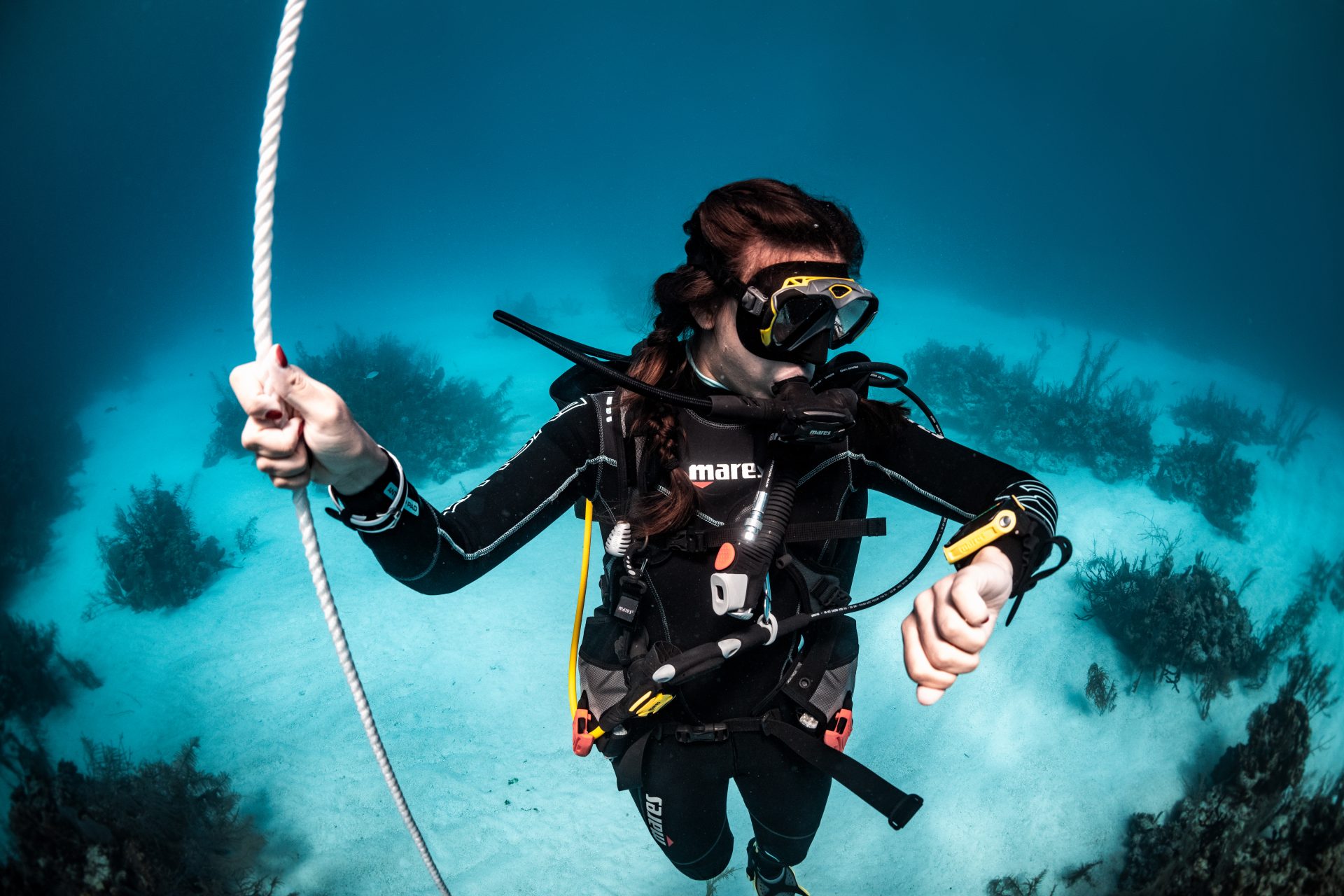
What happens in each situation — the honest table
This is the part we would have wanted to read before booking a course, so here it is in one place.
| What happens | What we do | What it costs |
|---|---|---|
| A skill takes you longer than the group | You repeat it, with the instructor, until it is safe and repeatable. Very common. Often it is one skill, once. | Nothing extra |
| You need more days than your course allows | Case by case. Depending on the schedule we may get you back out on a later trip to finish. If you are heading home first, we issue an SSI referral. | Discussed case by case — talk to us before you leave Cairns |
| You are flying out before you can finish | Your training record stays with you. SSI lets you complete the remaining dives at another SSI Training Centre anywhere in the world, and we sort the referral paperwork before you go. | The other centre charges for their portion |
| A doctor won’t clear you to dive (told to us before training starts) | We refund the course in full. We would rather do that than have anyone in the water who shouldn’t be. | Full refund |
| Weather or an operational cancellation costs you a day | We run the missed day on the next available trip if your travel dates allow. If they don’t, we issue an SSI referral so you can finish the remaining dives elsewhere, paperwork sorted before you leave. | No charge for the rescheduled day |
| You decide diving isn’t for you | You stop. Any diver can end a dive at any time, for any reason, without explaining themselves — that rule applies from your first breath underwater. | Course fees are not refundable once training has started; individual circumstances always reviewed |
| You change your mind before the course | Cancel or reschedule. | Free up to 24 hours before your course commences |
Our full terms sit on the terms and conditions page. Anything not covered above, ask our reservations team before you book rather than after.
Why “case by case” is the honest answer, not a dodge
We could publish a rule that says you get 1 extra dive free, or that you get nothing. Neither would be true to how this actually plays out.
We have put more than 110,000 divers in the water off Cairns, and the pattern is always the same: these situations look similar from outside and are quite different up close. A student who needs 20 more minutes on one skill on day 2 is not the same as a student who needs another full day of open-water dives and flies out tomorrow morning. What the schedule allows in any given week is different again.
So the promise we can make is that we will look at it properly and tell you your options — and that you will not be quietly written off. What we will not do is promise a certification card in exchange for money. Course fees cover your instruction and your days on the reef rather than a guaranteed outcome, which is exactly why the standard means something when you do get signed off.
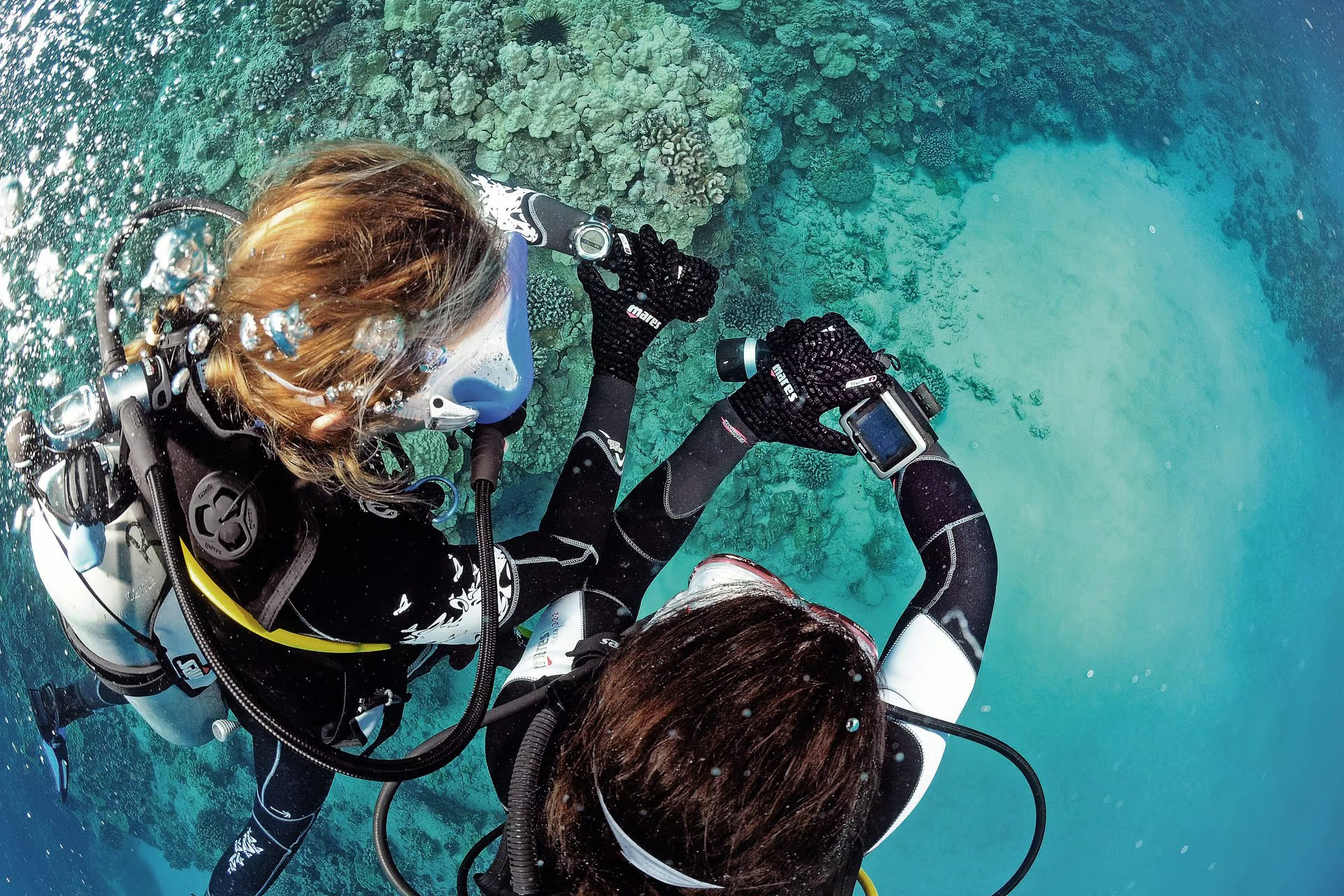
What you actually have to get through
Knowing the shape of the course takes some of the fear out of it. For the Open Water Diver certification there are 3 parts.
The theory
Done in the SSI app, at home, before you travel. You can re-read a section as many times as you like and re-sit a knowledge review — nobody is watching a clock. Getting it finished before you fly means your days on the reef are spent in the water.
The water fitness evaluation
Certification courses include a water fitness evaluation, so you do need to be able to swim. It is not a race and there is no stopwatch on the wall.
The dives
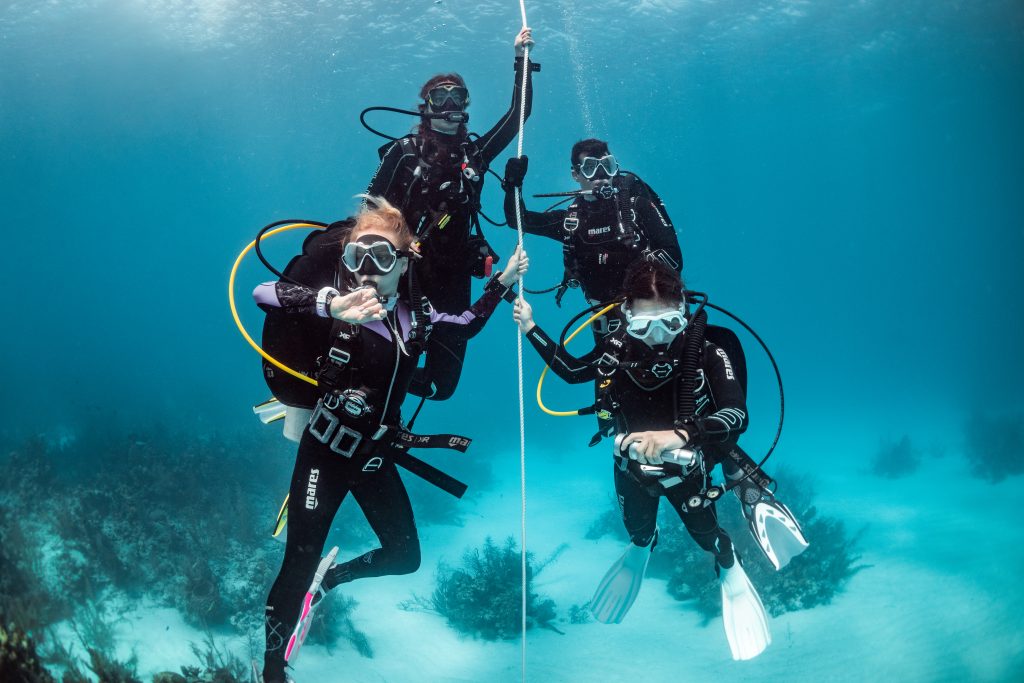
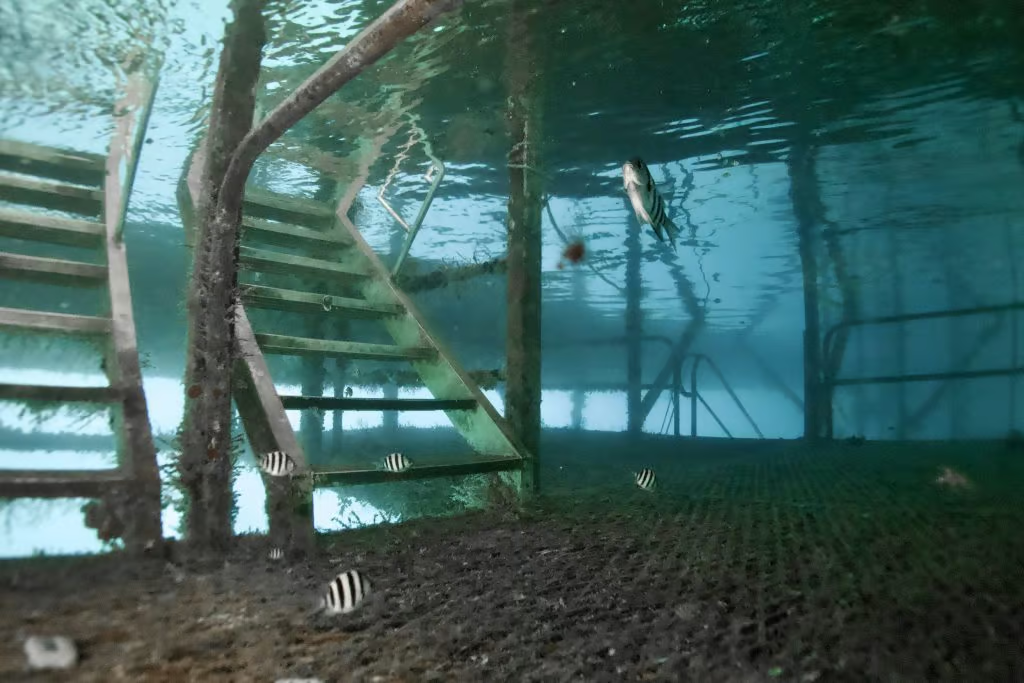
3 days and 9 training dives: 5 confined-water sessions on the sheltered training platform under our pontoon, then 4 open-water dives beside it. Skills are introduced on the platform where you can stand up and stop, and only then repeated in open water.
Which skills do people usually need to repeat?
4 come up more than the rest, and none of them means you are bad at diving.
- Equalising your ears. The most common reason a descent gets paused. Usually a technique problem or a head cold rather than a permanent barrier — go slowly, equalise early and often, and tell your instructor instead of pushing through pain.
- Mask skills. Flooding and clearing a mask, and taking it off underwater. Almost everyone dislikes this one at first, and almost everyone gets it.
- Buoyancy. Hovering without sinking or floating up takes practice, because it is mostly breathing rather than kicking. It keeps improving for years after your course.
- Nerves. Not a skill, but often what is actually going on. Nerves before a first dive are close to universal and they settle, usually somewhere in the second dive.
If you already know which of these worries you, tell your instructor on day 1. It changes how they run your session — a slower descent, an extra go on the platform, a hand on the line — and it is the single most useful thing you can do for yourself.
Does an unfinished course expire?
Your completed training sits on your SSI digital record, and you never have to repeat the parts you have already been signed off on. If you finish the remaining dives at another SSI Training Centre, they pick up where we left off.
Instructors will reasonably want to see recent skills if a long time has passed — that is a judgement about safety rather than an expiry date on your paperwork. If you are coming back to it after years away, that is what a refresher is for.
Does where you learn change your odds of finishing?
It does, and this is the one place we will make a case for ourselves.
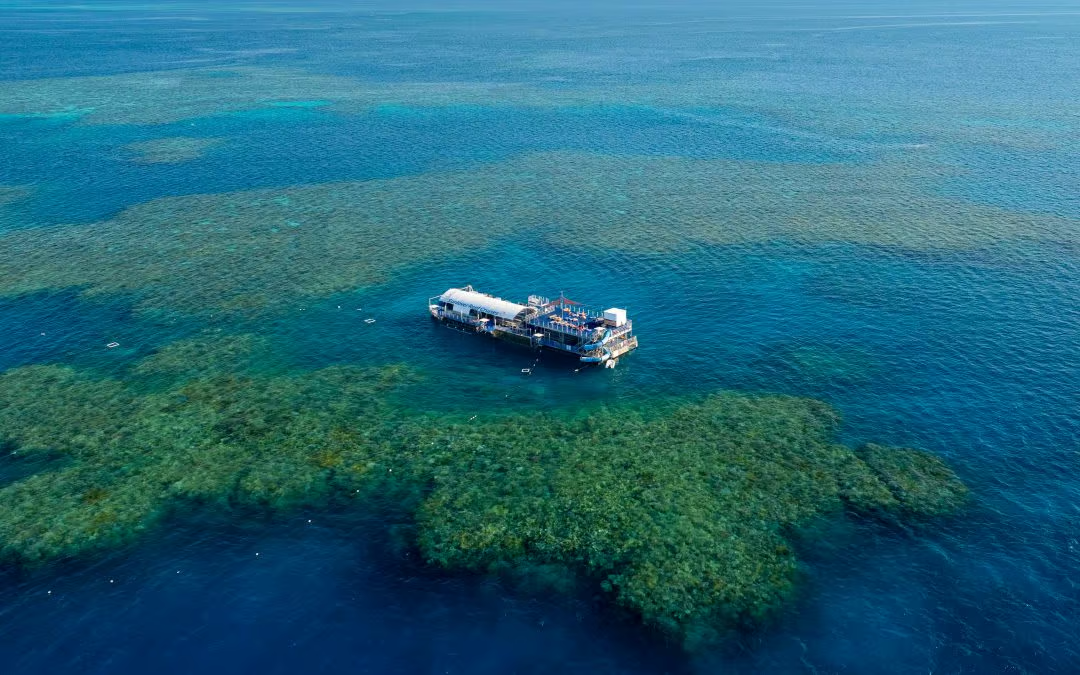
Most courses teach skills in a swimming pool, then move you to a boat for open water. Ours run entirely on the reef, from a moored pontoon. Skills are practised on the sheltered training platform beneath it, where the water is calm, you can surface and stand, and crew are a few metres away. Above you is a stable deck with lunch, shade and a chair — not a small boat rolling in swell.
You also sleep in your own bed in Cairns each night, which matters more than people expect. There is no liveaboard cabin, no 3 days of feeling seasick, and no committing to a boat you cannot get off.
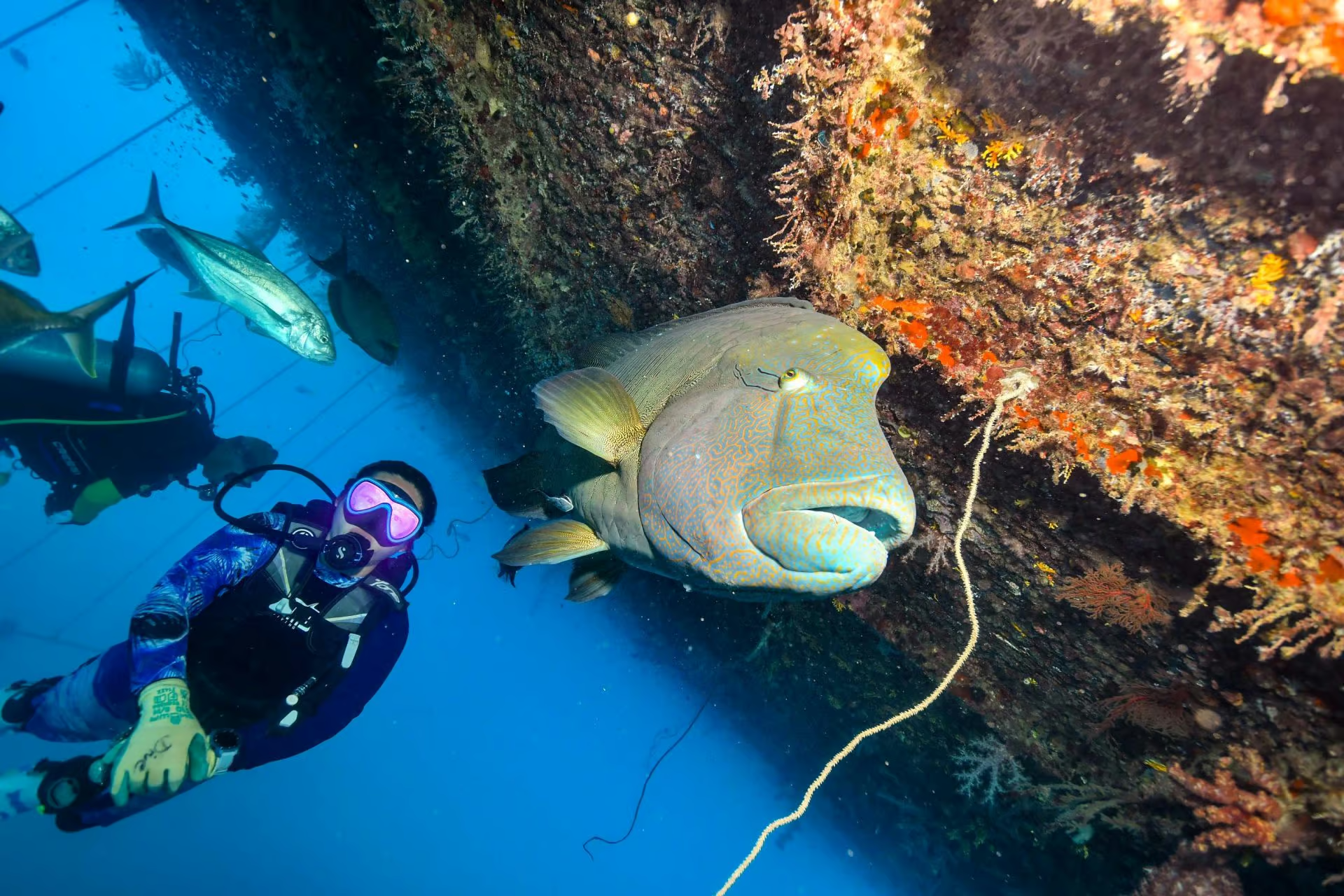
Still nervous? Start smaller
If committing to 3 days feels like a lot before you know whether you even like breathing underwater, do not start there.
| Option | Length | Price | Good for |
|---|---|---|---|
| Intro Reef Dive | Half day, 1 dive | $149 add-on | Finding out whether you like it, with an instructor beside you the whole dive |
| Open Water Diver | 3 days, 9 training dives | $1,030 | Full certification, recognised worldwide, valid for life |
| Return to Diving | Half day, refresher + 1 dive | $228 add-on | Certified divers who have been out of the water a while |
Prices marked “add-on” sit on top of the Moore Reef day fare. Courses are bookable now. Minimum age 10 for the Open Water Diver course, with a 12 m limit and smaller groups for 10 and 11 year olds; 12 for introductory dives and for the Advanced and Rescue courses.
The one thing that genuinely does stop people
- Every diver completes the RSTC Diver Medical questionnaire before getting in the water.
- Answer “yes” to anything and a doctor has to sign the Physician’s Evaluation section first, against the Australian Standard recreational dive medical (AS4005.1).
- Sort it at home and bring the form. It is the single most common avoidable hold-up.
- If a doctor will not clear you, tell us before training starts and we refund the course in full.
Common questions
Can you fail a scuba diving course?
What if I can’t finish my course in the time booked?
Do I get a refund if I don’t complete the course?
What if my doctor won’t clear me to dive?
What happens if the weather cancels one of my course days?
Can I stop a dive if I panic or change my mind?
Does my unfinished training expire?
Is there a written exam?
Do I need to be a strong swimmer?
What is the minimum age?
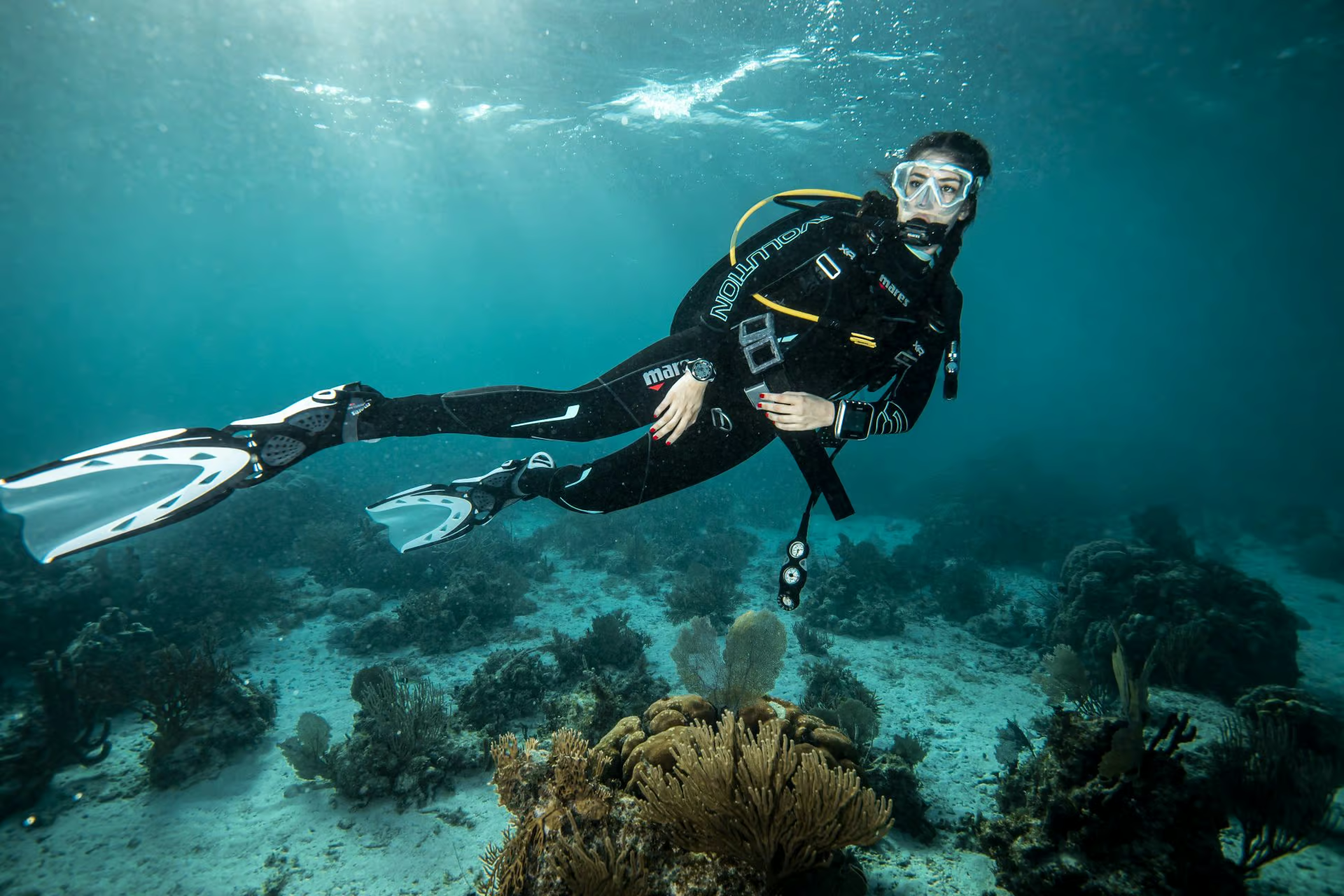
Learn to dive on the reef itself
The only SSI Training Centre in Cairns where every course runs on the Great Barrier Reef with no pool and no liveaboard — you train from our pontoon and are home in Cairns every night. Courses are bookable now.
Sources: Sunlover Reef Cruises course policies, ages and cancellation terms — dive course FAQs and terms and conditions. Medical requirements: RSTC Diver Medical — Participant Questionnaire, completed by every diver, and AS4005.1, the Australian Standard recreational dive medical used by doctors completing the Physician’s Evaluation section. Course structure and certification records: SSI training standards. Minimum ages reflect Queensland’s code of practice and SSI training standards.