Ask a group of divers why they dive and sooner or later someone says it: underwater is the only place their brain goes quiet. It turns out there is research on that — and one finding in it we would like to fix.
Quick answer: divers say it helps, and most never mention it
In a survey of 729 recreational divers, 90% of those with a diagnosed mental health condition said diving improved it. More than half had never declared that condition on a dive medical form — which is the part that makes diving less safe than it needs to be.
Key takeaways
- Divers who live with a mental health condition overwhelmingly say the sport helps. Several studies point the same way.
- The evidence is stronger on “divers feel better” than on “diving treats anything”. One clinical trial found no significant advantage.
- More than half of surveyed divers with a diagnosis had never declared it on a medical form. That is the risky bit, not the condition.
- Declaring it here means a doctor reviews you first. Most people are cleared and go diving.
- If a doctor will not clear you and you tell us before training starts, we refund the course in full.
What divers keep reporting
The clearest snapshot comes from a survey of 729 recreational divers published in Diving and Hyperbaric Medicine. Of the 60 divers who had a current diagnosis, 54 — that is 90% — felt diving improved their condition. Two thirds of everyone surveyed thought diving was good for mental health generally.
A much larger American study backs the feeling up from a different direction. Researchers matched active divers against non-divers of the same age, sex, activity level and home state, and the divers more often reported both good general health and good mental health.
And there is a wider body of work on what researchers call “blue space” — time spent by water. An 18-country study of more than 16,000 people, Queensland included, found recreational visits to the coast were consistently linked with better wellbeing. You do not need a tank on your back to get some of this. Diving is just the deep end of it.
Why the water probably helps
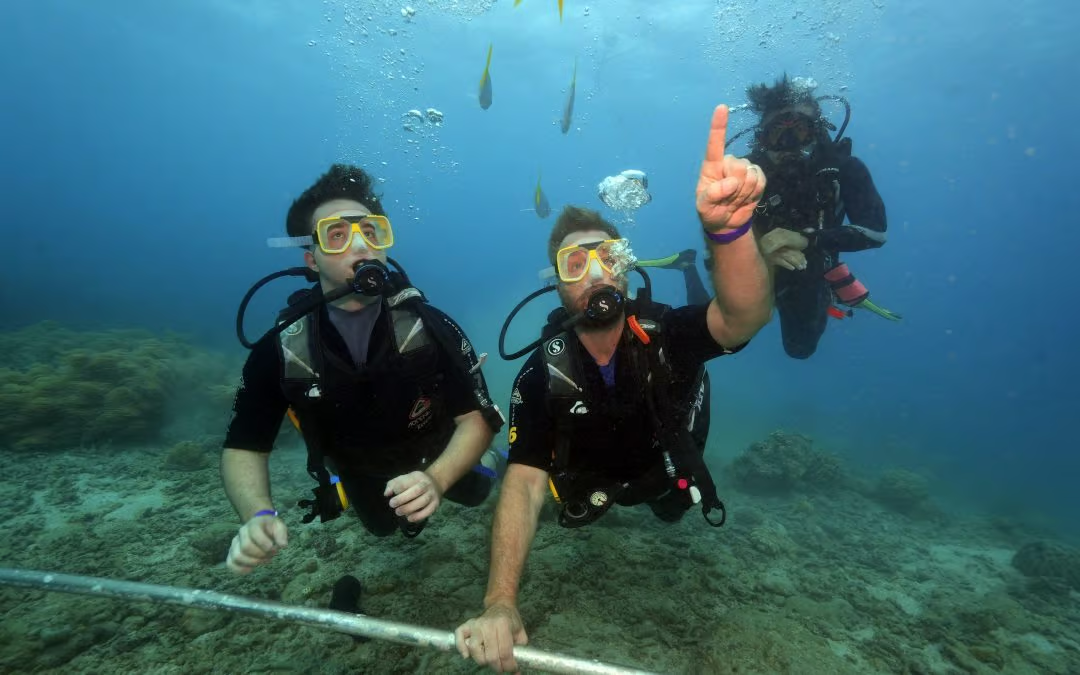
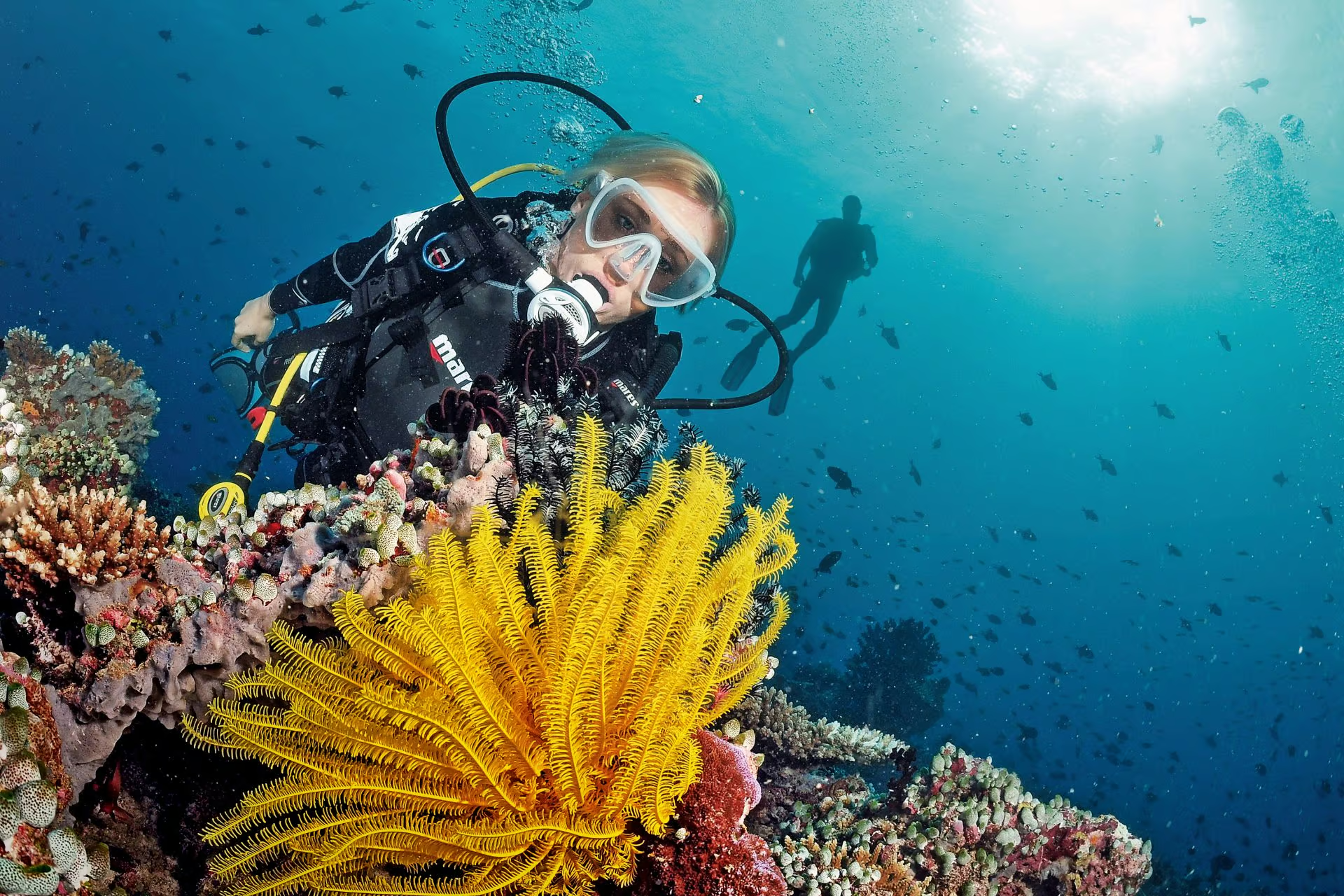
Nobody has fully pinned down the mechanism, but the ingredients are not mysterious. Your breathing slows down because it has to. Your attention narrows to a handful of things — depth, air, buddy, whatever just swam past. It is exercise, it is outdoors, and it happens with other people. Your phone is in a locker.
The 729-diver study puts it the same way: diving involves physical activity and encourages social connectedness and cooperation, on top of everything the blue-space research already suggests about being near water.
The evidence at a glance
| Study | Who it looked at | What it found |
|---|---|---|
| St Leger Dowse et al., Diving and Hyperbaric Medicine, 2019 | 729 UK recreational divers, online survey | 90% of divers with a diagnosis said diving improved it. 55% had not declared the condition on a dive form. |
| Buzzacott et al., Diving and Hyperbaric Medicine, 2022 | Active US divers vs matched non-divers, national survey data | Divers more often reported good general health and good mental health than their matched comparisons. |
| White et al., Scientific Reports, 2021 | 16,307 people across 18 countries and regions, including Queensland | Recreational visits to coastal blue space were positively associated with wellbeing. |
| Morgan et al., Disability and Rehabilitation, 2018 | 15 UK veterans with combat injuries, diving programme evaluation | Average wellbeing score improved by 14.3 points, with the biggest gains among psychological rather than physical injuries. |
| Gibert et al., European Journal of Psychotraumatology, 2022 | Pilot randomised trial: mindfulness-based diving vs multisport, for PTSD | The diving group improved more at 1 month, but not by a statistically significant margin, and the gap had gone by 3 months. |
Where the evidence stops
That last row is the honest one, so we have left it in. When researchers ran diving against another activity programme as a proper randomised trial, the diving group did better at 1 month but not by enough to call it a real effect, and the difference faded by 3 months. Their conclusion was that it takes sustained practice to hold onto the benefit.
Most of the rest is people telling researchers how they feel, which is worth knowing but is not the same as a measured clinical outcome. Divers who love diving are also more likely to answer a survey about diving. So: a course on the reef can be a genuinely good thing in your life. It is not a treatment, and we would never sell it as one.
The one finding we would like to fix
Here is the number that made us want to write this. Of the divers with a current diagnosis, 55% had never declared it on a diving certification form. Of the 45 taking prescribed medication, 21 had not mentioned that either. And only 21% of everyone surveyed knew what the medical guidance actually said.
Existing guidelines “may be unclear to the ordinary diver, or not evidence based”.
St Leger Dowse et al. — Diving and Hyperbaric Medicine, December 2019
The researchers’ read is that the guidance is confusing rather than that divers are reckless. Our read, after a lot of years of briefings, is simpler: people stay quiet because they assume declaring means being turned away.
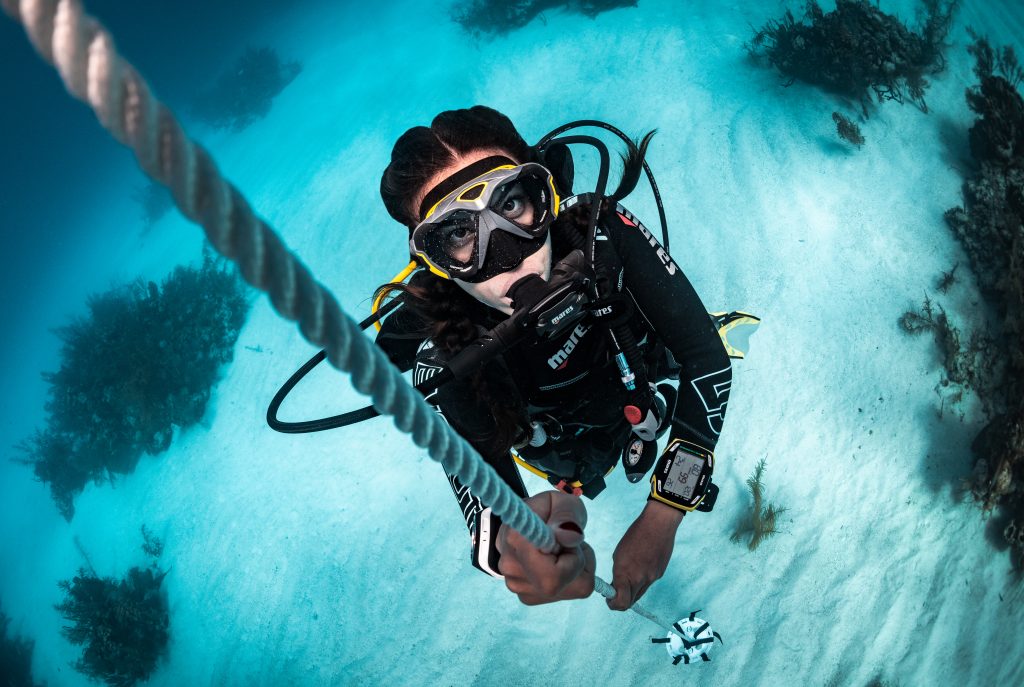
It usually means the opposite. An instructor who knows can plan around you — a slower descent, an extra skills session, a hand on the line, a shorter first dive, a quiet word before you get in. An instructor who does not know can only guess.
How the medical form works on our courses
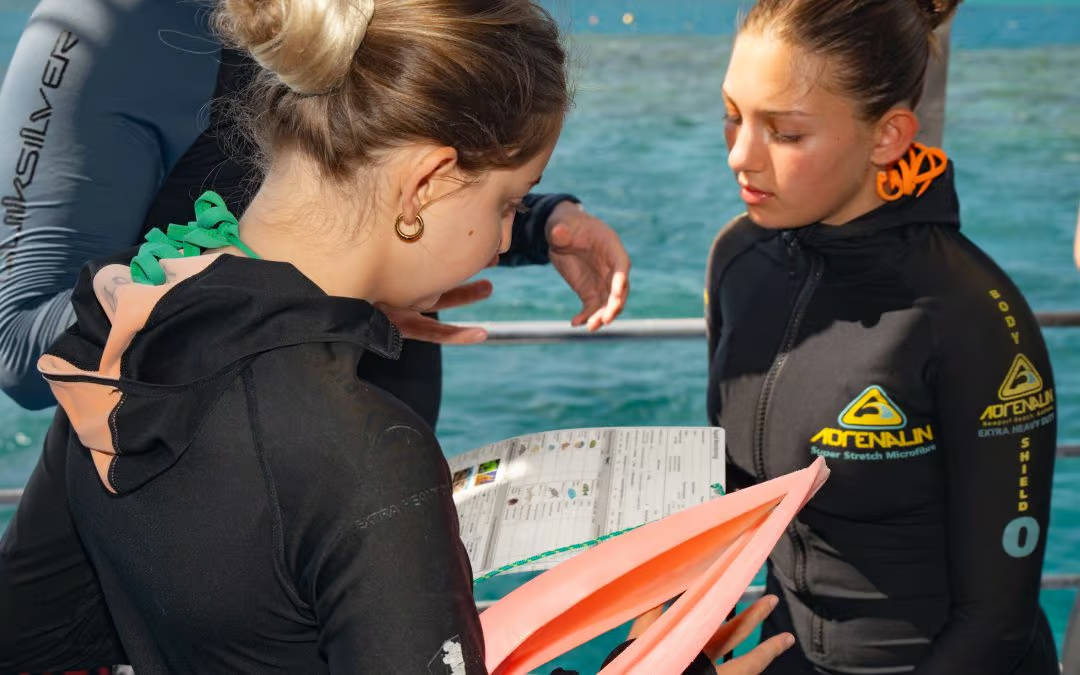
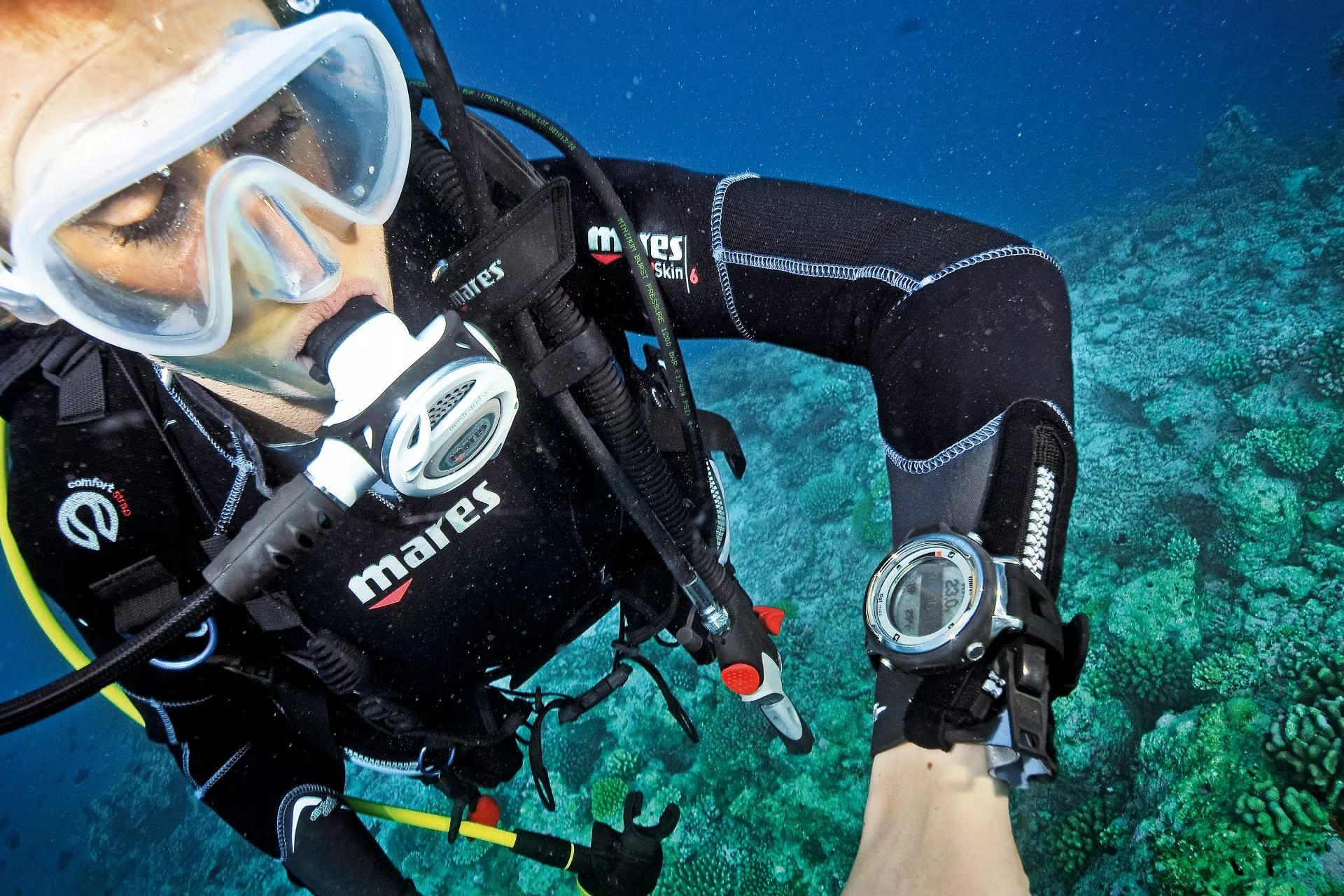
Everyone fills in the same one: the RSTC Diver Medical — Participant Questionnaire. Every course, every diver, whether it is a half-day introductory dive or a full certification.
| Your answers | What happens next | What to bring |
|---|---|---|
| “No” to everything | You are cleared to dive. Nothing else needed. | Just yourself |
| “Yes” to anything | A doctor signs the Physician’s Evaluation section, assessing you against the Australian Standard recreational dive medical (AS4005.1) | The signed form — sort it at home before you travel |
| A doctor won’t sign you off | We can’t take you in the water. That is a safety and legal requirement rather than something we can waive — and if you tell us before training starts, we refund the course in full. | Talk to us — a snorkel tour or the Seawalker helmet dive may still suit |
A “yes” is not a fail
- The form asks about asthma, heart conditions, ear and sinus problems, epilepsy, diabetes, lung conditions, recent surgery, pregnancy and mental health, among others.
- Ticking a box means a doctor looks at you first. Most people are cleared.
- What we can’t do is assess you ourselves — and what you shouldn’t do is leave a box blank to dodge the conversation.
If you take medication for anxiety or depression, that conversation belongs with your doctor rather than with us. They will weigh the practical things — alertness, sedation, how you would handle a problem at depth — not the diagnosis on its own. Booking that appointment before you fly to Cairns is the single most useful thing you can do, because a signed form in your bag on day 1 makes the whole thing a non-event.
Nervous about a first dive? That is normal
Almost everyone is, and nerves are not the same thing as a mental health condition. Both are easier on a course built around a stable platform instead of a small boat.
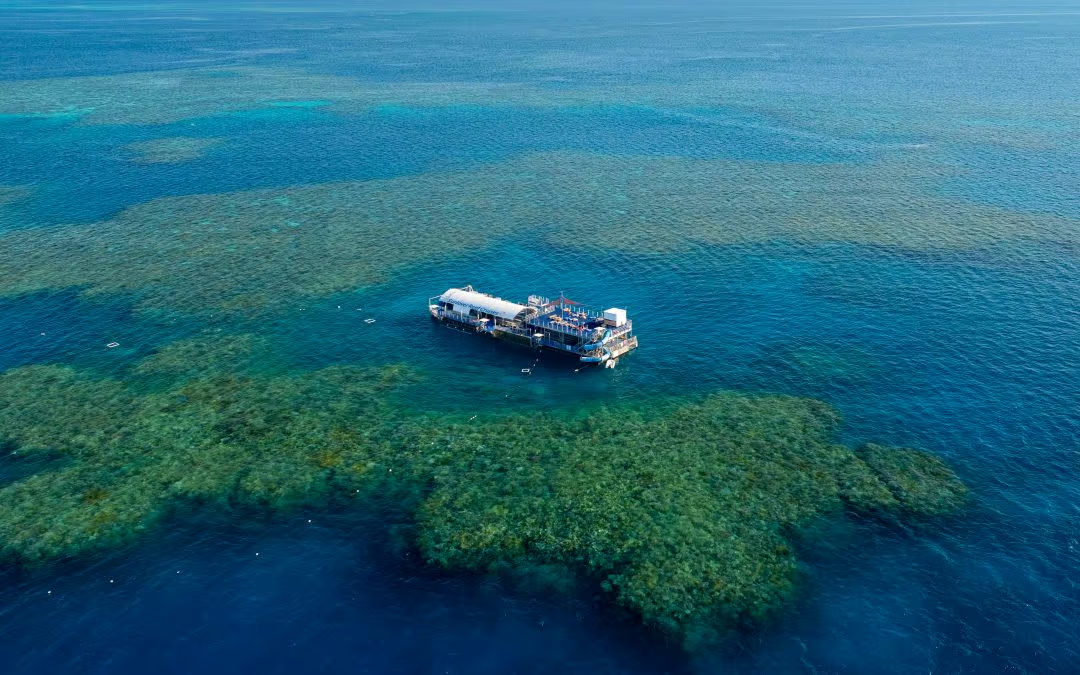
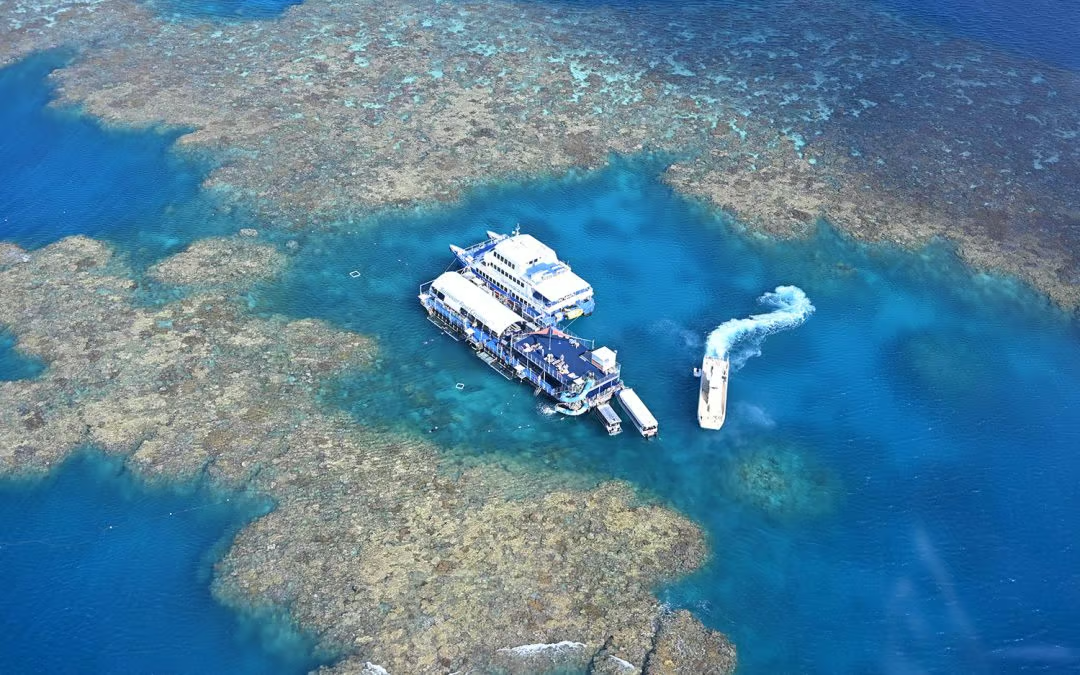
Ours runs from the pontoon at Moore Reef. Skills are practised on the sheltered platform beneath it, where you can surface, stand up, stop and start again with crew right there and the rest of the day — lunch, sun, a chair — waiting above. No pool, no liveaboard, and you sleep in your own bed in Cairns each night.
You are also allowed to stop. Any diver can end a dive at any time, for any reason, without explaining themselves. And if 3 days feels like a lot to commit to, start with a half-day introductory dive and see how you go.
If things are heavy right now, a dive course is not the answer to that on its own. In Australia, Lifeline is available 24 hours a day on 13 11 14 and Beyond Blue on 1300 22 4636.
Common questions
Can I learn to dive if I have anxiety or depression?
Do I have to declare a mental health condition?
Can I dive on antidepressants?
Will you refuse me if I tick “yes” on the form?
Where do I get a dive medical in Cairns?
Is diving a treatment for a mental health condition?
What if I panic underwater?
Can I cancel or reschedule my course?
What is the minimum age?
Learn to dive on the reef itself
The only SSI Training Centre in Cairns where every course runs on the Great Barrier Reef with no pool and no liveaboard — you train from our pontoon and are home in Cairns every night. More than 110,000 divers trained off Cairns, and counting. Courses are bookable now.
Sources: St Leger Dowse M, Whalley B, Waterman MK, Conway RM, Smerdon GR, Diving and mental health: the potential benefits and risks from a survey of recreational scuba divers, Diving and Hyperbaric Medicine, December 2019 · Buzzacott P, Edelson C, Chimiak J, Tillmans F, Health and wellbeing of recently active United States scuba divers, Diving and Hyperbaric Medicine, March 2022 · White MP, Elliott LR, Grellier J, et al., Associations between green/blue spaces and mental health across 18 countries, Scientific Reports, 2021 · Morgan A, Sinclair H, Tan A, Thomas E, Castle R, Can scuba diving offer therapeutic benefit to military veterans experiencing physical and psychological injuries as a result of combat? A service evaluation of Deptherapy UK, Disability and Rehabilitation, 2018 · Gibert L, Coulange M, Reynier JC, et al., Comparing meditative scuba diving versus multisport activities to improve post-traumatic stress disorder symptoms: a pilot, randomized controlled clinical trial, European Journal of Psychotraumatology, 2022. Medical requirements: RSTC Diver Medical — Participant Questionnaire and AS4005.1, the Australian Standard recreational dive medical. Course details: dive course FAQs.