Three versions of this question turn up in search every month: do you need a licence, do you need to be certified, and can you dive without either. They have slightly different answers, and the difference matters if you are planning a reef day.
The short answer
There is no diving licence in Australia. No government department issues one, and there is nothing to renew.
What exists is certification — a qualification from a recognised training agency saying you have been trained. You need it to dive independently with a buddy. You do not need it to dive under direct supervision with an instructor.
So: uncertified people dive on the Great Barrier Reef every single day, entirely legally.
Licence versus certification
The word “licence” implies a government permission that can be granted, refused or revoked. That does not exist for recreational diving here.
Certification is different. It is issued by a training agency — SSI, PADI, SDI, NAUI, RAID — and it is a statement of training, not permission from the state. It does not expire, there is no renewal fee, and it is recognised worldwide.
Dive operators ask for it because it tells them what you have been trained to do. Nobody is checking a register.
What you can do without any certification
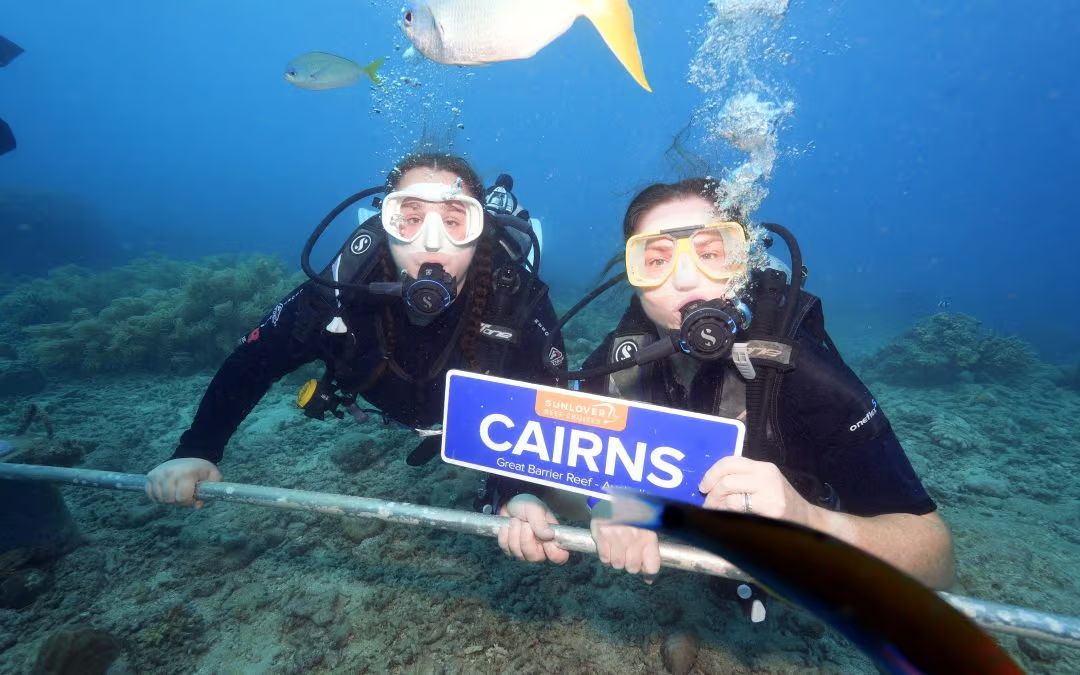
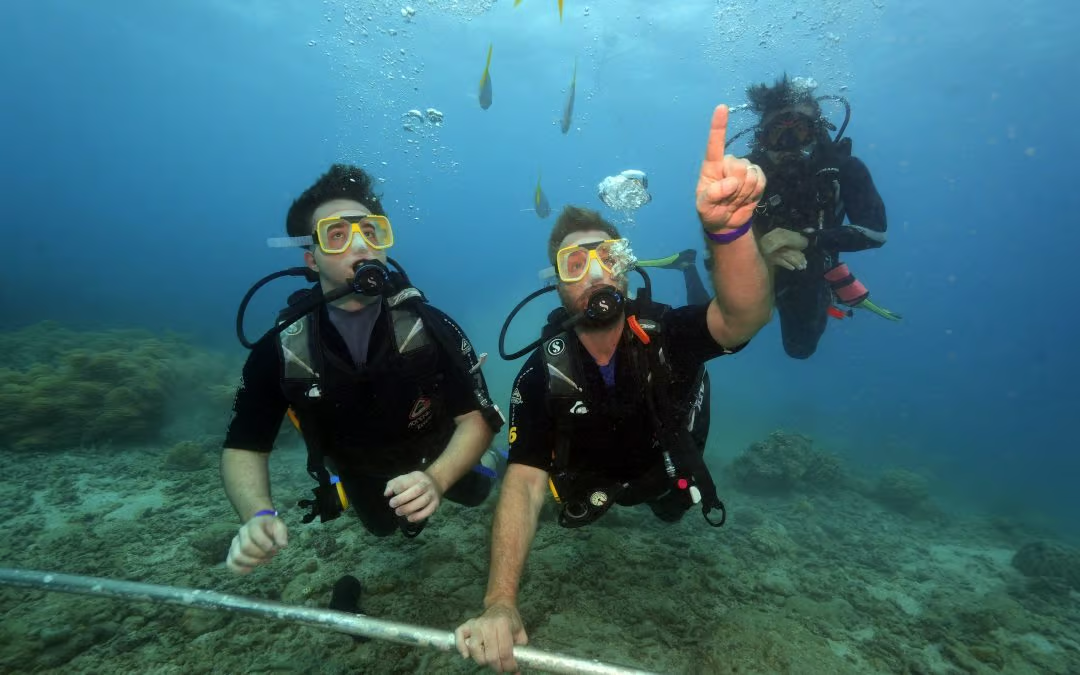
An introductory scuba dive
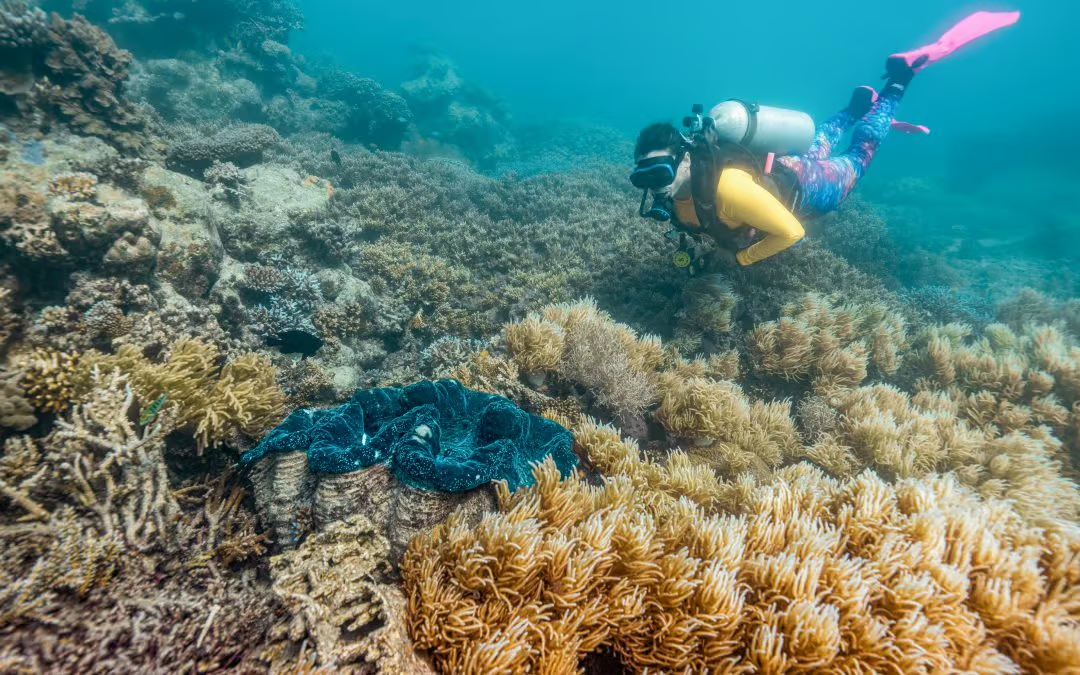
A real dive, on real scuba, with an instructor beside you the whole way. You get a briefing and shallow-water practice, then a guided dive.
Depth is limited and the ratio is tight — for us, a maximum of four divers per instructor. Ours is $149, and a second dive the same day is $99. Minimum age 12.
A helmet dive
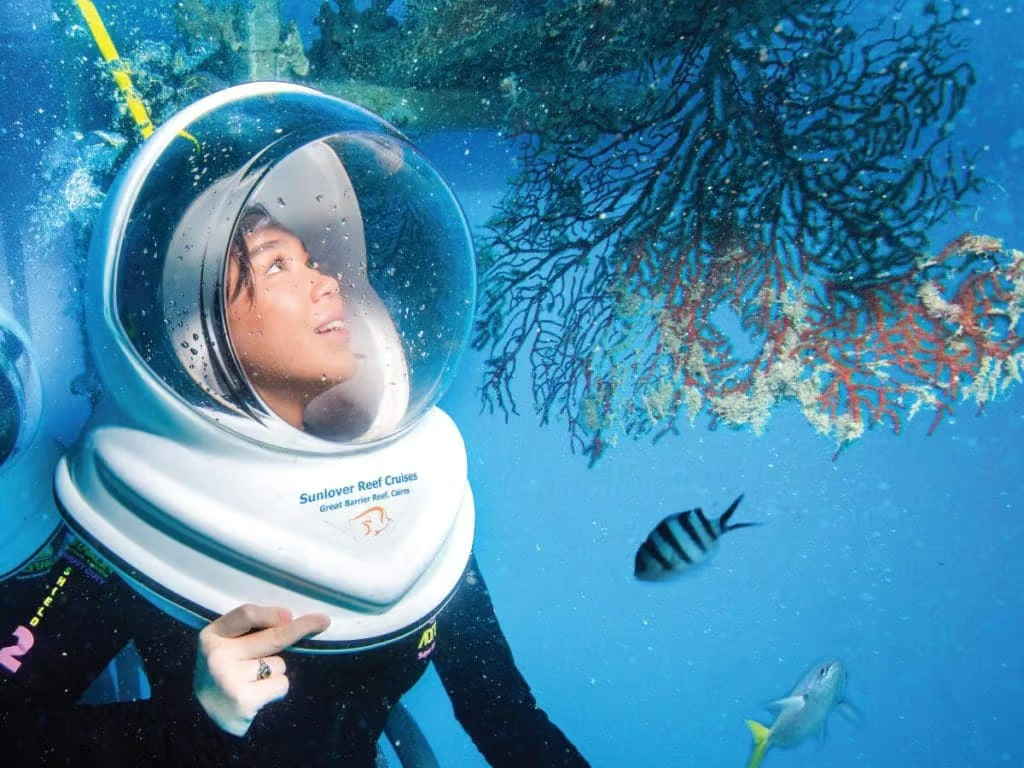
If putting your face in the water is the part that worries you, a Seawalker helmet dive lets you walk on the sea floor at about 3.5 metres with your head dry inside a helmet. No swimming, no mask, no regulator in your mouth. Also $149, also 12 and over.
It is genuinely popular with people who do not consider themselves water people, and with anyone who wears glasses and would rather keep seeing.
Snorkelling
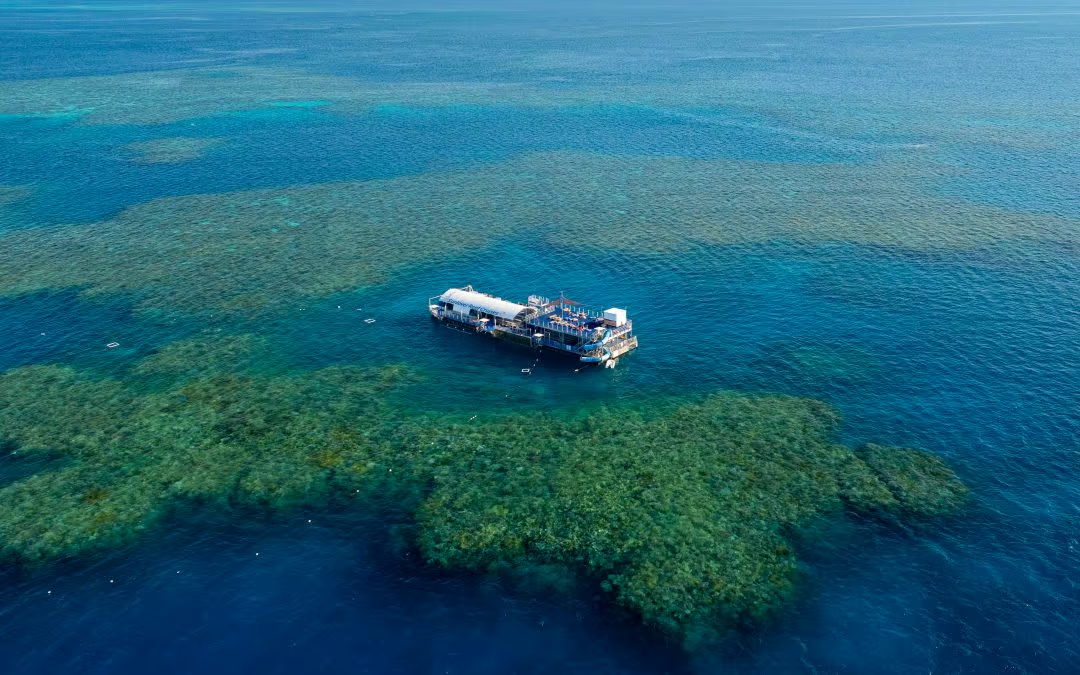
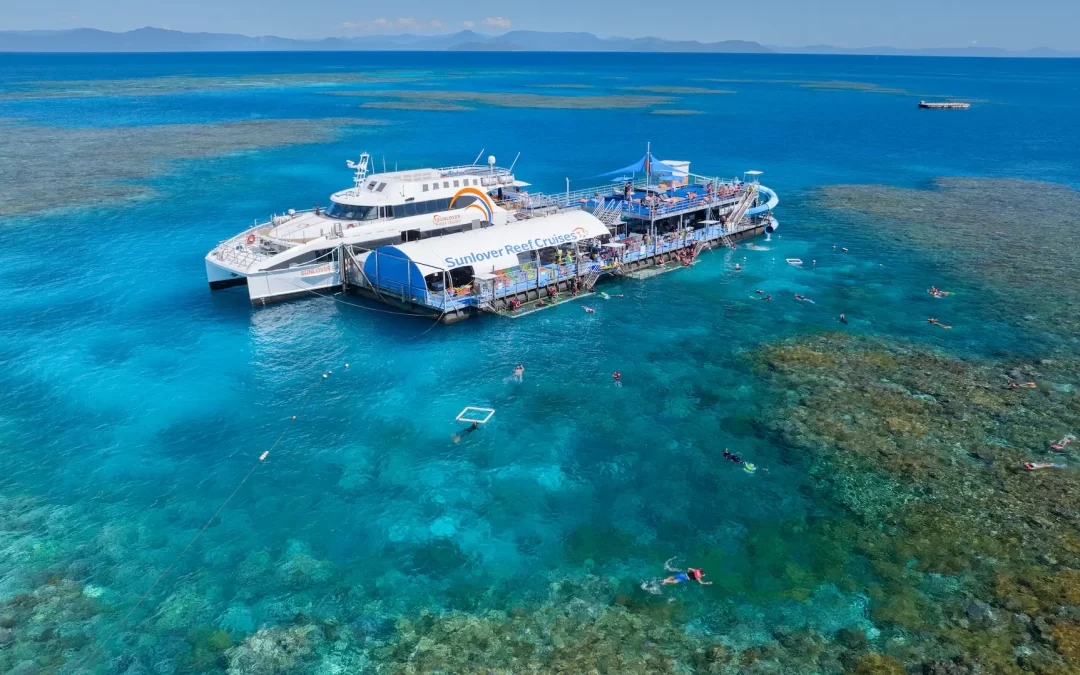
No certification, no age minimum in practice, and on a good day at Moore Reef you will see a great deal of what the divers see.
What you cannot do without certification
- Dive with a buddy rather than an instructor
- Hire equipment and dive independently
- Book onto a boat as a certified diver
- Go beyond the depth limits set for introductory divers
To do those things you need an entry-level certification, which takes three to four days.
The rules that actually apply in Queensland
Recreational diving in Queensland is governed by a code of practice under work health and safety law, which sets requirements for operators rather than for you — instructor ratios, depth limits for introductory divers, medical screening, supervision, and equipment standards.
The practical effect is that a legitimate operator will ask you to complete a medical questionnaire, will brief you properly, and will hold to defined ratios. If any of that seems to be skipped, that is the signal to walk, not the paperwork being an inconvenience.
Everyone completes the medical questionnaire, incidentally, certified or not — you are breathing compressed air at depth either way. Our medical requirements guide covers it.
Should you do an introductory dive or the full course?
A reasonable rule:
Do an introductory dive if you have never breathed underwater, you are not sure you will enjoy it, you have one day on the reef, or you are travelling with people who are snorkelling.
Do the course if you already know you like being underwater, you have four or more days, or you intend to dive again anywhere else, ever. The certification pays for itself the second time you use it, and it never expires.
There is no wrong order. Plenty of people do an introductory dive, decide within ten minutes that they want the certification, and book the course from the boat.
Common questions
Can I dive on the Great Barrier Reef with no experience at all?
Yes — a supervised introductory dive requires no experience and no certification. You will be briefed, taught the basics in shallow water, and accompanied throughout.
Do I need to be able to swim?
For an introductory dive you need to be comfortable in water; you are not swimming laps. For a full certification there is a swim assessment — 200 metres unaided, or 300 metres with mask, snorkel and fins, plus a ten-minute float. No time limit either way.
Is my overseas certification valid here?
Yes, if it is from a recognised agency. Bring the card or have it accessible in your agency’s app. Digital cards are fine.
I certified years ago and have not dived since. Do I need to re-do it?
No — it does not expire. Most operators will ask for a refresher if it has been a couple of years. Ours is Return to Diving — a half-day refresher plus one dive, built on the SSI Scuba Skills Update, at $228 as an add-on to the Moore Reef day fare rather than a stand-alone price. Minimum age 10, the same as the Open Water course, so it works for young divers coming back after a break as well as adults.
Is there an upper age limit?
No. Health and fitness matter; age alone does not.
Where to start
If you are visiting the reef and simply want to dive, book an introductory dive and do not overthink it. If you want to dive for the rest of your life, the certification is the thing worth buying.
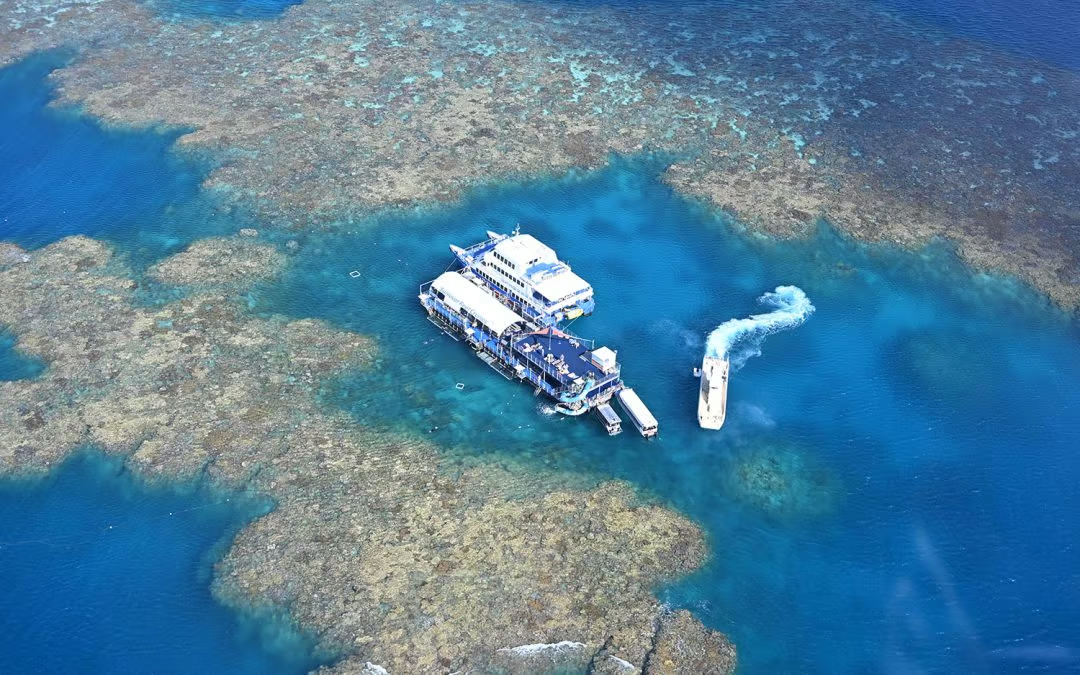
Our SSI courses open on 1 October 2026 from the Moore Reef pontoon — see the Learn to Dive page, or the full process in our guide to getting scuba certified in Australia.