We have been teaching people to dive off Cairns for a long time — more than 110,000 divers, which is a number we are quietly proud of. From 1 October 2026, our dive school runs as an SSI Training Centre. Here is what that means, and honestly, what it does not.
Quick answer: same reef, same crew, new training platform
From 1 October 2026 all Sunlover dive courses run as SSI programmes. The learning goes mobile-first and app-based, the course structure gets more flexible, and our instructors get better-resourced. Everything you would recognise — the boats, the crew, the pontoon, the standards, the reef — is unchanged. If you already hold a certification from another recognised agency, it stays valid.
Key takeaways
- From 1 October 2026, every Sunlover dive course runs as an SSI programme.
- Theory moves into the SSI app — on your phone, works offline, done at home before you fly.
- Your existing certification stays valid. You do not need to redo anything, and you can continue your training with us from wherever you are up to.
- Nothing changes about the vessels, the crew, the training platform, the safety standards, the minimum ages or the medical form.
- This is not a criticism of PADI. We taught tens of thousands of divers under their system and we are grateful for it.
What actually changed
Two things: the agency that stands behind the certification, and the platform you learn on. That is the entire list.
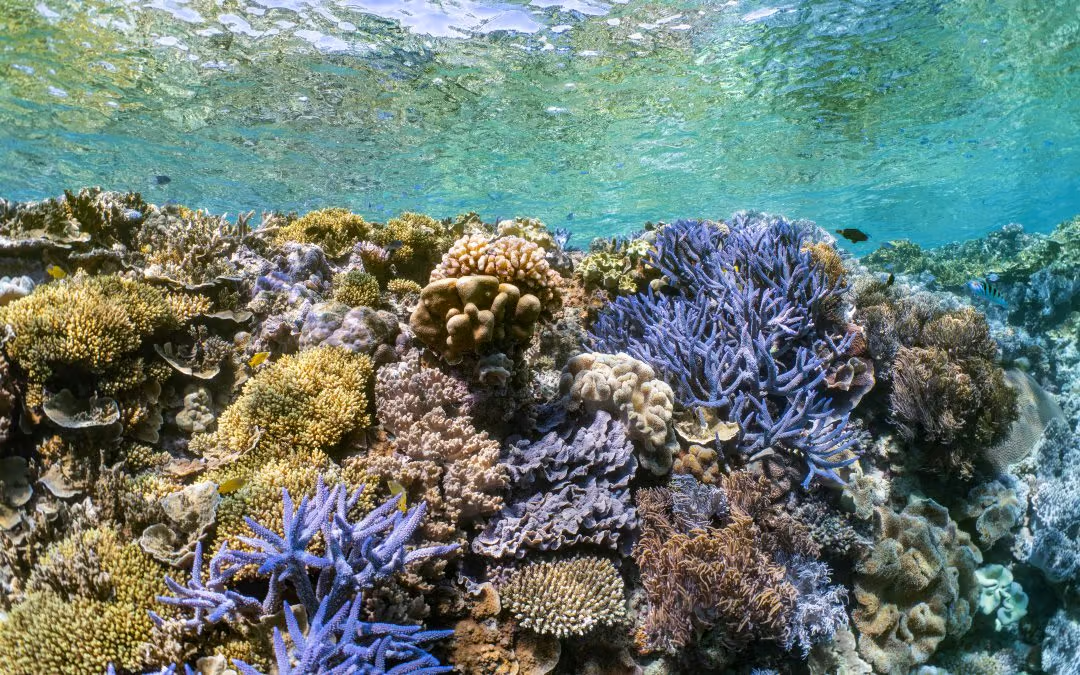
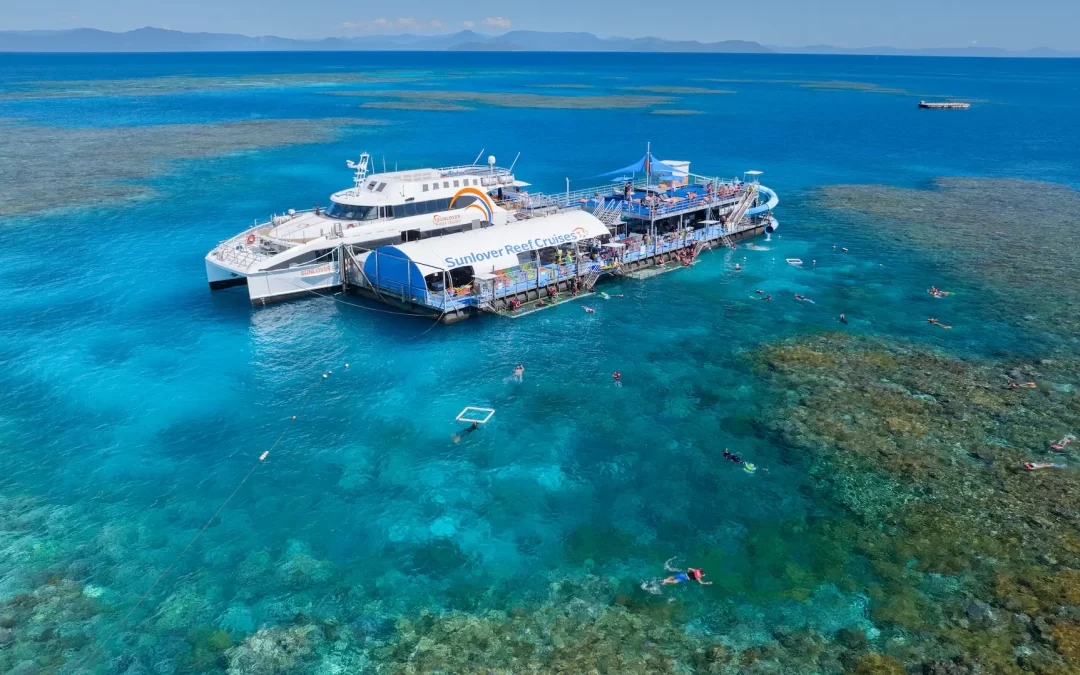
The reef is the same reef. The pontoon at Moore Reef is the same pontoon, with the same sheltered training platform underneath it. The instructors are the same instructors. The standards a diver has to meet before being signed off have not moved, because the international framework both agencies work to has not moved either.
Why we moved: mobile-first learning
The single biggest practical difference for a student is where the theory lives.
SSI’s learning is app-based and designed for a phone. You download your course, work through it at your own pace at home, and it keeps working when you have no signal — on a plane, on a boat, in a resort with terrible wi-fi. You can re-read a section as many times as you like.
That matters more than it sounds. A student who arrives in Cairns with the theory finished spends 3 days in the water instead of 2 days in the water and an afternoon indoors with a workbook. Your certification card and logbook live in the same app afterwards, so there is nothing to lose out of a wallet 5 years from now.
Why we moved: flexibility
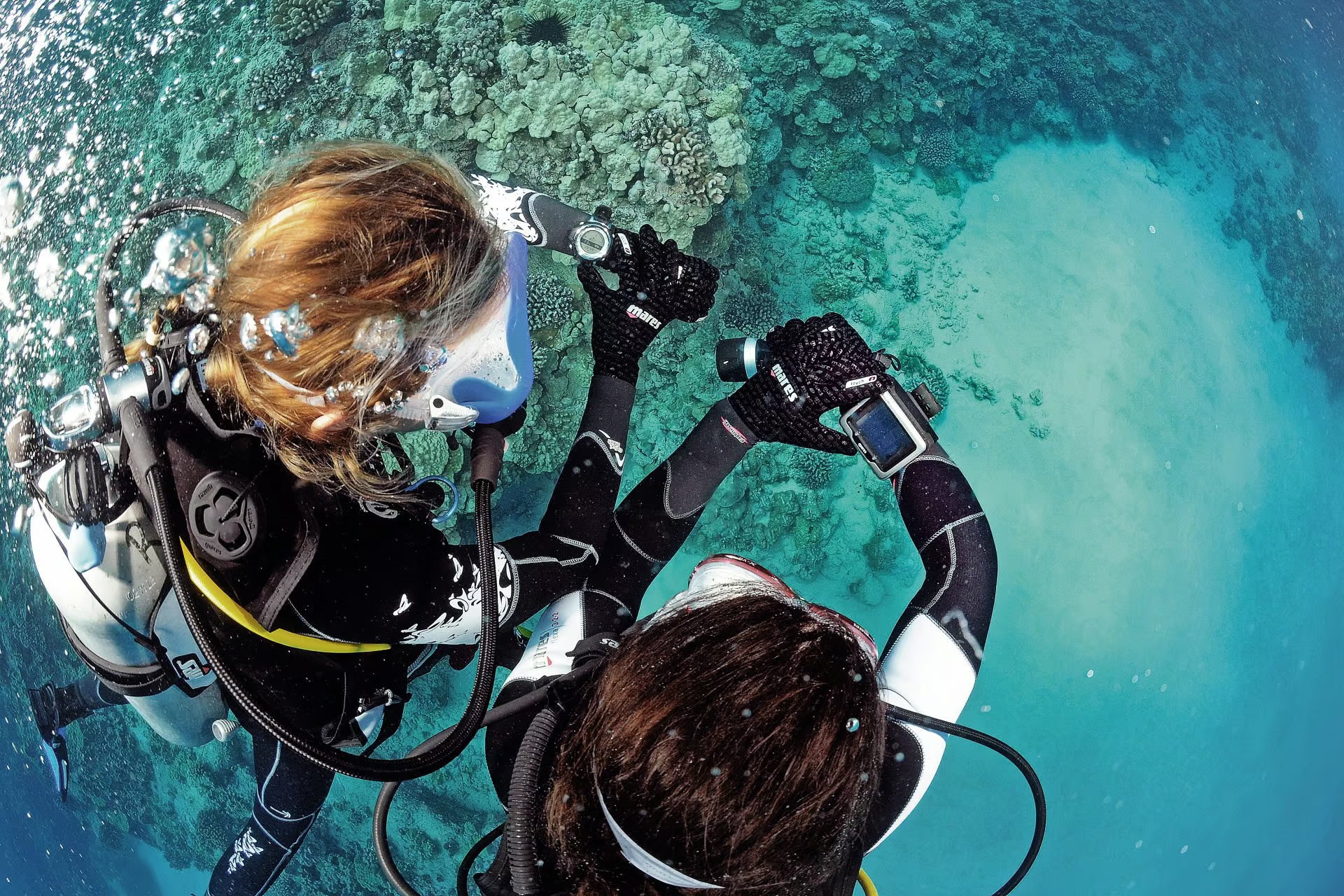
We are not a shopfront with a pool out the back. We are a reef operator, and our training happens on a moored pontoon 40-odd kilometres offshore, on days shaped by tides, weather and a boat timetable.
A course structure that flexes around that is worth a great deal. It means we can put skills where they fit best in a reef day, give a student who needs a slower descent the time to take one, and put a group in the water when conditions are right rather than when a schedule says so.
Why we moved: student first
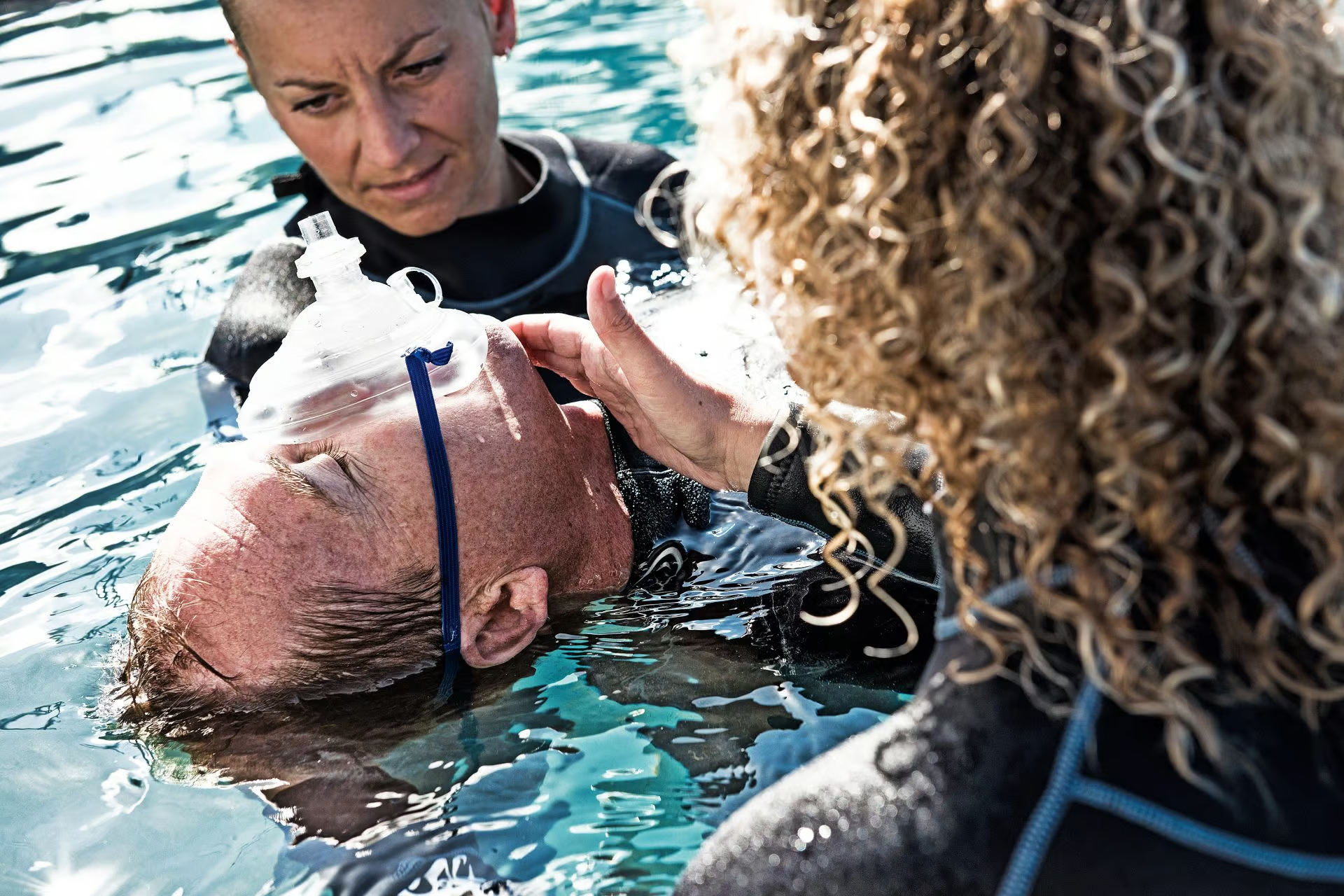
Dive certification has always been competency-based rather than pass-or-fail — you are signed off on each skill once you can do it safely, and if it is not there yet, you practise it again. We have written about that at length in what happens if you can’t finish your course.
What we wanted was a structure that makes it easy to actually deliver on that promise: to give one student another go at mask skills without derailing the other 3, and to hand someone a clean referral if they run out of days and have a flight to catch. Less administrative friction between an instructor and doing the right thing by the person in front of them.
Why we moved: support for our instructors
This one is invisible to guests and matters most to us.
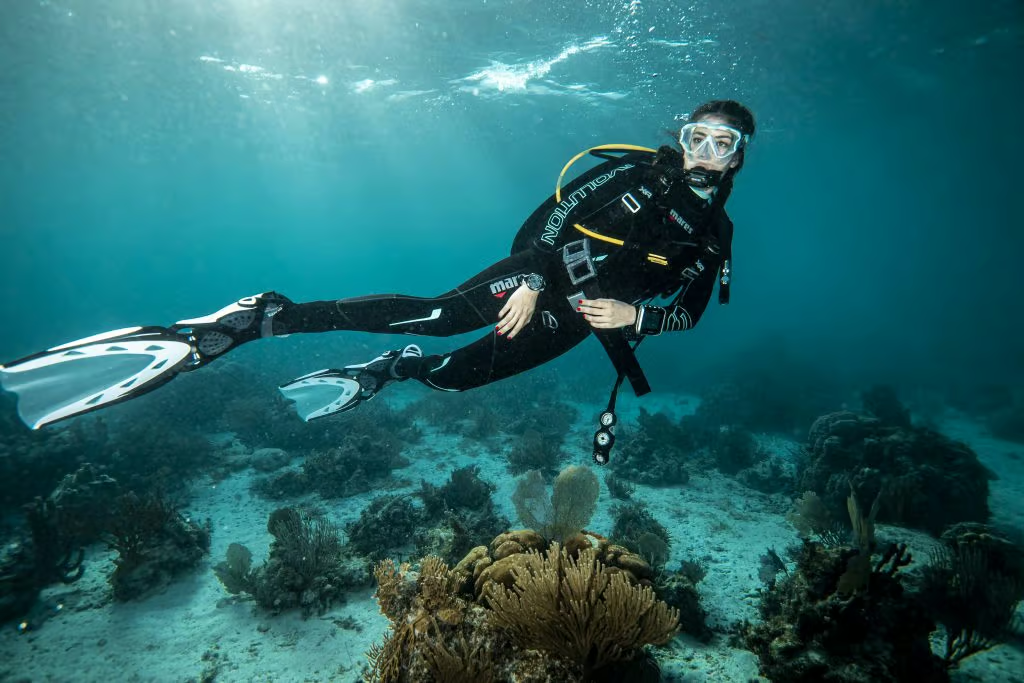
Our instructors are career professionals who teach on the Great Barrier Reef year-round, and the quality of the resources, training materials and professional development behind them shows up directly in what a student experiences on day 1. SSI’s support for teaching staff is genuinely strong, and better-supported instructors run better courses. That is not marketing — it is the reason a room full of dive professionals agreed with the decision.
What we are not going to say about PADI
Plenty of operators use a change like this to take a swing at whoever they left. We are not going to.
PADI is a good agency. The overwhelming majority of those 110,000 divers we have taught learned under a PADI programme, on these boats, with these crews, and they went home certified and safe. That is not a record you distance yourself from.
Both agencies are members of the RSTC, the United States council of the World Recreational Scuba Training Council, which sets the minimum standards they each work to. Both are recognised worldwide, by dive centres and liveaboards everywhere, and a diver certified by either is welcome on our boats tomorrow. This was a decision about which system fits the way we operate on the reef — not a verdict on anybody’s teaching.
What changes and what does not
| What | Before | From 1 October 2026 |
|---|---|---|
| Certifying agency | PADI | SSI |
| Where the theory happens | Workbook and online modules | SSI app, on your phone, offline-capable, at home before you travel |
| Your certification card | Plastic card | Digital card and logbook in the app, valid for life |
| Where you train | Moore Reef pontoon and the reef beside it | Unchanged |
| Vessels, crew and instructors | Ours | Unchanged |
| Safety standards and skill sign-off | Competency-based, international standards | Unchanged |
| Minimum age | 12 for intro dives, 10 for the Open Water course | Unchanged |
| Medical form | RSTC Diver Medical questionnaire | Unchanged |
| Certification you already hold | Valid | Still valid — nothing to redo |
If you are already a certified diver
Nothing here affects you negatively. Bring your card or your digital record, dive with us whenever you like, and if you want to go further — Advanced Open Water, Diver Stress & Rescue — you can continue with us from wherever you are up to. Certifications cross over between recognised agencies, which is the whole point of a shared standards framework.
If it has been a while since your last dive, start with Return to Diving: a half-day refresher plus 1 dive, $228 as an add-on to the Moore Reef day fare, bookable now.
Common questions
Is SSI as good as PADI?
Is my existing PADI certification still valid?
Can I continue my training with you if I certified with another agency?
Do I have to redo anything?
I started a course with you before October — what happens?
Is an SSI certification recognised worldwide?
Do I need internet on the boat for the app?
When do SSI courses start?
What is the minimum age?
Learn to dive on the reef itself
The only SSI Training Centre in Cairns where every course runs entirely on the Great Barrier Reef — no pool, no liveaboard, home every night. Courses commence 1 October 2026.
Sources: Sunlover Reef Cruises dive course pages — Learn to Dive and dive course FAQs. Certification standards: SSI (Scuba Schools International) training standards and the World Recreational Scuba Training Council minimum standards both agencies work to. Medical requirements: RSTC Diver Medical — Participant Questionnaire and AS4005.1, the Australian Standard recreational dive medical. Minimum ages reflect Queensland’s code of practice and SSI training standards.