It is one of the first things people ask when they start looking at dive courses, and the internet answers it badly — usually with someone’s loyalty rather than an explanation. So here is a straight one.
Quick answer: less different than the internet suggests
Both are internationally recognised training agencies, both are members of the same standards council, and a certification from either is accepted by dive centres worldwide. Neither expires. The real differences are in how you learn and, far more importantly, who teaches you.
Key takeaways
- PADI and SSI are both members of the RSTC, the United States council of the World Recreational Scuba Training Council, which sets the minimum training standards they work to.
- An Open Water certification from either is recognised worldwide and does not expire.
- The genuine differences are the learning platform, the certification card and the network you train through.
- Your existing certification from one agency does not stop you continuing with the other. Crossover is normal.
- The variable that actually changes your course is the dive centre and the instructor — not the logo on the card.
What is genuinely the same
This is the part most comparison articles skip, and it is the biggest part.
Both agencies are listed members of the RSTC, the United States council of the WRSTC — the body that exists to set globally recognised minimum training standards for recreational diving. Sitting alongside them on that list are IANTD, NASE, PSS, RAID, Scuba Educators International, SDI and SNSI. That shared floor is why a diver certified in one system can walk into a dive centre in another and be treated as a certified diver.
So the following do not change between the two:
- The skills you have to demonstrate before you are signed off as an Open Water diver.
- The fact that training is competency-based rather than pass-or-fail — see can you fail a scuba course?
- Worldwide recognition of the certification, and the fact that it does not expire.
- The medical declaration. Every diver completes the RSTC Diver Medical questionnaire, and a “yes” answer needs a doctor’s sign-off against the Australian Standard recreational dive medical (AS4005.1).
- The minimum age here, which is set by Queensland regulation at 12 rather than by either agency.
What is actually different
| SSI | PADI | |
|---|---|---|
| Learning materials | Delivered through the free MySSI app — “digital certification cards, learning materials, logbook” in one place, downloadable and usable offline | PADI eLearning, plus printed materials at many centres |
| Certification card | Digital card in the app | Digital and physical card options, including limited-edition card designs |
| Network | “4,000+ SSI Training Centers” worldwide — training runs through an authorised centre | “6,600 dive centers and resorts” and “128,000 professional members”, in “180+ countries” |
| Scale to date | A global network across multiple continents and languages | “More than 30 million certified divers to date”, “over 94 courses available” |
| What it costs you | Set by each individual centre | Set by each individual centre |
Figures above are each agency’s own published numbers (padi.com and divessi.com, August 2026). We have deliberately not compared prices: course fees are set by the dive centre, not the agency, so any “agency X is cheaper” claim is meaningless.
The course names, translated
The most confusing part in practice is that the two systems use different names for roughly the same thing. If you are comparing quotes from different Cairns operators, this is the table you want.
| What you are trying to do | SSI calls it | PADI calls it |
|---|---|---|
| Try diving once, with an instructor beside you | Basic Diver / introductory dive | Discover Scuba Diving |
| Your first full certification | Open Water Diver | Open Water Diver |
| Build on it — deeper, night, navigation, photography | Advanced Open Water Diver | Advanced Open Water Diver |
| Learn to manage problems and help other divers | Diver Stress & Rescue | Rescue Diver |
| Get back in the water after years away | Scuba Skills Update / refresher | ReActivate |
So which one should you learn with?
Here is the honest answer, and it is not the one either agency’s marketing gives you: choose the dive centre, not the agency.
The things that will actually determine whether you finish your course, enjoy it and come out a competent diver are all local decisions made by the operator in front of you:
- How many students per instructor. Ask the number. It matters more than any logo.
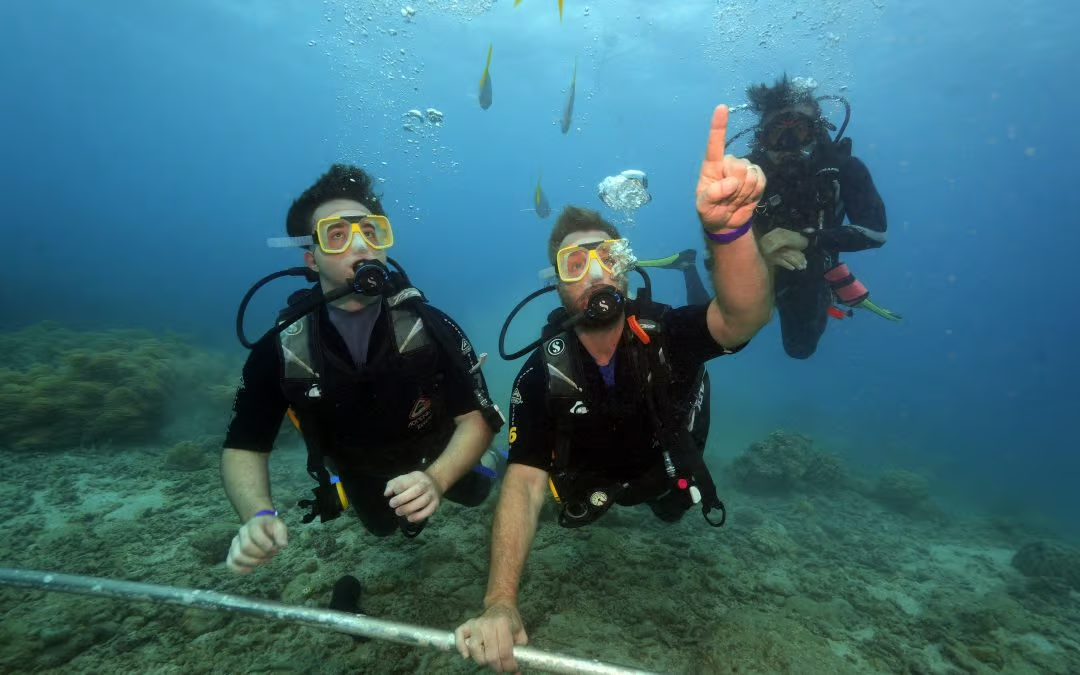
- Where the confined-water skills happen — a pool, a sheltered platform, or a beach in swell. This is the single biggest comfort factor for nervous beginners.
- Whether you are on the reef or in a pool for most of the course.
- What happens if you need more time. Ask them directly. A centre that has a clear answer has thought about it.
- Whether the price is all-in — materials, certification fee, gear, reef access, food.
- Whether you sleep in a bed or a bunk. Liveaboards are excellent, but not for everyone’s first 3 days underwater.
Two centres under the same agency can deliver completely different courses. Two centres under different agencies can deliver near-identical ones. The agency sets the floor; the operator sets the experience.
Where we sit
We are an SSI Training Centre, and we have written separately about why we made that move — mobile-first learning, a course structure that flexes around a reef day, and strong support for our instructors. We have trained more than 110,000 divers off Cairns, the majority of them under a PADI programme, on the same boats with the same crews. We are not going to pretend that record does not exist or that one logo taught them better than the other.
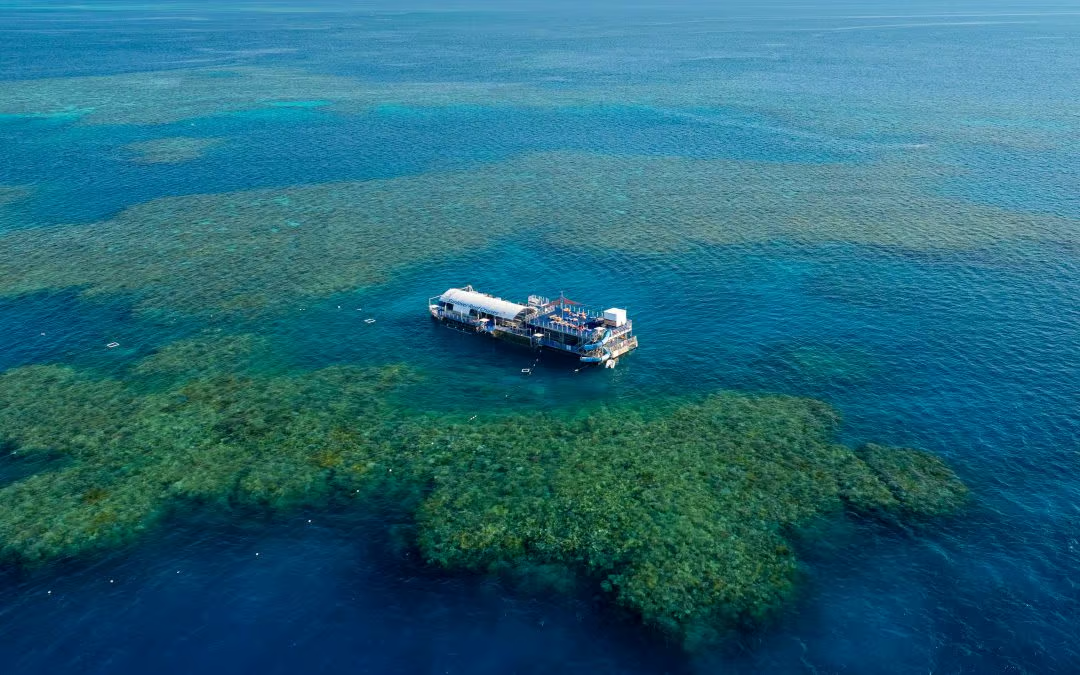
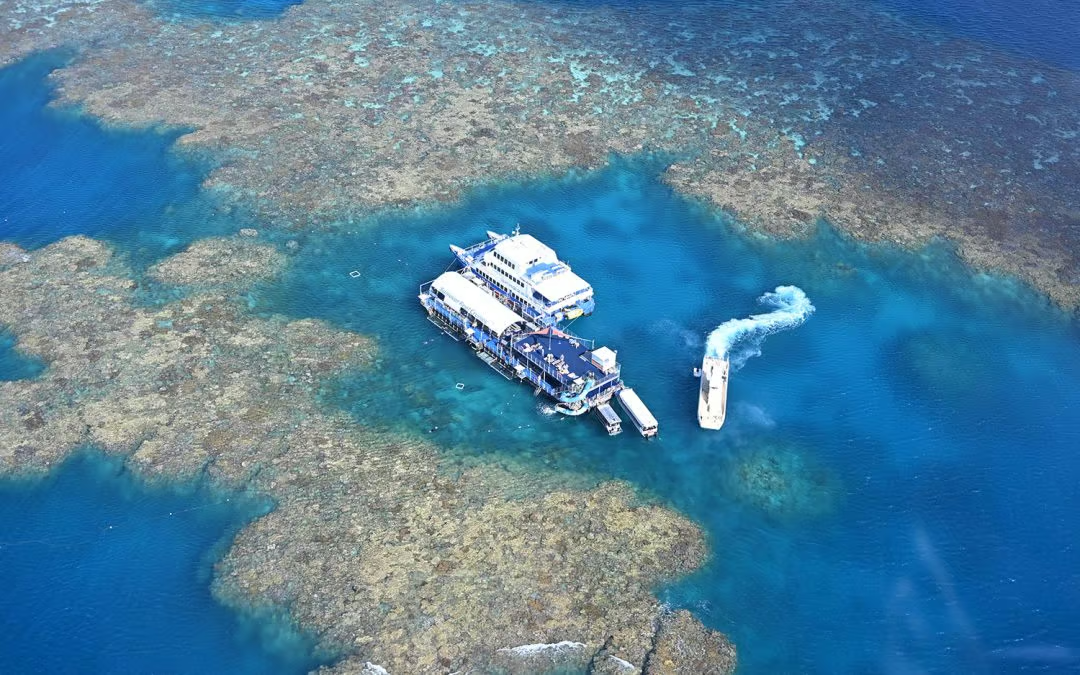
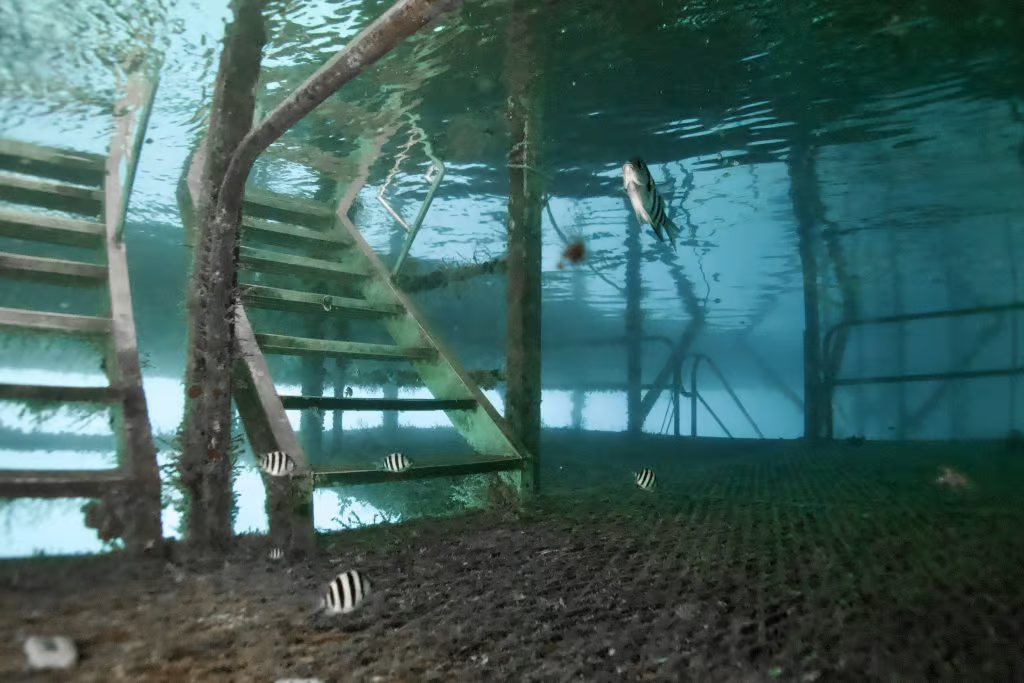
What we will say is what makes our courses different locally: they run entirely on the Great Barrier Reef from a moored pontoon, skills are practised on the sheltered training platform beneath it, and you sleep in your own bed in Cairns each night. No pool, no liveaboard.
If you already hold a PADI certification
It stays valid, it does not expire, and you are welcome on our boats tomorrow. If you want to keep going — Advanced Open Water, Diver Stress & Rescue — you can continue with us from wherever you are up to. Crossover between recognised agencies is routine, which is the entire point of a shared standards framework. Bring your card or your digital record.
If it has been a while, start with Return to Diving: a half-day refresher plus 1 dive, $228 as an add-on to the Moore Reef day fare.
Common questions
Is SSI as good as PADI?
Is a PADI certification more widely recognised than SSI?
Can I do my Open Water with one agency and my Advanced with the other?
Does my certification expire?
Which is cheaper, PADI or SSI?
What are the SSI course names compared with PADI?
Do I have to redo anything if I switch agencies?
Which agency does Sunlover teach with?
What should I actually ask a dive centre before booking?
What is the minimum age?
Learn to dive on the reef itself
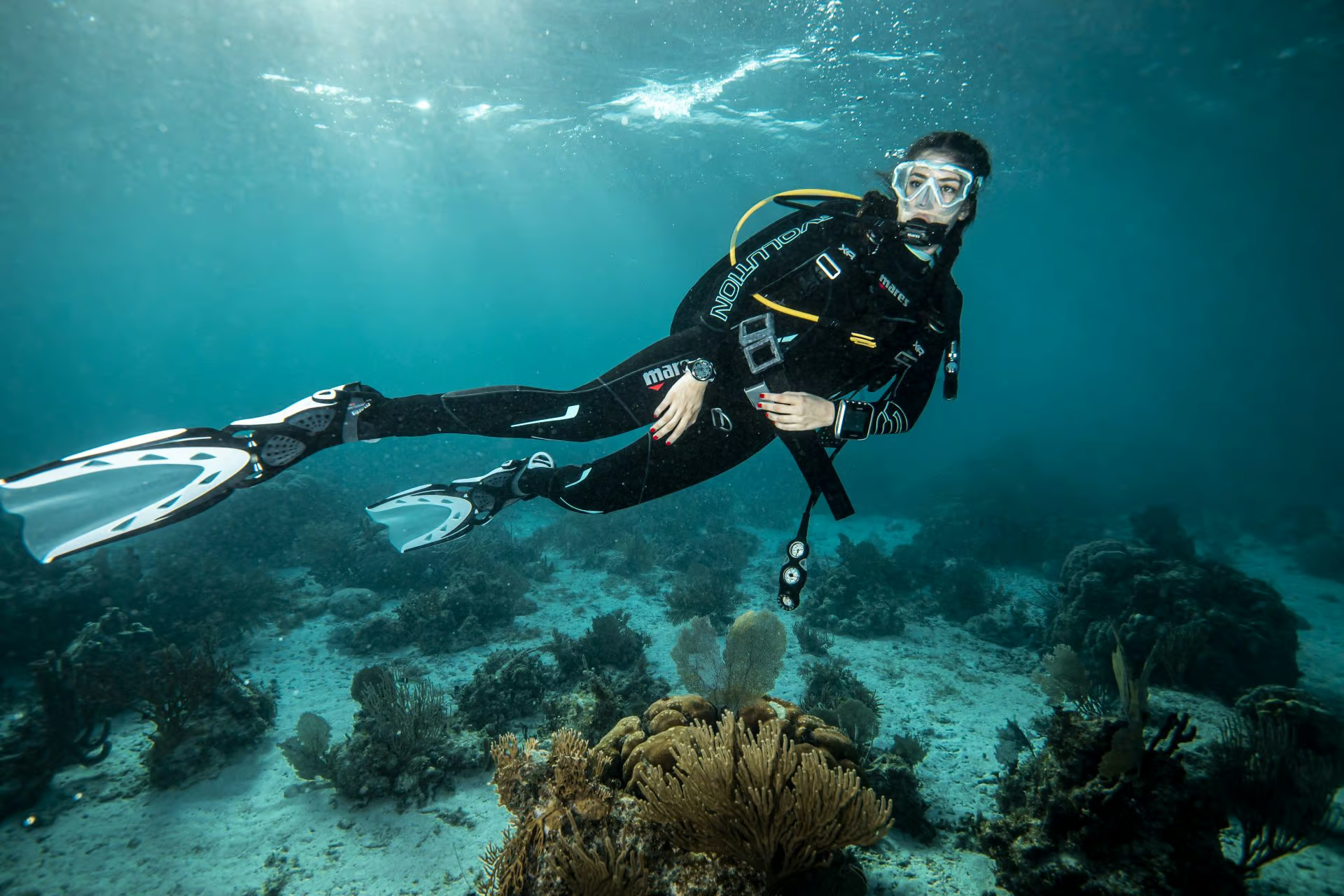
The only SSI Training Centre in Cairns where every course runs on the Great Barrier Reef with no pool and no liveaboard — you train from our pontoon and are home in Cairns every night. Courses are bookable now.
Sources: RSTC (United States Council) member list, World Recreational Scuba Training Council — both PADI and SSI listed, accessed August 2026 · padi.com/about for PADI’s network, membership, country and certification figures · divessi.com for SSI Training Centre numbers and the MySSI app · Sunlover course details, ages and terms: dive course FAQs. Medical requirements: RSTC Diver Medical — Participant Questionnaire and AS4005.1, the Australian Standard recreational dive medical. Minimum age reflects Queensland regulation.