Price is the easiest thing to compare between dive centres and the least useful. These nine questions expose what actually differs, and most of them take one sentence to answer.
Screenshot this page and ask the same nine of everyone you are considering. Two quotes $300 apart often stop being $300 apart once you have the answers.
We run dive courses, so read this knowing we would like your booking. We have still written the questions straight rather than rigged them, because a rigged checklist is obvious and useless. Some of the answers below are ours; where a different centre would answer better for your circumstances, that is worth knowing too.
1. How many students per instructor?
Ask for a number, not a description. “Small groups” means nothing.
Four to one is good. Six to one is workable. Eight to one means a meaningful share of your course is spent watching other people attempt a skill while you wait your turn in the water. This single number affects your experience more than anything else on this list, and it is the main reason two courses can differ by hundreds of dollars — instructor time is the real cost in dive training.
2. Where do the confined-water skills happen, and where do the open-water dives happen?
Two separate questions in one, and centres sometimes answer only the flattering half.
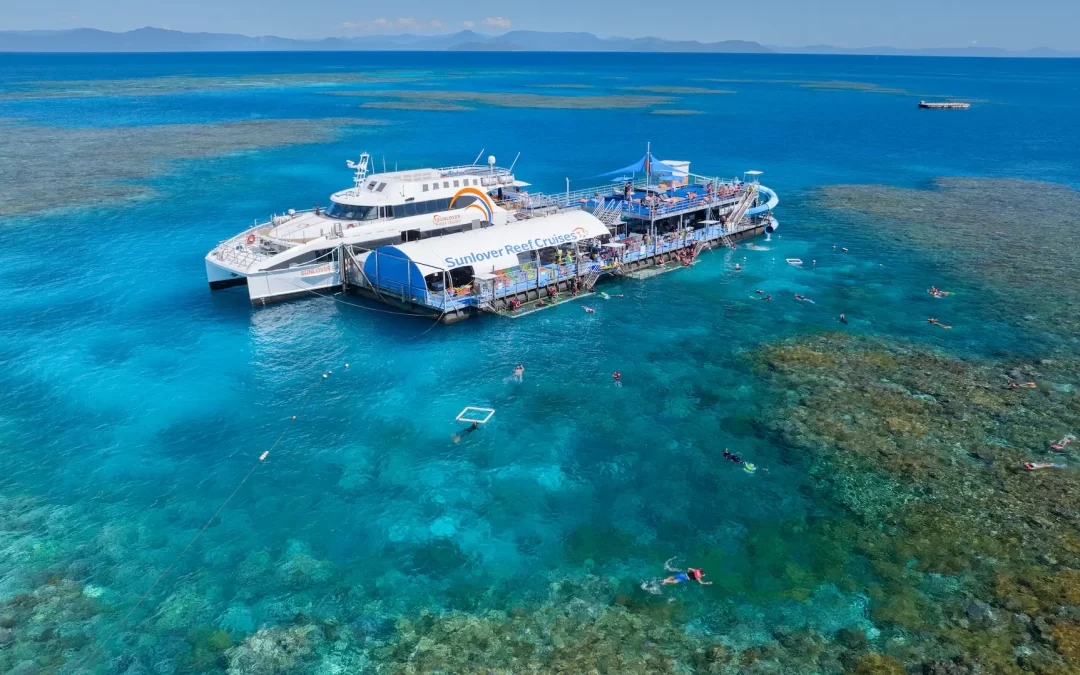
“The Great Barrier Reef” covers a lot of ground, from inner-shelf sites forty minutes out to the outer reef. Neither is wrong, but they are different days. Ask which reef, and how long the transit takes. If skills are in a pool, ask where the open-water dives happen afterwards — that is the part of the course you will remember.

3. How many dives do I get?
The agency minimum for Open Water is four open-water dives. Courses run anywhere from that minimum upwards. More dives means more time actually diving rather than repeating skills, which is the difference between finishing a course and finishing it feeling like a diver.
Ours runs nine. That is a genuine difference and it is worth asking about wherever you book.
4. Is every fee included?
Ask them to list what is not in the advertised price. The usual candidates are equipment hire, reef and marine park fees, certification processing, fuel levies and the digital learning materials.
A number that grows between the website and the invoice tells you more about a business than a number that is simply higher. Be particularly wary of any price that arrives with a “from”.
5. What happens if I need an extra day?
Some people need another session on mask clearing or equalising. It is common and it is not a failure.
Ask what that costs and — more importantly — whether it is even possible on their schedule. A centre running back-to-back courses may not have anywhere to put you. Ask before you are the person who needs it.
6. Who owns the boat?
Some dive centres own their vessels. Others book you onto someone else’s. Neither is a problem in itself, but it determines who is accountable when weather changes the plan, and how much flexibility exists to move you.
7. Will I have the same instructor for the whole course?
Continuity matters more than people expect. An instructor who watched you struggle with a skill on day one knows exactly what to do differently on day two. A different instructor each day starts from scratch.
Ask, and ask how experienced they are. You are not being rude; it is a reasonable thing to want to know about the person responsible for you underwater.
8. What do I need to do about the medical form?
The right answer is that they send you the RSTC Diver Medical questionnaire at booking so you can deal with anything it raises at home.
If a centre is casual about this, that is a signal. Turning up on day one having ticked “yes” to something, with no doctor available, is the most common way people lose a course day. Our guide to the medical requirements covers what the form asks and what happens next.
9. What happens if the weather turns?
Any operator who tells you weather never affects them is selling rather than explaining. Ask what their policy is for a cancelled or shortened day, whether you can move dates, and what happens if you are flying out the following morning.
The related advice: leave a clear day at the end of your trip. You need at least eighteen hours between your last dive and a flight anyway, and that spare day doubles as weather insurance.
The question not worth asking
“Is it PADI or SSI?”
Both are members of the same standards council, the minimum requirements for an entry-level course are effectively identical, and a certification from either is recognised worldwide and never expires. The agency on the card is the thing most people fixate on and it is close to the least important variable. We have set out the actual differences between PADI and SSI separately, and the short version is: choose the dive centre, not the logo.
Common questions
Is it rude to ask a dive centre all of this?
No, and a good centre will be pleased you did. You are asking about supervision ratios and safety procedures for an activity that involves breathing compressed air underwater. Anyone who bristles at these questions has answered a different one.
What if the answers are good but the price is higher?
Then you have found out what the extra money buys. Small groups, more dives and included fees all cost a centre real money. The point of the list is not to find the cheapest course — it is to know what you are comparing.
Does a more expensive course mean a better instructor?
Not reliably. Price signals what is included and where it happens, not teaching quality. A patient instructor with four students in a clean pool will teach you to dive properly; an expensive course run badly will not.
How do I check a centre is properly accredited?
Training centres are affiliated with their agency and can be verified through it, and in Queensland recreational diving operates under a code of practice with defined ratios, depth limits and medical screening. If any of that appears to be skipped, that is the signal to walk.
Should I book before I travel or once I arrive?
Before, especially between September and December when courses fill. Booking ahead also means you get the medical form in time to sort anything out at home.
Ask us the nine
Four divers per instructor, nine training dives, all equipment and reef fees included, and the medical form sent at booking. Our SSI courses open 1 October 2026.