There is no government register of dive schools to look up. Accreditation works through the training agencies, and in Queensland it is backed by a work health and safety code of practice that governs how operators must run.
So you verify two things: that the centre is genuinely affiliated with a recognised agency, and that it behaves like an operator working to the code. The second is easier to check than the first, and it tells you more.
“Accredited scuba training providers near me” is a sensible thing to search and a frustrating one, because the results are all dive centres telling you they are accredited. Here is how to actually check.
Step one: understand who accredits whom
A dive centre is not licensed by a government department. It is affiliated with a training agency — SSI, PADI, SDI, NAUI, RAID — and that agency sets the standards its centres and instructors must teach to.
Those agencies are in turn members of the Recreational Scuba Training Council, which is why an entry-level course looks much the same whichever logo is on it: same core skills, same 18-metre depth limit, same theory. It is also why a certification from any of them is accepted by dive centres worldwide and never expires.
The practical consequence: the agency name is not the thing to check. Almost every centre you find will be affiliated with one of them. What you are checking is whether the affiliation is current and whether the centre operates properly.
Step two: verify the affiliation
Every agency runs a public locator of its affiliated centres and professionals. Search the agency’s own site for the centre’s name rather than taking the logo on the website as proof — logos are easy to put on a page.
Two things worth asking directly:
- Is the centre itself affiliated, or just the instructor? Both exist, and they are different arrangements with different obligations.
- What rating does the instructor hold? Instructor ratings are tiered, and the minimum rating required varies by program. A legitimate centre will tell you without hesitating.

Step three: check they behave like a regulated operator
This is the part most people skip, and it is more revealing than any certificate.
Recreational diving in Queensland operates under a code of practice made under work health and safety law. It places obligations on the operator rather than on you: supervision ratios, depth limits for introductory divers, medical screening, briefings, equipment standards and record keeping.
You cannot audit that from a website. You can absolutely notice whether a centre acts like it applies:
- Do they send you a medical questionnaire before you pay? The RSTC Diver Medical form should arrive at booking, not on the morning. Our guide to the medical requirements explains why the timing matters.
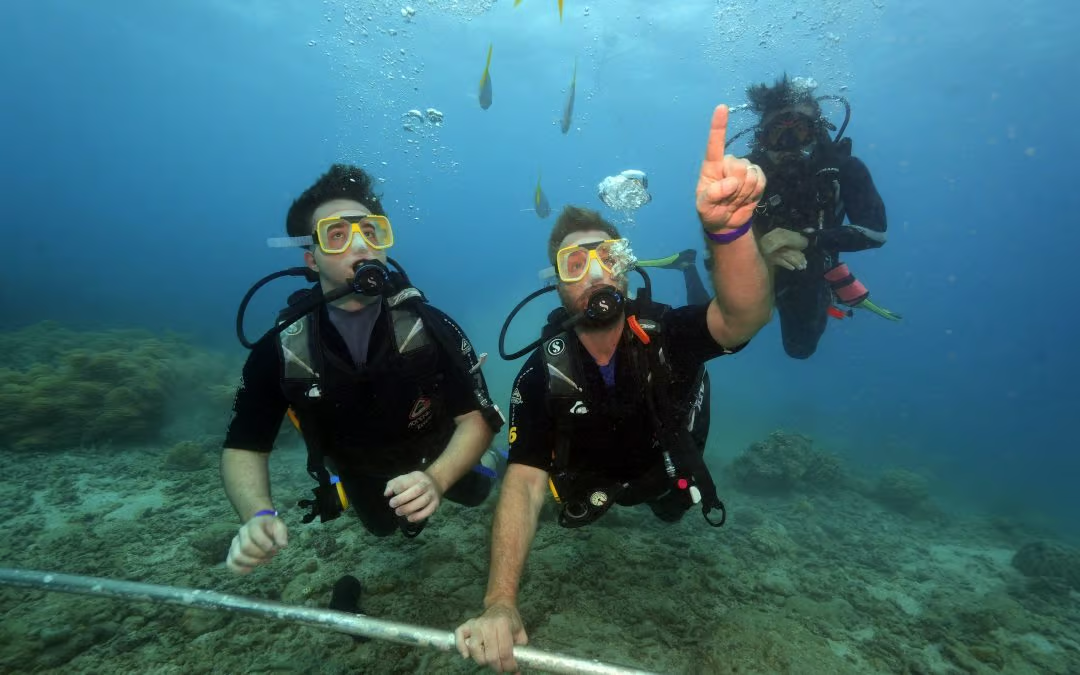
- Will they state a ratio as a number? “Small groups” is marketing. “Four students per instructor” is an answer.
- Is there a proper briefing? Not a two-minute summary shouted over an engine.
- Do they keep records? Certification checks, signed forms, dive logs.
- Do they say no to anyone? An operator that has never turned away a diver on medical or conditions grounds is not applying a standard.
If any of that appears to be skipped, that is your signal — not the absence of a certificate on a wall.
Red flags worth taking seriously
No medical form at all. Everybody completes one, certified or not, because you are breathing compressed air at depth either way.
Vagueness about ratios or depths. These are defined numbers. A centre that will not give them is either not tracking them or would rather you did not know.
Pressure to skip a step because you are short of time. The steps are the product.
A price that changes. Not a safety issue, but a reliable indicator of how the rest of the operation is run.
Does this work the same overseas?
The agency standards travel; the enforcement does not. An entry-level course in South East Asia is taught to the same written standard, but the regulatory framework sitting behind it — and your recourse if something goes wrong — varies a great deal more than the price does.
That is not an argument against learning overseas. Plenty of overseas centres are excellent. It is an argument for asking the questions in this article more insistently, not less, the further you are from home.
Where we sit
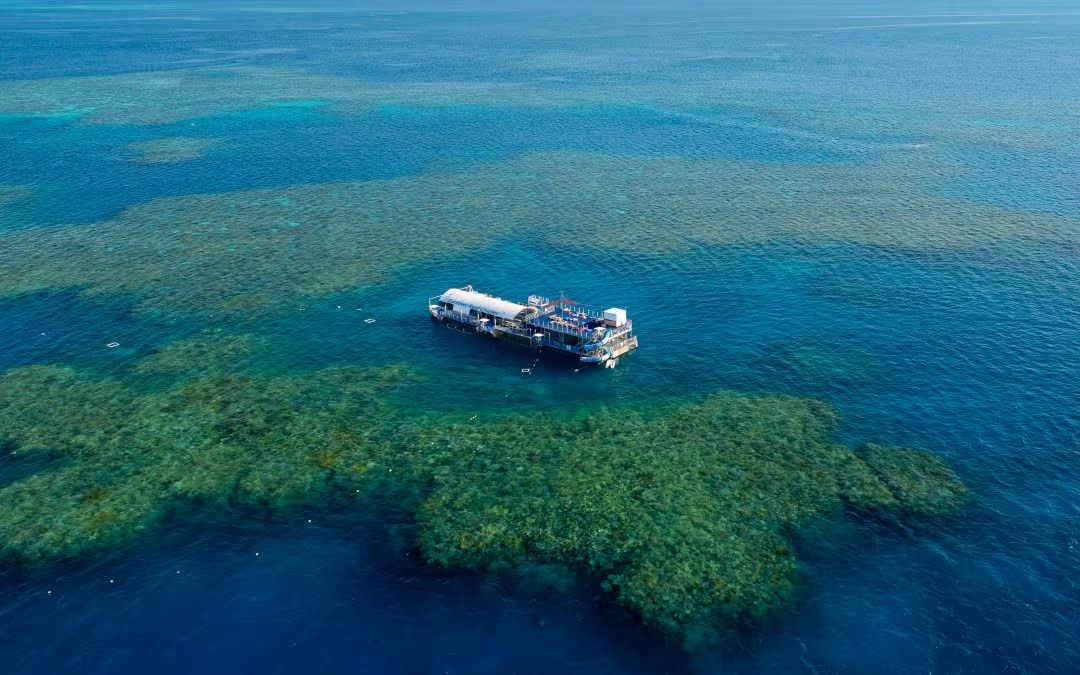
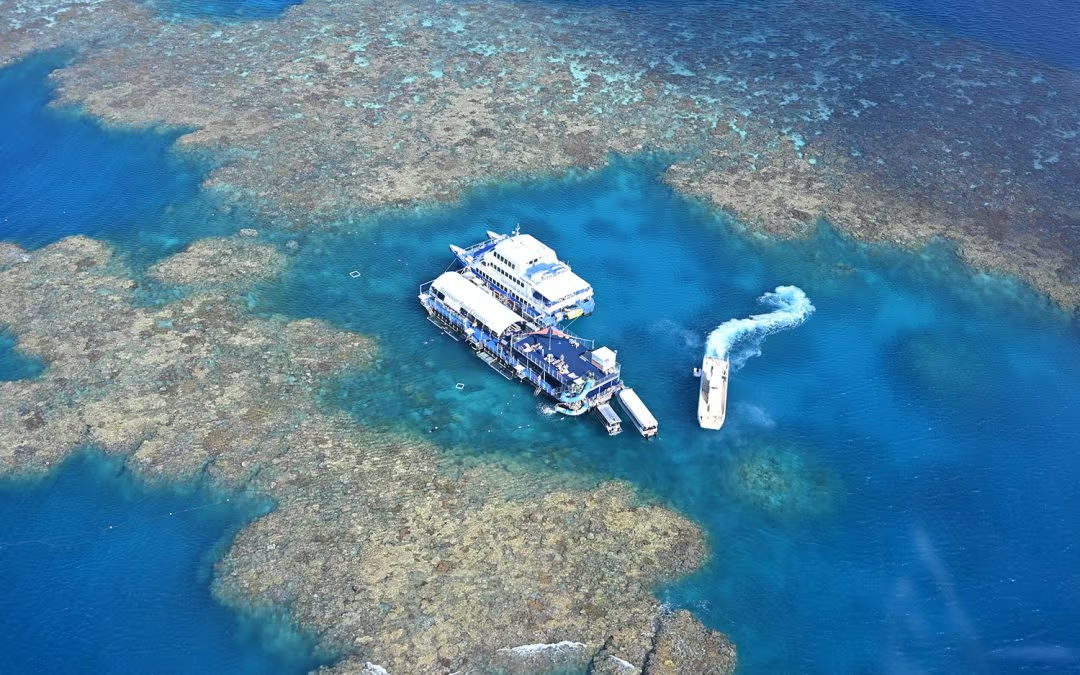
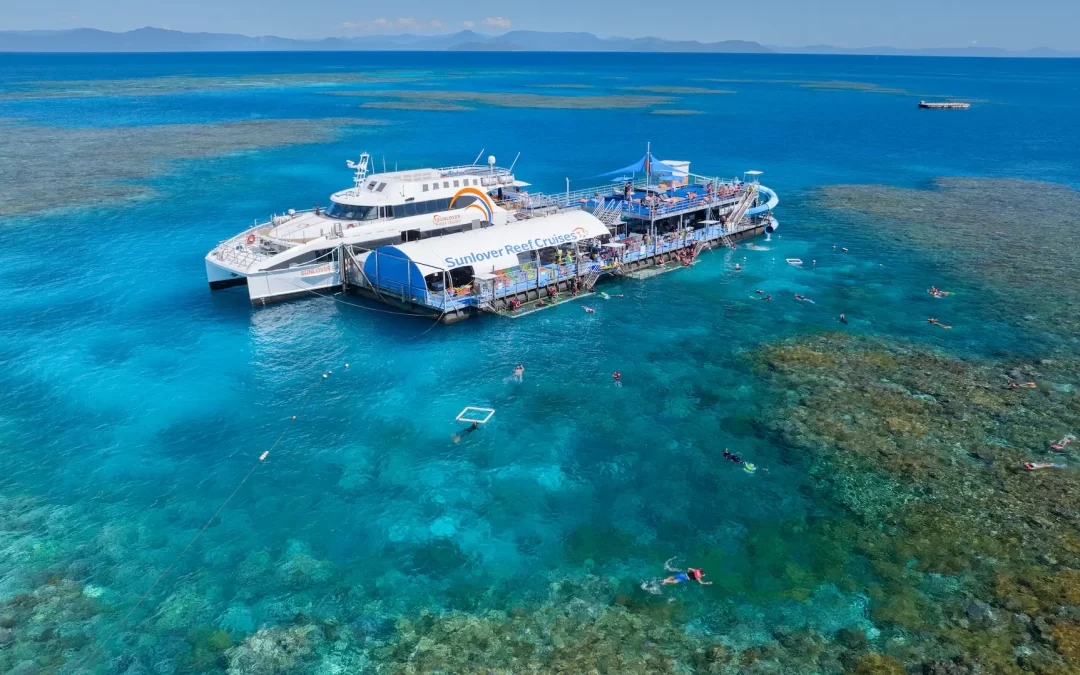
Sunlover is an SSI Training Centre, with courses running from 1 October 2026 at the Moore Reef pontoon on the outer Great Barrier Reef. We have written separately about why we chose SSI, and the honest summary is that the agency mattered less to that decision than how the training would actually run.
Ask us the same questions you would ask anyone else. If the answers do not suit your circumstances, we would rather tell you that than sell you the wrong course.
Common questions
Is there an Australian government register of dive schools?
No. There is no licensing register to search. Accreditation runs through the training agencies, and operators additionally have obligations under Queensland’s work health and safety code of practice for recreational diving.
How do I check a specific centre?
Search the training agency’s own centre locator for the business name rather than relying on the logo on their site, then ask whether the centre or only the instructor is affiliated, and what instructor rating you will be taught by.
Does the agency I certify with matter?
Far less than the internet suggests. The major agencies share a standards council, so entry-level requirements are effectively identical and every certification is recognised worldwide with no expiry. The dive centre matters much more than the logo.
What if a centre will not tell me its ratios?
Treat it as the answer. Ratios are defined numbers under both agency standards and the Queensland code, and any operator applying them can state them immediately.
Is my overseas certification valid in Australia?
Yes, if it is from a recognised agency. Bring the card or have it accessible in your agency’s app — digital cards are fine.
An SSI Training Centre on the outer reef
Courses open 1 October 2026. Four divers per instructor, nine training dives, the medical form sent at booking, and a ratio we will state as a number.